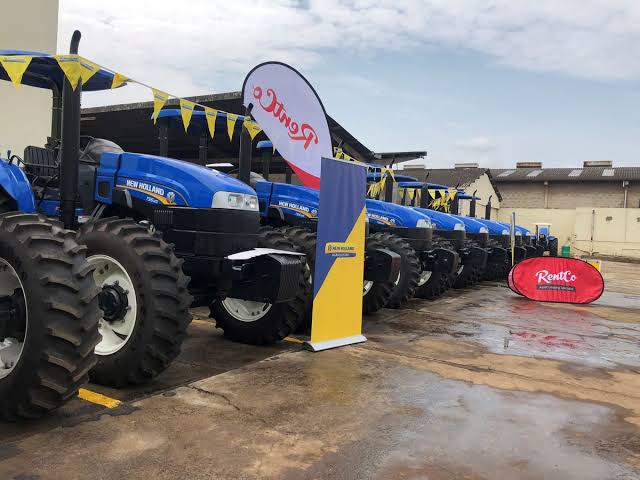
Agricultural equipment leasing is becoming an important option for farmers looking to improve productivity without making a large upfront investment in machinery. From tractors and planters to irrigation systems and harvesters, agricultural equipment can help farmers complete tasks faster, reduce labour requirements and improve farm efficiency.
For small-scale and commercial farmers, however, purchasing modern farm machinery can be expensive. Equipment leasing provides an alternative by allowing farmers to use machinery for an agreed period while making regular payments. This approach can make agricultural mechanisation more accessible and help farmers invest in productive activities without committing large amounts of capital at once.
What is agricultural equipment leasing?
Agricultural equipment leasing is an arrangement where a farmer or agricultural business obtains the right to use farm machinery from a leasing company, financial institution, equipment dealer or another provider for a specified period.
Instead of buying the equipment outright, the farmer makes agreed payments during the lease period. Depending on the lease agreement, the farmer may return the equipment at the end of the contract, renew the lease or have an option to purchase it.
Commonly leased agricultural equipment includes tractors, combine harvesters, ploughs, planters, irrigation equipment, hay balers, sprayers, trailers, milking machines and other specialised machinery.
Why farmers choose equipment leasing
One of the main advantages of agricultural equipment leasing is reduced initial capital requirements. Buying a tractor or other machinery can require a significant amount of money, which may be difficult for farmers who have limited working capital.
Leasing allows farmers to access equipment while spreading payments over an agreed period. This can help them preserve cash for other farm requirements such as purchasing seeds, fertiliser, animal feed, crop protection products and paying workers.
Leasing can also give farmers access to newer technology. Agricultural machinery continues to improve, with modern equipment offering better fuel efficiency, precision and productivity. Rather than keeping the same machine for many years, farmers may use leasing arrangements to access newer equipment when their existing lease expires.
Types of agricultural equipment that can be leased
Different types of agricultural machinery can be obtained through leasing arrangements depending on the provider and farming operation.
Tractors are among the most useful pieces of equipment for farmers. They can be used for land preparation, planting, transportation and other farm operations. Farmers may lease tractors together with implements such as ploughs, harrows and planters.
Harvesting equipment can also be leased, particularly by farmers who need machinery only during specific harvesting periods. Combine harvesters, forage harvesters and hay balers are examples of equipment that can support large-scale crop and livestock operations.
Irrigation equipment is another potential leasing option. Farmers can obtain pumps, irrigation systems and related machinery without purchasing the entire system upfront. This can support reliable water management, particularly in areas where rainfall is unpredictable.
Benefits of agricultural equipment leasing
Agricultural equipment leasing can offer several benefits when the agreement is properly structured. The first is improved access to mechanisation. Farmers who cannot afford to purchase expensive equipment outright may still be able to use machinery through a lease.
Leasing can also improve farm efficiency. Machinery can complete some agricultural tasks more quickly than manual labour, allowing farmers to prepare land, plant or harvest within the appropriate farming window.
Another benefit is better cash-flow management. Instead of spending a large amount of money at once, the farmer makes scheduled payments. This can make it easier to plan farm finances.
Equipment leasing may also reduce concerns about equipment becoming outdated. Farmers can potentially upgrade to newer machinery when the lease ends, depending on the terms offered by the leasing provider.
Challenges of agricultural equipment leasing
Despite its benefits, equipment leasing also has potential challenges. Farmers need to carefully examine the total cost of a lease rather than focusing only on the regular payment.
Maintenance responsibilities are another important consideration. Some agreements require the farmer to maintain and repair the equipment, while others may include maintenance services. Farmers should understand these obligations before signing a contract.
Lease agreements may also contain conditions concerning equipment use, insurance, operating hours and damage. Failure to comply with the terms can result in additional costs.
Farmers should therefore read the entire agreement carefully and ask questions about penalties, maintenance, insurance, payment schedules and what happens when the lease expires.
How to choose agricultural equipment for leasing
Farmers should begin by identifying the specific problem the equipment is expected to solve. A farmer who needs faster land preparation, for example, may require a tractor and appropriate implements, while a livestock farmer may benefit more from hay-making or milking equipment.
The size of the farm and the frequency of equipment use should also be considered. Leasing expensive machinery may not make financial sense if it will only be used occasionally. In such cases, farmers can compare leasing with hiring equipment or using agricultural contractors.
Farmers should also compare different providers and examine the condition, specifications and reliability of the machinery. Fuel consumption, availability of spare parts and access to technical support can affect the overall cost of using the equipment.
Agricultural equipment leasing and farm mechanisation
Agricultural equipment leasing can contribute to increased mechanisation by making machinery more accessible to farmers. Mechanisation can reduce dependence on manual labour for demanding farm operations and help farmers complete activities at the right time.
For young farmers and growing agricultural enterprises, leasing can also provide an opportunity to expand operations gradually. Instead of purchasing every machine needed for a farm, farmers can acquire equipment according to their production needs and financial capacity.
As agriculture becomes increasingly technology-driven, flexible financing models such as equipment leasing can play a role in helping farmers adopt modern machinery.
Agricultural equipment leasing provides farmers with an alternative way to access machinery without purchasing equipment outright. It can help reduce upfront financial pressure, improve access to modern technology and support efficient farm operations.
However, farmers should carefully compare lease agreements, understand maintenance and insurance responsibilities and calculate the total cost before committing. By selecting equipment that matches their farming needs and choosing suitable leasing terms, farmers can use agricultural machinery more efficiently while managing their available capital.

Author: Moureen Koech
Moureen Koech is a passionate Digital Journalist, an adept Agribusiness Writer with a keen eye for news and an impactful story-teller,whose stories provide key value to Agripreneurs and stakeholders in the Agricultural sector