Buyers no longer want to know only the price of farm produce. Supermarkets, exporters, hotels and shoppers increasingly want to know where food was grown, who grew it, how it was handled and when it was harvested. Traceability answers these questions by creating a record that follows produce from the farm to the final customer. For farmers, this record is becoming a passport to better markets and better prices.
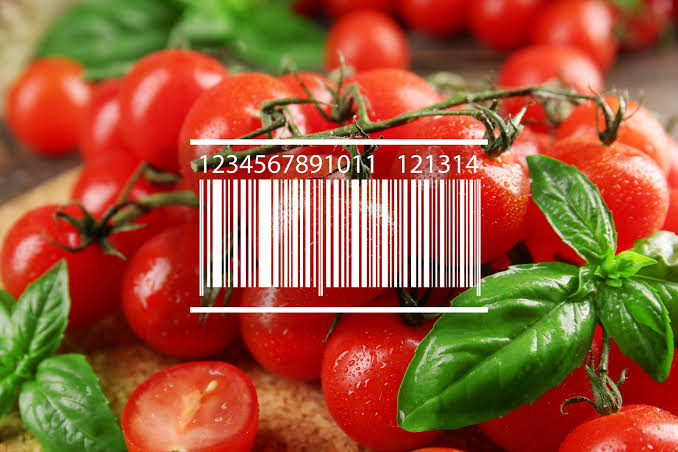
Barcodes are the simplest tool for building that record. A barcode is a small printed code that, when scanned, links a product to a set of information stored in a database. Whether it appears as the familiar black-and-white lines or as a square QR code, it turns an ordinary crate of tomatoes into a product with a verifiable history.
What is farm produce traceability?
Traceability is the ability to follow a product one step back and one step forward along the supply chain. One step back means identifying where the produce came from, including the farm, the plot, the input suppliers and the harvest date. One step forward means knowing who bought it, whether a trader, processor, supermarket or exporter.
A good system records key details at each stage. These typically include the farmer’s name or code, field location, crop variety, planting and harvest dates, fertilizers and pesticides used, storage conditions and transport details. When the information is linked to a barcode on a crate, sack or pack, anyone with a scanner or smartphone can retrieve it in seconds.
How Barcodes and QR Codes Work for Farmers
The process is more practical than many farmers expect. First, the farmer or cooperative registers with a traceability platform and receives unique identification codes. Second, each batch of produce is labelled at harvest or packing, using printed stickers, tags or labels on crates. Third, the code is scanned at each handover point, such as the collection centre, cold room, truck and market, and the system logs the time and place. Finally, the buyer scans the code and sees the produce’s full journey.
Two main code types are in use. Traditional one-dimensional barcodes hold a short number and are the standard in supermarkets. QR codes hold much more information and can be scanned with an ordinary phone, which makes them ideal for smallholders who cannot afford specialised equipment. Many farms now use both, with a barcode for retail systems and a QR code to tell the product’s story to consumers.
Key benefits for farmers and agribusinesses
Access to premium and export markets. Many export destinations, particularly in Europe, require proof of origin and safe production practices. Traceability helps farmers meet rules on pesticide residues and food safety, and it makes audits easier to pass.
Faster response to food safety problems. If a batch is found to be contaminated, a traceability system lets companies pinpoint the affected farm and recall only that batch, rather than throwing away everything on the market. This protects consumers and limits financial losses.
Fairer pricing and reduced fraud. When produce can be traced to its origin, farmers get credit for quality. It becomes harder for middlemen to mix good and poor produce or sell low-grade goods under a trusted farm’s name.
Better farm management. Records collected for traceability also show which fields and practices perform best. Over time, a farmer can see patterns in yield, input costs and losses, and use them to make smarter decisions.
Stronger consumer trust. Shoppers increasingly care about freshness and origin. A QR code on a pack of vegetables that shows the farmer’s name, farm and harvest date builds a personal link that supports loyalty and justifies higher prices.
Challenges smallholder farmers face
Despite the benefits, adoption is not without obstacles. Many smallholders have limited access to smartphones, reliable internet and printing equipment. Low digital literacy can make record-keeping feel burdensome, and the cost of labels, software subscriptions and training can discourage small producers. Fragmented supply chains also complicate matters, because produce from many tiny farms is often mixed at collection points, which breaks the trace unless batches are carefully separated.
There is also a trust issue. Some farmers worry that sharing detailed data will expose them to price pressure or let buyers bypass them. Clear agreements about who owns the data and how it will be used are essential for building confidence.
Practical steps to get started
Farmers do not need to adopt a complex system overnight. A sensible approach begins with simple paper or phone-based records of planting, input use and harvest dates. Next, group farmers into cooperatives so that the costs of software, labels and training can be shared. Choose an affordable traceability platform that works on basic smartphones and, where possible, offline, syncing data when a connection returns.
It also helps to start with one high-value crop, such as avocados, french beans or herbs, where buyers already demand traceability and are willing to pay for it. Partnering with an exporter, processor or development programme can provide the labels, scanners and training needed to begin. As confidence grows, the system can be expanded to other crops and markets.
The future of traceability in agriculture
Technology is making traceability cheaper and more powerful. Mobile apps now allow farmers to generate codes and record data from a single phone. Sensors can log temperature during storage and transport, and blockchain platforms are being tested to create tamper-proof records. Governments and regional trade bodies are also moving toward stricter food safety and origin requirements, which will make traceability less of an option and more of a necessity.
Barcodes and traceability systems turn farm produce from an anonymous commodity into a trusted, verifiable product. They open doors to premium and export markets, protect consumers, reduce fraud and help farmers manage their businesses better. The costs and skills needed can be a hurdle, but cooperatives, affordable mobile tools and partnerships with buyers make adoption realistic. For agribusinesses that want to compete in tomorrow’s markets, knowing and proving where food comes from is one of the smartest investments to make today.

Author: Moureen Koech
Moureen Koech is a passionate Digital Journalist, an adept Agribusiness Writer with a keen eye for news and an impactful story-teller,whose stories provide key value to Agripreneurs and stakeholders in the Agricultural sector