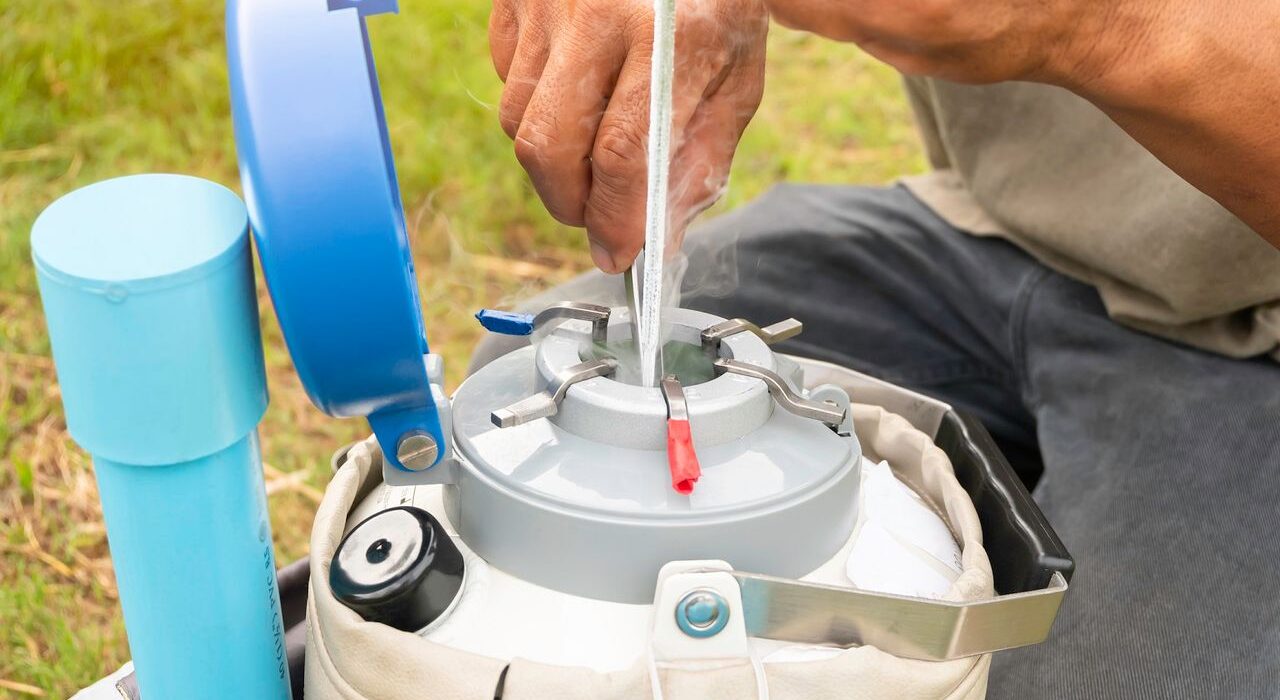
Artificial insemination or AI, is one of the most practical ways to improve livestock quality and one of the most dependable service businesses in rural agribusiness. Instead of keeping a bull or buck, farmers pay a trained technician to inseminate their animals with semen from proven, high-performing sires. For dairy and beef farmers, it means better animals at lower cost. For service providers, it means steady demand and strong repeat customers.
What is Artificial Insemination?
Artificial insemination is the process of placing semen from a selected male into a female’s reproductive tract at the right time in her heat cycle, without natural mating. Semen is collected from top-quality sires, diluted, packed in small straws and stored frozen in liquid nitrogen. The technician thaws a straw and places the semen in the cow’s uterus using a special instrument. The method is widely used in cattle and is also used in goats, sheep, pigs and poultry.
Why farmers demand AI services
The biggest benefit is genetic improvement. One top bull can serve thousands of cows through AI, giving small farmers access to genetics they could never afford by buying the bull. Dairy farmers can choose semen for higher milk yield, better milk quality, fertility, disease resistance or calving ease, while beef farmers can select for fast growth and good carcass quality.
AI also cuts costs and risks. Keeping a bull means feeding, housing and managing a large, sometimes dangerous animal, and bulls can spread venereal diseases through natural mating. With AI, farmers avoid those costs, and breeding records are easier to keep. It also helps small farms with only a few cows, where owning a bull is not economical.
Who can offer AI services?
AI is a skilled job, so it requires training. Most countries require service providers to complete an approved course, often offered by veterinary colleges, livestock training institutes or government veterinary departments, and many require registration or licensing with a veterinary board. Veterinarians, animal health assistants and trained farmers can all become AI technicians, provided they meet local rules. Check with your national or county veterinary authority before starting, because regulations on who may handle semen and liquid nitrogen differ by country.
What you need to start an AI service business
- Training and licence. Complete an accredited AI course and obtain any permit required in your area.
- Equipment. The basic kit includes a liquid nitrogen container (a small cryo tank for storing semen), a thawing flask, AI guns or sheaths, straw cutters, gloves, a thermometer and a reliable record book. A flask for carrying semen to farms is also needed.
- Reliable semen supply.Source semen from registered, reputable suppliers, such as national breeding organisations or licensed distributors. Poor semen handling or outdated stock leads to failed conceptions and damages your reputation.
- Liquid nitrogen supply. Semen must stay frozen at very low temperatures, so you need a dependable source of liquid nitrogen and the discipline to top up your tank regularly.
- Transport.Most technicians travel from farm to farm, so a motorcycle or small vehicle is essential.
- Capital. Costs include training fees, the tank, equipment, an initial stock of semen and transport. Start modestly and grow as your client base expands.
How AI services generate income
Technicians typically charge a fee per insemination visit, plus the cost of the semen. Income grows with the number of farms you serve. Many providers add related services such as heat detection advice, pregnancy diagnosis, calf care guidance, deworming and basic animal health support. Others work with dairy cooperatives or milk collection centres, which can supply a steady stream of clients. Selling extra semen straws, mineral supplements and breeding records can add more revenue.
Keys to success
Conception rates are your reputation. Good results depend on correct timing, which means teaching farmers to spot heat signs such as restlessness, mounting behaviour, mucus discharge and reduced milk yield. Handle semen carefully, keep the tank topped up, never expose straws to air longer than necessary, and thaw them according to supplier instructions. Keep clear records of each animal, the sire used, the date and the result, so you can advise farmers on follow-up and repeat services.
Build trust through reliability. Respond fast when farmers call, because a cow in heat has a narrow window. Offer follow-up visits when a cow returns to heat, and educate farmers on nutrition, since underfed cows rarely conceive well.
Challenges to expect
Common challenges include poor heat detection by farmers, long distances between farms, unreliable liquid nitrogen supply and low conception rates caused by poor nutrition or stress. Some farmers also distrust AI or prefer the local bull. Overcome these challenges through farmer training, demonstration visits and honest reporting of results.
Artificial insemination services combine skill, low overhead and steady demand, making them one of the strongest service businesses in livestock farming. Get properly trained and licensed, source quality semen, handle it correctly and keep farmers informed. With time, you will build a loyal client base and help raise the productivity of every herd you serve.

Author: Moureen Koech
Moureen Koech is a passionate Digital Journalist, an adept Agribusiness Writer with a keen eye for news and an impactful story-teller,whose stories provide key value to Agripreneurs and stakeholders in the Agricultural sector