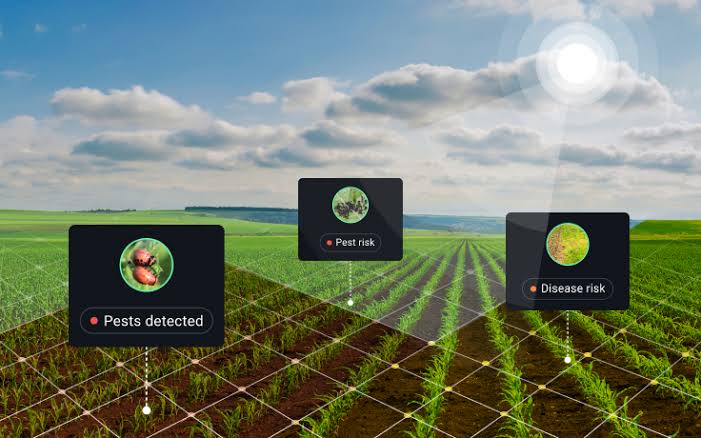
Remote-sensing insurance is a type of agricultural insurance that uses satellite images, weather data and other technology to measure crop conditions and decide when a farmer should be paid. Instead of an assessor visiting each farm to inspect damage, the insurer studies data from space and from weather stations to see whether drought, floods, excess heat or poor vegetation growth have hurt crops in a particular area.
This approach is often called index-based or satellite-based insurance. Because payouts depend on measurable data rather than individual farm inspections, claims can be processed faster and at lower cost. For smallholder farmers in remote areas, that can make insurance practical for the first time.
Why traditional crop insurance struggles
Conventional crop insurance requires an adjuster to visit each farm, verify the loss and calculate compensation. For smallholders with small plots spread across large regions, this is expensive and slow. Fraud and disputes can also arise, since it is hard to prove exactly how much damage occurred.
As a result, many farmers have been left without cover and bear the full risk of climate shocks. A failed season can force them to sell assets, skip school fees or fall into debt. Remote-sensing insurance was developed to close this protection gap.
How the technology works
Satellites regularly capture images of farmland and measure indicators such as vegetation greenness, rainfall, soil moisture and temperature. Insurers combine these readings with historical records to define what a normal season looks like in a given area. If conditions fall below an agreed threshold, such as severely low vegetation growth during a key crop stage, the policy triggers a payout.
Many products also use weather stations, rainfall estimates, drones and mobile phone data to improve accuracy. Farmers typically register their plots with a location, crop type and planting dates, and the system monitors conditions automatically through the season. Some programmes use algorithms to confirm that planting actually took place, reducing false claims.
Benefits for farmers
The main benefit is financial protection against climate risk. When drought or flooding strikes, a payout helps farmers replant, buy food, repay loans or cover household needs. Payouts can be fast, sometimes delivered through mobile money within weeks, which matters when farmers need cash urgently.
Insurance also improves access to credit. Lenders are more willing to finance inputs when crops are insured, since repayment is more secure. With reduced risk, farmers may feel confident investing in better seed, fertilizer and improved practices, which can raise yields and incomes over time.
Benefits for insurers, lenders and agribusinesses
For insurers, remote sensing reduces administrative costs and enables them to serve large numbers of small farmers. Data also helps price risk more accurately. For banks, microfinance institutions and input suppliers, insurance protects loan portfolios and reduces default during bad seasons.
Cooperatives, processors and out-grower schemes can bundle insurance with inputs or contracts, protecting supply chains. Governments and development partners sometimes support premiums to expand coverage, particularly for smallholders and climate-vulnerable regions.
Limitations and challenges
The system is not perfect. One major concern is basis risk, which happens when the data suggests normal conditions, but a particular farm suffers losses or the opposite. For example, a local hailstorm may damage one farm while satellite data for the wider area looks fine. This can leave farmers feeling the policy did not protect them.
Other challenges include low awareness, limited trust in insurance, affordability of premiums and difficulty understanding how triggers work. Cloud cover can affect some satellite images, and small, mixed or intercropped plots are harder to monitor. Clear explanations, farmer training and transparent terms are essential for building confidence.
How farmers can choose a good policy
Before buying, ask which crops, regions and risks the policy covers, what data is used and what triggers a payout. Understand the coverage period, premium cost, payment timing and how payouts are delivered. Check that the insurer is licensed and read the terms carefully, including exclusions.
Compare options from different providers and ask extension officers, cooperatives or farmer groups for advice. Policies bundled with seed or loan packages may be cheaper, but make sure you understand the conditions. Keep records of your planting dates, inputs and field locations, as these may be needed when registering or making a claim.
Opportunities for entrepreneurs and agribusinesses
Remote-sensing insurance also creates business opportunities. Agri-tech companies, data providers, mobile money firms, agents who register farmers and cooperatives that distribute policies all play a part. Input suppliers can bundle cover with their products, and lenders can integrate insurance into loan packages. Entrepreneurs who combine technology with farmer education and trust-building stand to gain in this growing field.
The future of crop insurance
As satellite technology, mobile networks and data analysis improve, coverage is expected to become more accurate and affordable. Combining remote sensing with local weather stations, drones and farmer reports can reduce basis risk and widen the reach of insurance in rural communities.
Remote-sensing insurance offers a modern way to protect farmers from climate shocks, using data instead of costly field inspections. When explained clearly and designed fairly, it can strengthen farm incomes, unlock credit and make agriculture more resilient. Farmers who understand how it works and choose carefully are better prepared to face uncertain seasons.

Author: Moureen Koech
Moureen Koech is a passionate Digital Journalist, an adept Agribusiness Writer with a keen eye for news and an impactful story-teller,whose stories provide key value to Agripreneurs and stakeholders in the Agricultural sector