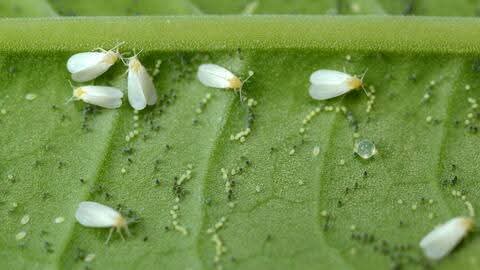
Whiteflies are among the most destructive pests affecting tomato production worldwide. Though tiny in size, these sap-sucking insects can cause significant yield losses if not managed early. Whiteflies weaken tomato plants, reduce fruit quality and transmit serious viral diseases such as Tomato Yellow Leaf Curl Virus (TYLCV). Understanding how to identify, control, and prevent whiteflies on tomato plants is essential for successful tomato farming.
What are whiteflies and why are they a problem?
Whiteflies are small, white, moth-like insects that live and feed mainly on the undersides of tomato leaves. They suck plant sap, depriving tomatoes of essential nutrients. As they feed, they excrete a sticky substance known as honeydew, which promotes the growth of black sooty mold and interferes with photosynthesis.
More importantly, whiteflies are vectors of viral diseases, making them a major threat in both open-field and greenhouse tomato production.
Signs of whitefly infestation on tomato plants
Early detection is key to effective control. Common signs of whiteflies on tomatoes include:
1. Tiny White Flying Insects
When tomato plants are disturbed, small white flies flutter around and quickly settle back on the undersides of leaves. This is often the first visible sign of infestation.
2. Sticky Residue (Honeydew)
Whiteflies excrete honeydew, which coats leaves and fruits. This sticky substance attracts ants and encourages the development of black sooty mold.
3. Yellowing and wilting leaves
Affected leaves gradually turn yellow, then brown, wilt, and eventually fall off. This reduces the plant’s ability to photosynthesize effectively.
4. Stunted growth and poor fruit set
Severe infestations weaken plants, causing stunted growth, flower drop, and poor fruit development. When viruses like TYLCV are involved, losses can be severe and irreversible.
Control methods for whiteflies on tomato
Effective whitefly management requires a combination of physical, biological and organic control methods.
1. Physical Removal
Spraying tomato plants with a strong jet of water helps dislodge whiteflies, especially from the undersides of leaves where they hide and lay eggs. This method is simple, inexpensive and effective when done regularly.
A handheld vacuum can also be used to suck up adult whiteflies. Dispose of the vacuum bag immediately to prevent re-infestation.
2. Insecticidal Soap and Neem Oil
Insecticidal soaps and neem oil are effective organic solutions for controlling whiteflies on tomatoes. These products kill whiteflies by disrupting their cell membranes or hormonal systems.
- Spray in the early morning or evening when whiteflies are less active.
- Focus on the undersides of leaves.
- Repeat applications every 5–7 days for best results.
3. Yellow Sticky Traps
Yellow sticky traps attract adult whiteflies and help reduce their population. They are also useful for monitoring infestation levels and detecting early outbreaks.
Place traps slightly above plant height and replace them once they are full.
4. Garden Hygiene
Whiteflies thrive in poorly managed fields. Remove weeds, volunteer plants, and plant debris that serve as hiding and breeding sites. Proper sanitation significantly reduces whitefly pressure.
5. Biological Control
Introducing beneficial insects such as ladybugs, lacewings, and parasitic wasps helps control whiteflies naturally. These predators feed on whitefly eggs, larvae and adults, keeping populations in check.
Preventive measures against whiteflies on tomato
Prevention is always more effective and economical than cure.
1. Regular Inspection
Inspect tomato plants frequently, especially young plants, for early signs of whiteflies. Pay close attention to the undersides of leaves.
2. Maintain good airflow
Prune excess foliage to improve air circulation within the plant canopy. Good airflow reduces humidity and makes the environment less favorable for whiteflies.
3. Healthy soil and strong plants
Use rich, organic soil and apply well-balanced fertilizers. Healthy tomato plants are more resilient and can better withstand pest pressure.
4. Crop Rotation
Avoid planting tomatoes or related crops in the same area season after season. Crop rotation disrupts whitefly life cycles and reduces carryover populations.
What to avoid when managing whiteflies
- Broad-spectrum insecticides: These can kill beneficial insects and lead to pesticide resistance. They are also not ideal for edible crops.
- Over-fertilizing with nitrogen: Excess nitrogen encourages soft, lush growth that attracts whiteflies and other sap-sucking pests.
Key takeaway
Whiteflies on tomato plants can cause serious damage if ignored, but they are manageable with early detection and consistent control. Focusing on the undersides of leaves, maintaining good garden hygiene, using organic treatments and encouraging beneficial insects are the most effective strategies.
An integrated approach combining cure and prevention ensures healthier tomato plants, better yields and reduced disease risk.

Author: Moureen Koech
Moureen Koech is a passionate Digital Journalist, an adept Agribusiness Writer with a keen eye for news and an impactful story-teller,whose stories provide key value to Agripreneurs and stakeholders in the Agricultural sector