Agriculture is changing rapidly as farmers around the world search for smarter, more efficient ways to produce food. Climate change, shrinking farmland, unpredictable weather patterns and increasing food demand have pushed the agricultural sector to adopt innovative solutions. One of the most promising advancements transforming modern farming is Controlled Environment Agriculture (CEA).
Controlled Environment Agriculture refers to a farming system where environmental conditions are carefully managed to create ideal growing conditions for crops. Instead of depending entirely on natural weather conditions, farmers regulate factors such as temperature, humidity, light intensity, water supply, carbon dioxide levels and nutrients to maximize crop growth and productivity.
As technology continues to evolve, CEA is becoming a practical solution for producing high-quality food while conserving resources and increasing yields.
What is Controlled Environment Agriculture (CEA)?
Controlled Environment Agriculture (CEA) is an advanced agricultural production system that uses technology and infrastructure to create the best possible environment for plant growth.
Unlike traditional open-field farming, CEA allows growers to control nearly every aspect of crop development. The goal is to remove environmental limitations and provide plants with stable conditions that encourage faster growth, higher yields and improved quality.
CEA can be practiced in structures such as greenhouses, vertical farms, indoor farms, plant factories and hydroponic systems.
By controlling growing conditions, farmers reduce the risks associated with drought, floods, pests and changing seasons.
How controlled environment agriculture works
CEA combines agriculture with modern technology to monitor and adjust environmental conditions in real time.
Several factors are managed simultaneously:
Temperature Control
Temperature plays a critical role in plant growth. In CEA systems, heating and cooling equipment maintain the ideal temperature range needed for different crops.
Stable temperatures reduce plant stress and promote consistent development throughout the growing cycle.
Humidity Management
Humidity affects water absorption, transpiration and disease development. Excess moisture can encourage fungal infections, while low humidity may cause plants to dry out.
CEA systems use sensors and ventilation to maintain balanced humidity levels.
Artificial and Natural Lighting
Light is essential for photosynthesis. Controlled farming environments often combine natural sunlight with LED grow lights to ensure plants receive the right amount of light regardless of weather conditions.
LED technology allows farmers to customize light intensity and spectrum depending on crop requirements.
Water and nutrient delivery
Many CEA operations use efficient irrigation methods such as drip systems, hydroponics or fertigation.
Plants receive water and nutrients directly to their roots, minimizing waste and improving nutrient absorption.
Carbon Dioxide regulation
Carbon dioxide supports photosynthesis and plant growth. Some CEA facilities enrich growing environments with controlled CO₂ levels to accelerate crop development and increase yields.
Types of Controlled Environment Agriculture
Controlled Environment Agriculture includes several farming methods depending on infrastructure, investment, and production goals.
Greenhouse Farming
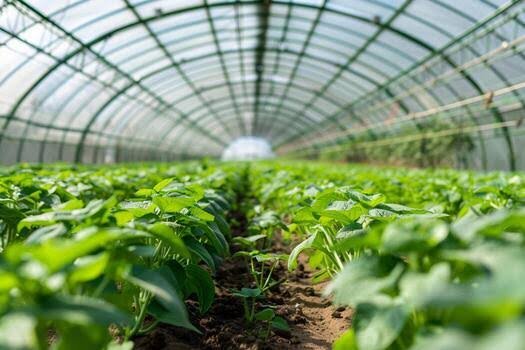
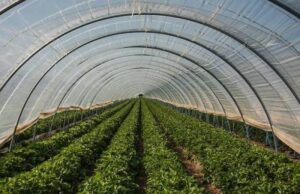
Greenhouses are among the most common forms of CEA. These structures allow farmers to control temperature, humidity and ventilation while still using sunlight.
Greenhouse farming is widely used for vegetables, flowers, herbs and fruits.
Hydroponics
Hydroponics involves growing plants without soil. Instead, roots absorb nutrients from water-based solutions.
This method reduces water usage and allows faster crop growth.
Vertical Farming
Vertical farming grows crops in stacked layers inside controlled indoor spaces.
This system maximizes land use and enables food production even in urban environments where land is limited.
Aeroponics
Aeroponics grows plants by suspending roots in air and delivering nutrients through fine mist sprays.
This method uses minimal water and supports rapid root development.
Aquaponics
Aquaponics combines hydroponics with fish farming.
Fish waste provides nutrients for plants, while plants help filter and clean the water.
Benefits of Controlled Environment Agriculture
CEA offers numerous advantages that make it increasingly attractive to farmers and investors.
Higher Crop Yields
Since environmental conditions remain optimal throughout production, crops grow faster and produce more consistently compared to traditional farming.
Efficient Water Use
CEA systems can reduce water consumption significantly through recycling and targeted irrigation methods.
This makes the system ideal for areas experiencing water shortages.
Year-Round Production
Because crops are protected from seasonal changes, farmers can produce food continuously throughout the year.This improves market supply and income stability.
Reduced Pest and Disease Pressure
Enclosed environments limit exposure to pests and diseases, reducing reliance on chemical pesticides.
Improved Product Quality
Controlled conditions help produce crops with uniform size, color, taste and appearance.
Consumers benefit from more reliable food quality.
Challenges of Controlled Environment Agriculture
Despite its advantages, CEA also presents several challenges.
High Initial Investment
Setting up controlled environments requires substantial capital for structures, equipment, sensors and automation systems.
Energy Requirements
Indoor farming systems often depend heavily on electricity for lighting, heating, and climate control.
Energy costs can affect profitability if not managed efficiently.
Technical Knowledge Requirements
Successful CEA operations require farmers to understand plant science, environmental control and technology management.
Training and continuous learning are important.
Limited Crop Selection
Although many vegetables and herbs thrive in CEA systems, some large-scale field crops remain less economically practical.
Crops Commonly Grown Using CEA
Many high-value crops perform exceptionally well under controlled environments, including:
- Tomatoes
- Lettuce
- Spinach
- Cucumbers
- Strawberries
- Peppers
- Herbs such as basil and mint
- Microgreens
- Flowers
These crops benefit from stable growing conditions and premium market demand.
The Future of Controlled Environment Agriculture
As the global population continues to rise, food production systems must become more productive and sustainable. Controlled Environment Agriculture is positioned to play a major role in addressing food security challenges.
Advancements in automation, artificial intelligence, renewable energy and smart sensors are making CEA more accessible and cost-effective.
For countries facing climate variability and land pressure, including many regions across Africa, controlled agriculture presents opportunities to produce more food using fewer resources
Controlled Environment Agriculture is reshaping how food is grown by creating predictable and optimized growing environments. Through technologies that manage temperature, humidity, lighting, water, and nutrients, farmers can achieve higher productivity while conserving valuable resources.
Although the system requires investment and technical expertise, its potential to support sustainable agriculture and year-round food production makes it one of the most important innovations in modern farming.
As agriculture continues evolving, Controlled Environment Agriculture is expected to become an increasingly important part of feeding the world efficiently and sustainably.

Author: Moureen Koech
Moureen Koech is a passionate Digital Journalist, an adept Agribusiness Writer with a keen eye for news and an impactful story-teller,whose stories provide key value to Agripreneurs and stakeholders in the Agricultural sector