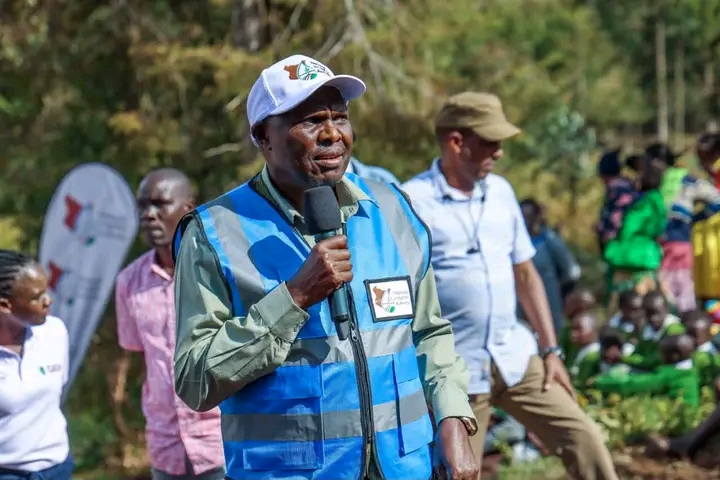
More than 1,000 farming households in Kaptarakwa Ward, Keiyo South Sub-County, are set to benefit from year-round agricultural production following the launch of the Cheminya Irrigation Development Project, a government initiative that will irrigate 250 acres of farmland to boost food security, improve household incomes and cushion farmers against the effects of climate change.
The project, officially launched by Head of Public Service Felix Koskei, is being implemented by the National Irrigation Authority (NIA) as part of the Government’s efforts to expand irrigation infrastructure and reduce reliance on rain-fed agriculture under the Bottom-Up Economic Transformation Agenda (BETA).
For years, farmers in the area have depended on unpredictable rainfall to grow crops, often recording poor harvests during prolonged dry spells. The new irrigation scheme is expected to change that by providing a reliable water supply that will enable continuous farming throughout the year, allowing growers to increase production and venture into high-value crops.
Speaking during the groundbreaking ceremony, Koskei said the Government is prioritising irrigation development as a sustainable solution to the growing challenges posed by climate change, noting that reliable water infrastructure is critical to improving agricultural productivity and strengthening national food security.
“The Government is committed to expanding irrigation infrastructure across the country to unlock agricultural potential, improve food production and enhance the economic well-being of farming communities. The Cheminya Irrigation Development Project is a key investment that will empower farmers to produce throughout the year, increase their incomes and contribute to national food security,” he said.
He noted that irrigation remains one of the key pillars of the Bottom-Up Economic Transformation Agenda, particularly in supporting agricultural value chains, creating employment opportunities and improving livelihoods in rural communities.
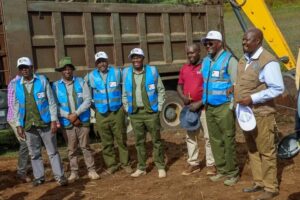
The irrigation scheme forms the second phase of the Cheminya Dam Water Supply Project, a multi-agency initiative aimed at improving access to water for both domestic use and agricultural production.
The first phase of the project was undertaken by the North Rift Valley Water Works Development Agency (NRVWWDA), which rehabilitated the dam embankment, installed a solar-powered pumping system, constructed transmission pipelines, rehabilitated storage tanks and expanded the water distribution network. The completed works have already improved access to clean and reliable water for households and public institutions within the area.
With the water infrastructure now in place, the National Irrigation Authority has taken over the second phase to develop irrigation facilities that will enable farmers to utilise the stored water for commercial crop production.
Officials said the collaboration between the two agencies demonstrates the Government’s integrated approach to water resource management by combining domestic water supply and irrigation development to maximise the benefits of public investment.
The North Rift Valley Water Works Development Agency said the successful implementation of the first phase had laid a solid foundation for the irrigation programme, adding that continued collaboration with the National Irrigation Authority would ensure communities derive maximum value from the project.
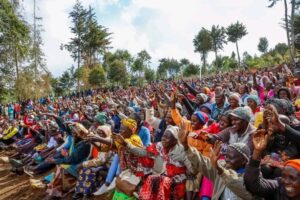
Residents welcomed the initiative, expressing optimism that reliable irrigation water will enable them to produce food throughout the year, improve household food security and increase their incomes through commercial farming. Many also believe the project will create employment opportunities for young people through expanded agricultural activities and agribusiness ventures.
As Kenya continues to invest in climate-smart agriculture, irrigation projects such as Cheminya are expected to play a critical role in reducing the country’s dependence on rainfall, increasing agricultural productivity and strengthening resilience against climate variability. Once completed, the project is expected to transform farming in Kaptarakwa Ward while improving the socio-economic wellbeing of more than 1000 beneficiary households.

Author: Moureen Koech
Moureen Koech is a passionate Digital Journalist, an adept Agribusiness Writer with a keen eye for news and an impactful story-teller,whose stories provide key value to Agripreneurs and stakeholders in the Agricultural sector