The government has unveiled a comprehensive plan to revive the troubled Kwale International Sugar Company Limited (KISCOL), raising fresh hopes for thousands of sugarcane farmers, workers and businesses that have been affected by years of inactivity at one of Kenya’s largest privately owned sugar mills.
The initiative is expected to restore sugar production in the Coast region, create employment opportunities and strengthen the country’s efforts to reduce reliance on imported sugar.
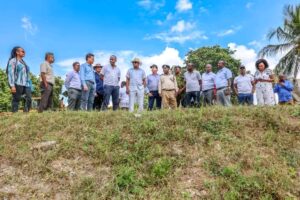
Agriculture and Livestock Development Cabinet Secretary Mutahi Kagwe announced the formation of a high-level multi-agency committee that will oversee the factory’s revival during an inspection tour of KISCOL’s milling plant, irrigation infrastructure, nucleus estate and outgrower farms in Kwale County. The committee, to be led by the Kenya Sugar Board, will bring together the national and county governments, investors, farmers, security agencies and local leaders to address the legal, operational and financial hurdles that have stalled the factory’s operations.
Addressing stakeholders during the visit, Kagwe said the government’s focus was on rebuilding livelihoods rather than engaging in politics, noting that restoring the factory would directly improve the lives of thousands of families who depend on the sugar value chain. “This visit is not about politics. It is about the lives and livelihoods of the people of Kwale. A factory is only important because of the people whose lives it transforms,” Kagwe said.
The CS described KISCOL as a strategic investment with enormous potential to transform the economy of the Coast region. He noted that the company already possesses modern milling facilities, an extensive irrigated nucleus estate and an established network of outgrower farmers, placing it in a strong position to resume commercial operations once the existing challenges are resolved.
According to the ministry, the newly established revival committee will develop a comprehensive roadmap covering factory operations, irrigation management, sugarcane development, financing, governance and long-term sustainability. The framework will also outline the responsibilities of every stakeholder while ensuring farmers remain at the centre of the recovery programme.
Kagwe acknowledged that the factory’s problems extend beyond financing. He cited prolonged land disputes, inadequate cane supply, vandalism of irrigation infrastructure, delayed payments to farmers and insecurity as some of the major issues that must be addressed before the mill can return to full production.
As part of the immediate interventions, the government announced plans to clear KSh66 million in outstanding payments owed to sugarcane farmers. The settlement is expected to restore confidence among growers who abandoned cane farming after years of uncertainty and delayed payments, while encouraging fresh investment in sugarcane production across Kwale and neighbouring counties.
The Cabinet Secretary also appealed to local communities to protect sugarcane farms, irrigation canals and other critical infrastructure, warning that acts of vandalism and deliberate burning of cane fields continue to undermine recovery efforts and deny farmers their livelihoods.
Land ownership remains another critical issue in the revival process. Kagwe urged the Kwale County Government to expedite the resettlement of approximately 15,000 squatters occupying nearly 7,000 acres belonging to the company, saying the dispute has significantly limited the factory’s ability to expand cane production and attract fresh investment.
Once operational, KISCOL is expected to support thousands of direct and indirect jobs across the sugar value chain. Besides providing a reliable market for sugarcane farmers, the factory is expected to create employment in transport, engineering, irrigation services, farm input supply, retail trade and manufacturing. The integrated complex also has the capacity to diversify into value-added products such as ethanol, molasses and electricity generated from bagasse, creating additional revenue streams while promoting industrial growth in the Coast region.

The revival initiative comes as the government continues implementing broader reforms aimed at revitalising Kenya’s sugar industry. In recent months, authorities have pursued the restructuring and leasing of several state-owned sugar factories to strategic investors, with the objective of improving efficiency, increasing domestic sugar production and ensuring farmers receive prompt payments for their cane. The reforms form part of the government’s long-term strategy to strengthen the competitiveness of the sugar sector and reduce dependence on imported sugar.
Industry data shows Kenya continues to face a sugar production deficit, with local output falling short of annual demand. Experts argue that increasing productivity through irrigation, expanding cane acreage and modernising processing factories are critical steps towards improving the country’s food security and reducing the sugar import bill.
The Kenya Sugar Board, which will spearhead the KISCOL revival programme, is expected to coordinate implementation of the recovery strategy alongside both levels of government and private investors. The board has pledged to promote sustainable sugar production, strengthen industry regulation and support investments that enhance productivity across the sugar value chain.
If successfully implemented, the revival of KISCOL is expected to position Kwale as a key sugar production hub in the Coast region, stimulate new private investment, create employment opportunities for young people and restore confidence among thousands of farmers who have waited years for a dependable market. For many families whose livelihoods have been tied to the factory, the government’s latest intervention represents renewed optimism that the once-promising sugar mill can once again become a major driver of agricultural and economic growth.

Author: Moureen Koech
Moureen Koech is a passionate Digital Journalist, an adept Agribusiness Writer with a keen eye for news and an impactful story-teller,whose stories provide key value to Agripreneurs and stakeholders in the Agricultural sector