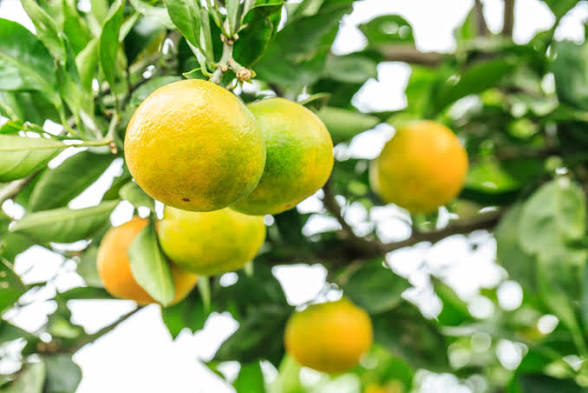
Citrus regreening is a phenomenon where citrus fruits that have already reached physiological maturity develop green patches or regain some of their green appearance. This can be confusing for farmers because the fruit may look unripe even when it is mature and ready for harvesting.
For citrus farmers, understanding regreening is important because fruit colour does not always provide a complete indication of maturity. Depending on the variety, climate and orchard management practices, mature oranges, tangerines, grapefruit and other citrus fruits may retain or regain green colour on the peel.
Citrus regreening is mainly associated with changes in chlorophyll and the pigments responsible for fruit colour. As citrus fruit matures, chlorophyll in the peel normally breaks down, allowing yellow, orange or red pigments to become more visible. However, under certain environmental and management conditions, chlorophyll degradation may slow down or green colour may become more noticeable again.
What Causes Citrus Regreening?
Warm Temperatures
Temperature is one of the major factors influencing citrus peel colour. During normal maturation, cooler temperatures, particularly cooler nights, encourage chlorophyll breakdown in the peel. This allows the characteristic orange, yellow or red colour of mature citrus fruit to develop.
When temperatures remain relatively warm, chlorophyll breakdown can be reduced. As a result, fruit may remain green or develop green areas even after reaching physiological maturity.
This is why citrus grown in warmer regions may sometimes remain green on the outside while having acceptable internal maturity. Farmers should therefore consider the local climate when evaluating fruit maturity and should not automatically assume that green fruit is immature.
Leaving fruit on the tree for too long
Overmaturity can also contribute to changes in citrus peel colour. When mature fruit is left on the tree beyond the appropriate harvesting period, its external appearance can change. In some cases, the strong orange colour may become less uniform and greenish areas may become noticeable.
Harvesting decisions should therefore be based on the maturity characteristics of the particular citrus variety and the requirements of the target market. Farmers who rely entirely on peel colour may delay harvesting unnecessarily or reject fruit that is already physiologically mature.
Water Stress and Irrigation
Water management also plays an important role in citrus production. Prolonged drought, irregular irrigation or sudden changes in soil moisture can place stress on citrus trees and affect fruit development and quality.
Maintaining relatively consistent soil moisture during important stages of fruit development can help support healthy tree growth and fruit development. However, farmers should avoid excessive irrigation and waterlogging because citrus roots require adequate oxygen for healthy growth.
Good orchard water management should therefore balance sufficient moisture with proper drainage, especially in soils that retain water for long periods.
Nutrient Imbalances
Nutrient availability can affect the overall health and productivity of citrus trees. Citrus requires a balanced supply of nutrients, including nitrogen, phosphorus, potassium and various micronutrients, to support foliage development, flowering and fruit growth.
Nutrient deficiencies or imbalances may contribute to weak tree growth and uneven fruit development. However, farmers should avoid applying fertilizers without first understanding the condition of their soil and trees.
Soil testing and, where appropriate, leaf analysis can help identify nutrient deficiencies and guide fertilizer applications. A balanced nutrition programme is generally more useful than applying large amounts of a single nutrient.
Light and Canopy Management
Light availability within the citrus canopy can also influence fruit colour development. Fruits growing on the outside of a tree may receive more sunlight than those growing deep inside a dense canopy. This can result in differences in colour between exposed and shaded fruit.
Proper pruning can help improve light penetration and airflow within the canopy. Farmers should focus on removing dead, diseased, damaged, crossing or poorly positioned branches while maintaining enough healthy foliage for photosynthesis and fruit development.
Excessive pruning should be avoided because citrus leaves are essential for producing the energy required by the tree.
How farmers can manage citrus regreening
There is no single treatment that can simply be applied to citrus fruit to permanently prevent regreening. Instead, farmers should focus on managing the orchard conditions that influence tree health, fruit development and peel colour.
Good practices include maintaining balanced tree nutrition, providing adequate and consistent soil moisture, ensuring proper drainage and managing the tree canopy carefully. Farmers should also understand the temperature conditions in their production area and monitor their orchards regularly.
Pest and disease management is equally important because unhealthy trees may have reduced productivity and poorer fruit development. Regular orchard inspections can help farmers identify problems early and take appropriate action.
Harvesting should also be timed according to the maturity stage required by the intended market. Farmers supplying fresh markets, processors or other commercial buyers should understand the quality requirements for their particular citrus variety.
Does green citrus fruit mean it is unripe?
A green citrus fruit is not necessarily immature. Peel colour is only one indicator of maturity, and its reliability can vary depending on the citrus variety and growing conditions.
Farmers should consider other characteristics, including fruit size, juice content, soluble solids, acidity and flavour. Internal maturity can sometimes be more important than external colour when determining whether fruit is ready for harvesting.
For commercial citrus production, farmers should therefore avoid judging maturity by colour alone. Understanding the characteristics of each variety and using appropriate maturity indicators can help reduce unnecessary harvesting delays and improve fruit quality.
Better citrus production starts with good orchard management
Successful citrus farming requires more than producing fruit with an attractive external colour. Farmers need to focus on healthy trees, suitable varieties, good planting material, balanced nutrition, proper water management and effective pest and disease control.
Whether growing oranges, tangerines, grapefruit, kumquats or other citrus varieties, farmers should select varieties that are suited to their local growing conditions and target market.
Most importantly, citrus regreening should not automatically be treated as evidence that fruit is unripe. Warm temperatures, water stress, nutrition, canopy conditions and the length of time fruit remains on the tree can all influence its external appearance.
By understanding these factors and assessing fruit maturity using several indicators, farmers can make better decisions about orchard management and harvesting while maintaining good citrus fruit quality.

Author: Moureen Koech
Moureen Koech is a passionate Digital Journalist, an adept Agribusiness Writer with a keen eye for news and an impactful story-teller,whose stories provide key value to Agripreneurs and stakeholders in the Agricultural sector