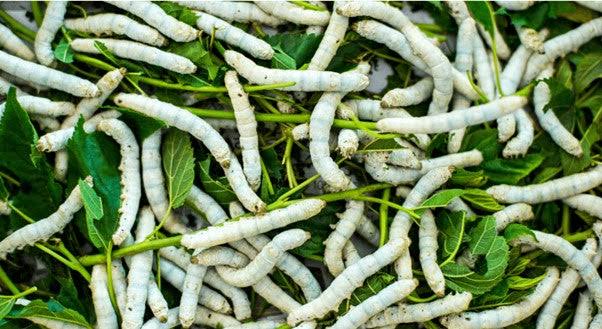
Silkworm farming, also known as sericulture, is one of the most rewarding agribusiness ventures for farmers seeking to diversify their income. The industry revolves around rearing silkworms to produce silk cocoons, which are processed into the luxurious natural fiber used in textiles worldwide. With growing demand for sustainable and biodegradable fabrics, silk remains a valuable commodity, creating profitable opportunities for farmers, entrepreneurs and cooperatives.
For countries seeking to expand agricultural exports and create employment, silkworm farming offers immense potential. It requires relatively small land sizes, generates regular income, and supports value addition through silk processing and textile manufacturing.
What is silkworm farming?
Silkworm farming is the practice of breeding and raising silkworms, primarily the species Bombyx mori, for silk production. The silkworm feeds almost exclusively on mulberry leaves and spins a protective cocoon made from a continuous silk filament before transforming into a moth.
Each cocoon contains a single silk thread that can measure between 600 and 1,500 meters in length. These delicate fibers are carefully unwound during processing to produce raw silk, which is later woven into fabrics, garments, scarves, upholstery, and various luxury products.
Sericulture involves several interconnected activities, including mulberry cultivation, silkworm rearing, cocoon harvesting, silk reeling and marketing.
Why silkworm farming is a profitable agribusiness
Silkworm farming has become increasingly attractive because of its multiple income streams and relatively low startup costs. Unlike many agricultural enterprises that rely on a single harvest each year, silkworms have a short production cycle, allowing farmers to rear several batches annually.
The enterprise also creates employment opportunities for family members through feeding, cleaning, cocoon harvesting, and processing. Farmers who integrate mulberry production with silkworm rearing reduce feed costs while maximizing land productivity.
Growing global demand for eco-friendly textiles has further strengthened silk markets. Consumers increasingly prefer natural fibers over synthetic materials, making silk one of the world’s most valuable agricultural products.
Choosing the right location
Successful silkworm farming begins with selecting a suitable environment. Silkworms thrive in moderate temperatures ranging between 23°C and 28°C with relative humidity levels of about 70 to 85 percent.
The farm should be located in an area with reliable water supply, good air circulation, and easy access to mulberry plantations. Clean surroundings are essential because silkworms are highly sensitive to contamination, dust, smoke, and chemical pollutants.
The rearing house should be well ventilated while protecting the worms from direct sunlight, rain, predators, and sudden temperature changes.
Growing mulberry for silkworm feed
Mulberry leaves are the primary source of food for silkworms. Establishing a healthy mulberry plantation is therefore one of the most important investments in sericulture.
Mulberry grows well in fertile, well-drained soils with adequate rainfall or irrigation. Farmers should prepare the land properly before planting and incorporate organic manure to improve soil fertility.
Regular pruning encourages fresh leaf production throughout the year. Proper weed control, irrigation and fertilizer application ensure continuous availability of nutritious leaves required during the silkworm rearing period.
Healthy leaves directly influence cocoon quality, silk yield and overall profitability.
Selecting healthy silkworm eggs
High-quality silkworm eggs form the foundation of successful production. Farmers should purchase disease-free eggs from certified breeding centers or reputable suppliers.
Healthy eggs hatch uniformly, resulting in consistent growth and easier management. Using poor-quality eggs increases mortality rates and reduces cocoon production.
Before introducing new batches into the rearing house, farmers should thoroughly disinfect all equipment and maintain strict hygiene standards to minimize disease outbreaks.
Feeding and managing silkworms
After hatching, silkworm larvae require fresh mulberry leaves several times each day. Young larvae prefer tender leaves, while older worms consume mature leaves in larger quantities.
Feeding schedules should remain consistent to promote healthy growth. Overcrowding should be avoided because it encourages disease transmission and reduces feeding efficiency.
The rearing trays must be cleaned regularly by removing leftover leaves, droppings, and dead larvae. Maintaining proper sanitation significantly improves survival rates.
As silkworms mature, they undergo several moulting stages before becoming ready to spin cocoons.
Cocoon formation and harvesting
When fully grown, silkworms stop feeding and begin searching for suitable structures where they can spin cocoons. Farmers provide mounting frames or branches that allow each worm enough space to construct its cocoon.
The spinning process usually lasts about three days. Once complete, the cocoons are left to harden before harvesting.
Harvesting should be done carefully to avoid damaging the delicate silk filament. High-quality cocoons are firm, compact, clean, and uniform in size.
Proper harvesting practices greatly influence the quality and market value of the final silk.
Common diseases and pest management
Silkworms are vulnerable to several diseases caused by bacteria, fungi, viruses, and parasites. Poor hygiene remains the leading cause of disease outbreaks in sericulture.
Preventive measures are far more effective than treatment. Farmers should disinfect rearing rooms before every production cycle, use disease-free eggs, maintain proper ventilation, and remove infected worms immediately.
Rodents, ants, birds, and lizards may also attack silkworms and should be controlled through appropriate farm management practices.
Strict biosecurity helps maintain healthy colonies and consistent production.
Marketing silk cocoons
Fresh cocoons are sold to silk reeling factories, textile manufacturers, cooperatives, and commercial silk processors. Farmers can also increase profits by engaging in value addition through silk reeling, spinning, weaving, or producing finished silk products.
Demand for natural silk remains strong in both domestic and international markets due to its use in luxury clothing, home décor, medical materials, handicrafts and high-end fashion.
Joining farmer cooperatives can improve bargaining power and provide access to better markets, training, and technical support.
Challenges facing silkworm farming
Although sericulture offers excellent returns, farmers may encounter challenges such as disease outbreaks, fluctuating market prices, limited access to quality eggs, inadequate technical knowledge and climate-related stresses affecting mulberry production.
Poor storage and handling of cocoons can also reduce silk quality and profitability.
Continuous farmer training, proper planning, and adoption of improved production technologies help overcome these challenges.
Tips for success in silkworm farming
Success in silkworm farming depends on maintaining healthy mulberry plantations, sourcing quality silkworm eggs, observing strict hygiene, providing adequate feeding and harvesting cocoons at the right stage. Farmers should also keep accurate production records, monitor environmental conditions closely and stay informed about improved sericulture practices.
Diversifying into silk processing and finished textile products can further increase profitability by capturing more value along the production chain.
Silkworm farming is an emerging agribusiness with significant potential for income generation, employment creation, and rural development. As global demand for natural silk continues to grow, farmers who adopt modern sericulture practices can build sustainable and profitable enterprises.
By combining quality mulberry cultivation, proper silkworm management, disease prevention and effective marketing, producers can consistently achieve high cocoon yields and access lucrative markets. Whether undertaken on a small family farm or as a commercial enterprise, silkworm farming remains one of the most promising agricultural opportunities for entrepreneurs looking to invest in high-value, environmentally sustainable production.

Author: Moureen Koech
Moureen Koech is a passionate Digital Journalist, an adept Agribusiness Writer with a keen eye for news and an impactful story-teller,whose stories provide key value to Agripreneurs and stakeholders in the Agricultural sector