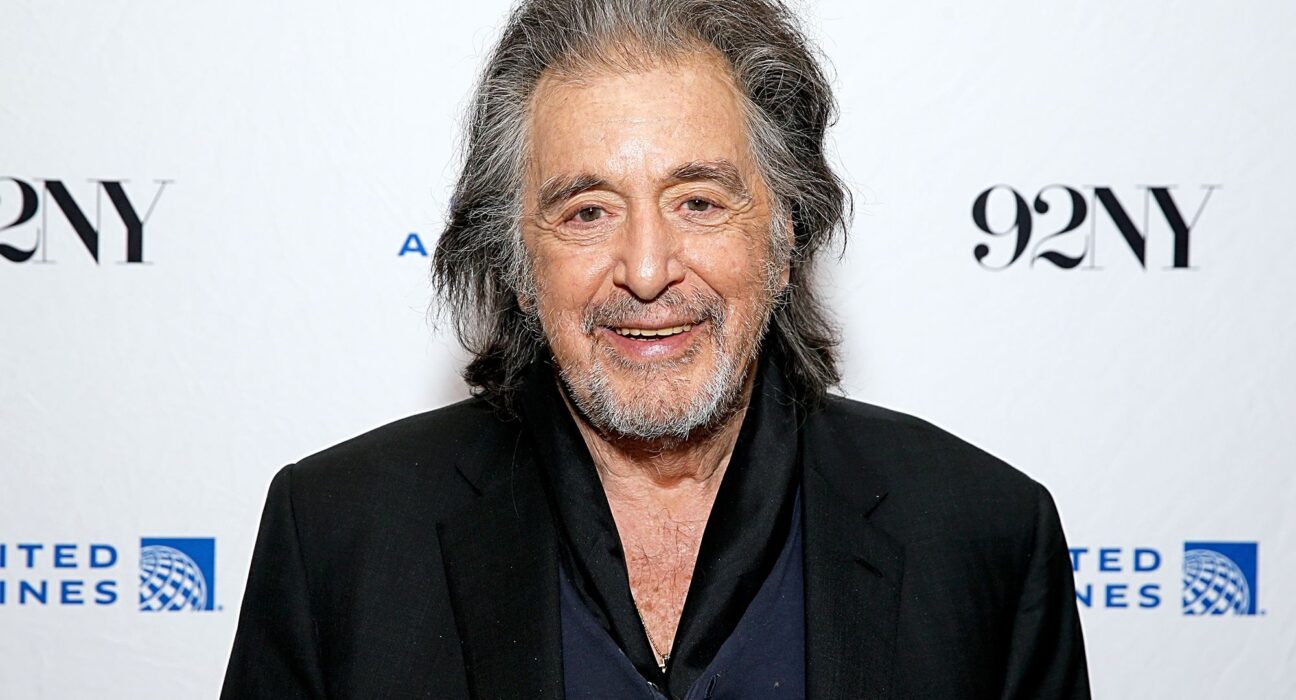
Al Pacino has an estimated net worth of $40 million. The American actor, director and producer has enjoyed a career spanning more than six decades. He is widely regarded as one of the greatest performers in film history, with memorable roles in The Godfather, Scarface, Serpico, Dog Day Afternoon, Heat and The Irishman.
Pacino has earned millions of dollars through acting, film production, television and theatre. He won the Academy Award for Best Actor for Scent of a Woman and has received nine Oscar nominations. He has also won two Tony Awards and two Primetime Emmy Awards.
Despite his success, Pacino’s financial journey has not been straightforward. In his 2024 memoir, Sonny Boy, he revealed that poor financial management, extravagant spending and fraud by his former financial adviser cost him much of his fortune. He eventually rebuilt his finances through continued acting work and major film and television projects.
- Al Pacino Net Worth: $40 Million
- Date of Birth: April 25, 1940
- Place of Birth: East Harlem, Manhattan, New York
- Nationality: American
- Career: actor, director and producer
Early Life
Alfredo James Pacino was born on April 25, 1940, in East Harlem, Manhattan, New York. He was the only child of Rose Gerardi and Salvatore Pacino.
His parents separated when he was two years old. He moved with his mother to the South Bronx and was largely raised by his maternal grandparents, Kate and James Gerardi.
His grandparents had immigrated to the United States from Corleone, Sicily. His father was also of Sicilian descent and later moved to California, where he worked as an insurance salesman before operating a restaurant.
Pacino grew up in a working-class environment. He developed an interest in acting at a young age and often imitated movie characters for his friends. His mother frequently took him to the cinema, helping nurture his interest in performance.
He attended New York’s High School of Performing Arts but eventually left school. He supported himself through various jobs, including working as a messenger, janitor, busboy and postal clerk.
Struggling Actor
Pacino spent several years pursuing acting while struggling financially. He sometimes slept in theatres or stayed with friends because he could not afford accommodation.
He studied at the Herbert Berghof Studio under acting teacher Charlie Laughton. In 1966, he was accepted into the Actors Studio, where he studied method acting under Lee Strasberg.
His stage career began gaining attention in the late 1960s. In 1968, he starred in Israel Horovitz’s The Indian Wants the Bronx, earning an Obie Award.
His performance attracted the attention of manager Martin Bregman, who signed him and helped guide his professional career.
Pacino made his Broadway debut in 1969 in Does a Tiger Wear a Necktie? His performance earned him the Tony Award for Best Featured Actor in a Play.
That same year, he made his film debut in Me, Natalie. In 1971, he secured a major role in The Panic in Needle Park, playing a heroin addict in a New York drama.
The Godfather
Pacino’s career changed dramatically when director Francis Ford Coppola cast him as Michael Corleone in The Godfather (1972).
Paramount executives initially questioned the decision because Pacino was relatively unknown. Coppola, however, believed he was the right actor for the role.
Pacino starred alongside Marlon Brando, James Caan, Robert Duvall and Diane Keaton. His portrayal of Michael Corleone’s transformation from a reluctant family outsider into a powerful Mafia leader became one of the most celebrated performances in cinema.
The film was a major commercial and critical success. Pacino received his first Academy Award nomination for Best Supporting Actor.
He returned as Michael Corleone in The Godfather Part II (1974). The sequel earned widespread acclaim and further established Pacino as one of Hollywood’s leading actors.
Extraordinary Success in the 1970s
Following The Godfather, Pacino delivered several acclaimed performances.
In 1973, he starred in Serpico, portraying real-life New York police officer Frank Serpico. His performance earned him an Academy Award nomination for Best Actor.
He followed this with The Godfather Part II, which earned him another Best Actor nomination.
In 1975, he starred in Dog Day Afternoon, playing Sonny Wortzik, a man involved in a bank robbery that turns into a hostage situation. The film earned him another Oscar nomination.
Pacino later appeared in Bobby Deerfield and …And Justice for All. The latter earned him his fifth Academy Award nomination.
By the end of the 1970s, he had established himself as one of the most respected actors of his generation.
Scarface and the 1980s
Pacino entered the 1980s with Cruising, a crime thriller directed by William Friedkin.
His most famous role of the decade came in Brian De Palma’s Scarface (1983). He played Tony Montana, a Cuban immigrant who rises to power in Miami’s drug trade.
Although the film initially received mixed reviews and attracted controversy over its violence and language, it later became a major cultural phenomenon.
Tony Montana became one of Pacino’s most recognisable characters. The film also gained a strong following in hip-hop culture and influenced popular music, fashion and entertainment.
Pacino followed Scarface with the historical drama Revolution in 1985. The film performed poorly, and he took a break from major film roles for several years.
He returned in 1989 with the crime thriller Sea of Love, which helped revive his film career.
Career Renaissance in the 1990s
Pacino enjoyed another successful period during the 1990s.
He played gangster Big Boy Caprice in Warren Beatty’s Dick Tracy (1990), earning an Academy Award nomination for Best Supporting Actor.
He later returned as Michael Corleone in The Godfather Part III (1990).
In 1992, he delivered two major performances. He played aggressive real estate salesman Ricky Roma in Glengarry Glen Ross and blind retired Army officer Frank Slade in Scent of a Woman.
Pacino received Academy Award nominations for both performances. He won Best Actor for Scent of a Woman, finally securing the award after several previous nominations.
He followed with Carlito’s Way in 1993, playing a former drug dealer attempting to leave his criminal past behind.
In 1995, he starred opposite Robert De Niro in Michael Mann’s Heat. Their performances became a major highlight of the film.
Other projects from the decade included City Hall, Donnie Brasco, The Devil’s Advocate, The Insider and Any Given Sunday.
Television and HBO Projects
Pacino expanded his career into television and continued earning substantial fees through major productions.
In 2003, he portrayed lawyer Roy Cohn in HBO’s adaptation of Angels in America. The performance earned him his first Primetime Emmy Award.
He later appeared in You Don’t Know Jack (2010), playing assisted-suicide advocate Jack Kevorkian. The role earned him another Emmy Award.
Other television films included Phil Spector and Paterno, in which he portrayed the former Penn State football coach Joe Paterno.
These projects strengthened his relationship with HBO and contributed to his earnings. Pacino reportedly received around $10 million for individual HBO films, including You Don’t Know Jack, Phil Spector and Paterno.
The Irishman
Pacino experienced another major career moment in 2019 when he appeared in Quentin Tarantino’s Once Upon a Time in Hollywood and Martin Scorsese’s The Irishman.
In The Irishman, he played Teamsters president Jimmy Hoffa opposite Robert De Niro and Joe Pesci. The performance earned him his ninth Academy Award nomination.
He later starred in Amazon’s television series Hunters, playing Meyer Offerman, a wealthy Nazi hunter.
His other projects included Ridley Scott’s House of Gucci and Modì: Three Days on the Wing of Madness, directed by Johnny Depp.
In 2025, Pacino appeared in the horror film The Ritual, portraying Father Theophilus Riesinger. He also starred in Billy Knight, playing an enigmatic filmmaker.
His continued involvement in film and television has helped him maintain an income after the financial problems revealed in his memoir.
Theatre Career and Awards
Although Pacino became internationally famous through film, theatre has remained an important part of his career.
He won his first Tony Award for Does a Tiger Wear a Necktie? in 1969. In 1977, he received his second Tony for his performance in The Basic Training of Pavlo Hummel.
His other stage credits include Richard III, American Buffalo, Chinese Coffee, Hughie, Salome and The Merchant of Venice.
Pacino has also won two Primetime Emmy Awards and one Academy Award. His competitive wins across the Oscars, Emmys and Tonys have earned him the unofficial Triple Crown of Acting.
Other honours include four Golden Globe Awards, the Cecil B. DeMille Award, the American Film Institute Life Achievement Award, a Kennedy Center Honor and the National Medal of Arts.
Directing Career
Pacino has also worked behind the camera as a director.
In 1996, he directed Looking for Richard, a documentary exploring William Shakespeare’s Richard III. The film combined rehearsals, interviews, performances and discussions about Shakespeare’s work.
He later directed Chinese Coffee and Wilde Salomé. The latter documented his efforts to understand and stage Oscar Wilde’s play Salome.
His directing work reflects his interest in theatre, literature and experimental filmmaking.
Al Pacino’s Movie Salaries
Pacino’s earnings increased significantly as he became one of Hollywood’s most sought-after actors.
He reportedly received just $35,000 for his role in the original The Godfather in 1972. His compensation rose to approximately $500,000 for The Godfather Part II, together with a reported 10% share of the film’s gross after it reached profitability.
His later salaries included approximately $1.5 million for Glengarry Glen Ross and $6 million for Carlito’s Way.
For The Godfather Part III, he reportedly received $8 million, together with additional payments for reshoots. He also earned a reported $11 million for S1m0ne.
Some of his major reported salaries include:
| Film or project | Reported salary |
| The Godfather | $35,000 |
| The Godfather Part II | $500,000 plus backend participation |
| Glengarry Glen Ross | $1.5 million |
| Carlito’s Way | $6 million |
| The Godfather Part III | $8 million |
| S1m0ne | $11 million |
| HBO television films | Up to $10 million each |
| The Irishman | $20 million |
These figures are reported estimates and may not reflect final compensation after taxes, representation fees and other expenses.
Financial Problems
Despite earning millions of dollars throughout his career, Pacino experienced a major financial collapse.
In his 2024 memoir, Sonny Boy, he explained that extravagant spending and poor financial management contributed to the loss of much of his fortune.
At one point, he reportedly had approximately $50 million but later discovered that he had virtually no available cash, despite still owning property.
Pacino described a lifestyle that cost as much as $400,000 per month. One of his most expensive arrangements involved a landscaper who reportedly received $400,000 annually to maintain a property he said he did not even live in.
His financial affairs were managed by Kenneth Starr, a financial adviser who handled money for several wealthy clients. Starr was later convicted of federal fraud offences and sentenced to 90 months in prison.
Pacino’s memoir described how he gradually discovered the extent of the financial damage. He wrote:
“I was broke. I had $50 million, and then I had nothing. I had property, but I didn’t have any money.”
He also explained that an actor’s reported salary does not represent the amount that eventually reaches their bank account. Agents, lawyers, publicists and taxes can significantly reduce the final payment.
The financial problems forced him to reconsider his career choices. He accepted some film roles mainly because he needed the income.
Among the projects he later discussed was the 2011 comedy Jack and Jill, in which he played an exaggerated version of himself. His appearance in the film included the memorable “Dunkaccino” sequence.
Rebuilding His Wealth
Pacino gradually rebuilt his finances by continuing to accept acting roles in films, television productions and theatre.
His reported $20 million salary for The Irishman was one of his major later-career paydays. His HBO projects also provided substantial income.
He has continued working in the entertainment industry, taking roles that keep him active in Hollywood while maintaining his reputation as a respected actor.
His memoir also gave audiences a clearer picture of the financial difficulties he faced and the lessons he learned from the experience.
Personal Life
Al Pacino has never married but has four children.
His first child, Julie Marie, was born in 1989 from his relationship with acting coach Jan Tarrant.
He later had twins, Anton James and Olivia Rose, with actress Beverly D’Angelo. The twins were born in 2001. Pacino and D’Angelo were together from 1996 until 2003.
He subsequently had a relationship with actress Lucila Polak.
In 2023, Pacino welcomed his fourth child, a son named Roman, with Noor Alfallah. He was 83 years old when the child was born.
Following their separation, Pacino and Alfallah reached a custody and financial support arrangement. Reports on the arrangement indicated that Pacino agreed to pay monthly child support and contribute towards the child’s education and medical expenses.
Pacino has also spoken openly about his earlier struggles with alcohol. He stopped drinking decades ago and has discussed how his personal experiences shaped his life and career.
Real Estate
Pacino has taken a different approach to property ownership compared with many wealthy Hollywood actors. He has often preferred renting his primary residences rather than owning a large collection of homes.
For many years, he lived in a Beverly Hills mansion that previously belonged to novelist Jackie Collins. The property and an adjacent home were sold by Collins’ estate for a combined $30 million in 2016. Pacino continued living there as a tenant.
He also owned property in Palisades, New York. He purchased a substantial property in 1979 for approximately $375,000 and expanded the compound in 2013 by acquiring a neighbouring three-acre property for $3.3 million.
His property interests have changed over the years, and the full value of his current real estate holdings has not been publicly established.

Author: Andrew Walyaula
Andrew Walyaula is a seasoned multimedia journalist. Email: [email protected]