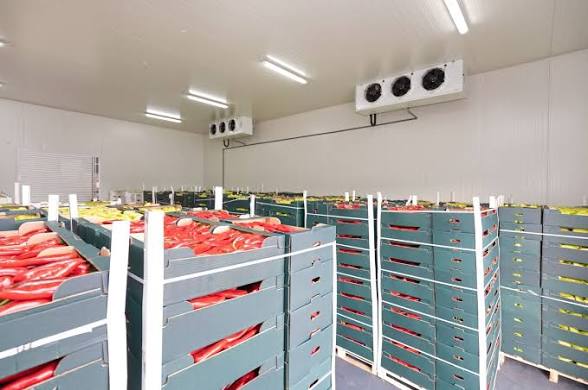
Cold storage plays an important role in modern agriculture by helping farmers, traders, processors and retailers preserve agricultural products after harvest. Fruits, vegetables, dairy products, meat, fish and other perishable goods can deteriorate quickly when exposed to high temperatures and poor storage conditions. Proper cold storage helps maintain product quality, extend shelf life and reduce post-harvest losses.
For agricultural producers, reducing losses after harvest is just as important as increasing production. A farmer may produce a high-quality crop, but poor storage can result in significant quantities being spoiled before reaching consumers. Investing in appropriate cold storage solutions can therefore improve efficiency and create better opportunities across the agricultural value chain.
Reduces post-harvest losses
One of the main benefits of cold storage in agriculture is reducing post-harvest losses. Perishable agricultural products continue to undergo biological and chemical changes after harvesting. High temperatures can accelerate these processes, causing products to lose their freshness and quality.
Cold storage slows down deterioration by maintaining suitable temperatures for different products. This allows fruits, vegetables, dairy products and other perishables to remain usable for longer periods.
Reducing post-harvest losses means that farmers can sell a larger proportion of what they produce instead of losing products to spoilage. This can improve farm income while also making more food available to consumers.
Extends the shelf life of produce
Cold storage helps extend the shelf life of many agricultural products. Different commodities require different storage temperatures and humidity levels, so storage facilities should be properly designed according to the products being handled.
For example, cooling can help maintain the freshness of vegetables and fruits after harvesting. Dairy products and meat also require controlled temperatures to remain safe and maintain their quality.
Longer shelf life gives farmers and traders more time to find suitable buyers. Instead of being forced to sell highly perishable products immediately after harvest, they can have greater flexibility in managing their produce.
Maintains product quality
Consumers expect agricultural products to maintain good appearance, freshness, taste and quality. Poor storage conditions can cause products to wilt, lose colour, develop unpleasant odours or deteriorate rapidly.
Cold storage helps maintain the quality of products between harvesting and consumption. This is particularly important for businesses supplying supermarkets, hotels, restaurants, processors and other customers that may have strict quality requirements.
Maintaining quality can also help agricultural businesses build stronger relationships with customers and develop a reliable reputation in the market.
Improves food safety
Temperature control is an important part of food safety, particularly for products such as meat, fish and dairy. Poor temperature management can create conditions that encourage the growth of harmful microorganisms.
Properly managed cold storage can help slow the growth of many microorganisms and preserve products under appropriate conditions. However, refrigeration does not replace good hygiene, proper handling, cleaning and food-safety practices.
Cold storage facilities should therefore be combined with appropriate sanitation and temperature monitoring to maintain food safety throughout the supply chain.
Gives farmers greater market flexibility
Without adequate storage, farmers dealing with highly perishable products may be under pressure to sell immediately after harvesting. When many farmers harvest at the same time, increased supply can put downward pressure on prices.
Cold storage can provide additional time to identify buyers and organise transportation. Farmers and traders may therefore have greater flexibility in determining when and where to sell their products.
This can be particularly valuable for agricultural enterprises supplying distant markets where transportation and distribution require additional time.
Supports Value Addition and Processing
Cold storage is also important for agricultural processing businesses. Processors often need to store raw materials before they are converted into products for consumers.
For example, a food-processing business may need to temporarily store fruits, vegetables, milk or meat before processing. Reliable temperature-controlled storage helps maintain the condition of these raw materials until they are ready for processing.
This supports the development of value-added agricultural products and can create additional business opportunities within the agricultural value chain.
Supports agricultural trade
Cold storage can contribute to domestic and international agricultural trade by helping maintain the quality of products during storage and distribution. Perishable products often need to pass through several stages before reaching the final consumer.
Cold rooms, refrigerated vehicles and other temperature-controlled systems can help maintain appropriate conditions throughout these stages.
For agricultural businesses targeting high-value markets, proper cold-chain management can be particularly important because buyers may have specific quality and handling requirements.
Creates agribusiness opportunities
The growing need for temperature-controlled storage creates opportunities for entrepreneurs. Businesses can provide cold-room facilities to farmers, traders, food processors, retailers and other agricultural enterprises.
Cold storage can also be combined with other services such as produce aggregation, packaging, transportation and distribution. This creates opportunities for businesses to serve multiple stages of the agricultural supply chain.
Small-scale cold-storage facilities can be established in areas where farmers produce significant quantities of perishable commodities, particularly where access to markets is limited by storage challenges.
Supports food security
Reducing food losses contributes to food security by ensuring that more of the food produced reaches consumers. When large quantities of agricultural products spoil after harvest, resources such as land, water, labour and farm inputs are wasted.
Cold storage helps preserve food for longer and can contribute to a more efficient food supply chain. It can also help make certain products available beyond their normal harvesting periods, depending on the commodity and storage technology used.
Cold storage is an important component of an efficient agricultural value chain. It helps reduce post-harvest losses, extend shelf life, maintain product quality and support food safety. It also gives farmers greater flexibility when marketing their produce and creates opportunities for businesses involved in processing, distribution and agricultural trade.
As agricultural production and demand for fresh food continue to grow, investment in appropriate cold-storage and cold-chain infrastructure can help create a more efficient and sustainable agricultural sector. Farmers and agribusiness entrepreneurs should consider storage requirements as part of their production and marketing plans, particularly when dealing with highly perishable products.

Author: Moureen Koech
Moureen Koech is a passionate Digital Journalist, an adept Agribusiness Writer with a keen eye for news and an impactful story-teller,whose stories provide key value to Agripreneurs and stakeholders in the Agricultural sector