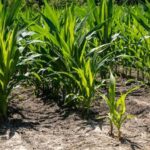
Agriculture and renewable energy are increasingly coming together as farmers look for innovative ways to improve productivity while adapting to climate change. One of the emerging approaches is agrivoltaics, a farming system that combines solar photovoltaic panels with agricultural production on the same piece of land.
Instead of using farmland exclusively for either crop production or solar energy generation, agrivoltaics allows the two activities to coexist. Solar panels are installed above or alongside crops, creating an integrated system that can produce electricity while agricultural activities continue underneath.
The approach is attracting growing interest because land is a limited resource, while demand for both food and clean energy continues to increase.
What is Agrivoltaics?
Agrivoltaics, also known as agrivoltaic farming or dual-use solar farming, involves combining agricultural production with solar energy generation.
In a typical system, solar panels are elevated above crops, allowing farmers to continue cultivating the land underneath. The panels may be positioned to provide partial shade while still allowing sufficient sunlight to reach crops.
The design can vary depending on the crop, climate, soil conditions and energy requirements. Some systems use fixed panels, while others use elevated or adjustable structures.
The goal is to make the same land productive for both agriculture and renewable energy.
How agrivoltaics can benefit farmers
One of the biggest potential benefits of agrivoltaics is more efficient land use. Farmers can produce crops while generating electricity from the same area.
The electricity generated can potentially be used for farm operations such as irrigation, refrigeration, lighting, water pumping and processing agricultural products. Depending on the system and local regulations, excess electricity may also be supplied to the grid.
This can create an additional source of value for agricultural land while supporting the transition towards renewable energy.
Can solar panels help crops?
Solar panels can change the conditions experienced by crops underneath them. In some environments, partial shade can reduce excessive heat and lower water loss from the soil.
This may be particularly useful in areas where high temperatures and water scarcity are major agricultural challenges. The panels can also provide some protection from extreme weather conditions such as excessive sunlight and, depending on their design, hail.
However, not every crop will benefit from shade. Some crops require high levels of direct sunlight, meaning agrivoltaic systems need to be carefully designed around the specific crop being grown.
Potential water savings
Water management is an important consideration for farmers, particularly in regions affected by drought and irregular rainfall.
Solar panels can provide shade over portions of the soil, potentially reducing evaporation. Cooler conditions underneath the panels may help retain soil moisture for longer in certain environments.
When combined with efficient irrigation systems such as drip irrigation, agrivoltaics may help farmers make better use of available water.
The actual benefits, however, depend on factors such as climate, panel arrangement, crop type and irrigation practices.
Supports climate-smart agriculture
Agrivoltaics can form part of climate-smart agriculture by combining food production with renewable energy.
Farmers face increasing challenges from changing rainfall patterns, higher temperatures and extreme weather events. Producing renewable electricity on agricultural land can help reduce dependence on fossil-fuel-based energy while providing an additional resource for farm operations.
Solar power can also support agricultural activities in areas where access to reliable electricity is limited.
Opportunities for livestock farmers
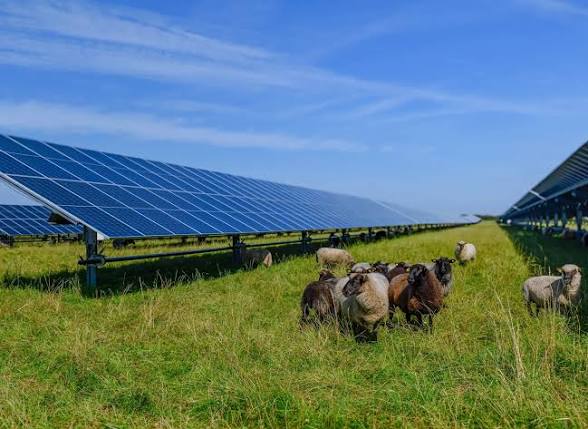
Agrivoltaics is not limited to crop production. Solar installations can also be combined with livestock activities in suitable locations.
For example, elevated solar panels can provide shade for livestock while allowing animals to graze underneath or around the installation, provided the system is designed with animal safety and farm operations in mind.
This creates another possibility for using land for both energy production and agriculture.
Challenges of Agrivoltaics
Despite its potential, agrivoltaics also has challenges. The initial cost of installing solar panels and supporting structures can be significant.
Farmers also need technical expertise to determine the appropriate panel height, spacing, orientation and layout. Poorly designed systems could interfere with farm machinery, reduce crop yields or make agricultural operations more difficult.
Maintenance is another consideration. Solar installations need to remain accessible for cleaning, repairs and inspection without disrupting agricultural activities.
Farmers should therefore conduct careful technical and financial assessments before investing in an agrivoltaic system.
Choosing suitable crops
Crop selection is an important part of successful agrivoltaic farming. Crops that can tolerate partial shade may be more suitable than those that require intense direct sunlight throughout the growing season.
Leafy vegetables, certain fruits, herbs and other shade-tolerant crops may be considered depending on local conditions. However, farmers should evaluate each crop individually rather than assuming that all plants will perform well under solar panels.
Small-scale trials can help farmers understand how a particular crop responds before investing in a larger system.
The future of agrivoltaics
As the demand for food and renewable energy continues to grow, agrivoltaics could become an increasingly important agricultural innovation.
Technological improvements may make solar structures more adaptable to different crops and farming systems. Better monitoring tools can also help farmers track sunlight, soil moisture, temperature, crop growth and energy production.
For countries such as Kenya, where solar energy potential is significant and farmers face increasing climate-related challenges, agrivoltaics could provide opportunities for combining agricultural production with clean energy.
Agrivoltaics offers an innovative way of combining agriculture and solar energy on the same land. By producing electricity while maintaining agricultural activities, the approach can improve land-use efficiency and potentially support water conservation, climate resilience and farm energy needs.
However, successful agrivoltaic farming requires careful planning. Crop selection, panel design, installation costs, irrigation, farm machinery and local conditions must all be considered.
As renewable energy and climate-smart agriculture continue to develop, agrivoltaics could provide farmers with a new way to produce food and energy while making more efficient use of valuable agricultural land.

Author: Moureen Koech
Moureen Koech is a passionate Digital Journalist, an adept Agribusiness Writer with a keen eye for news and an impactful story-teller,whose stories provide key value to Agripreneurs and stakeholders in the Agricultural sector