The African Union Commission (AUC) is considering institutionalising a continental agricultural research and innovation programme to safeguard its achievements following the end of donor funding, raising questions about the sustainability of agricultural development initiatives across Africa.
The proposed changes target the Continental Agricultural Research, Innovation and Extension Platform (CAADP-XP4), a seven-year initiative that officially closed on September 30, 2026, after receiving financial support from the European Union (EU) through its Development Smart Innovation through Research in Agriculture (DeSIRA) initiative. The programme was administered by the International Fund for Agricultural Development (IFAD).
The future of the initiative was discussed during a week-long closing meeting in Nairobi, where representatives of the African Union Commission and regional agricultural research organisations explored ways to maintain the partnerships, institutional capacity and agricultural innovations developed during its implementation.
AU proposes unified agricultural research framework
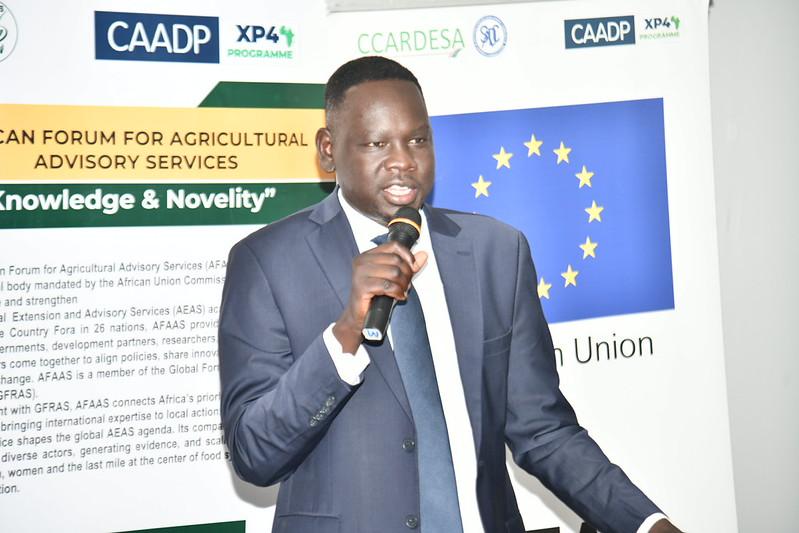
Speaking after the meeting, AUC senior official Mukulia Kennedy Ayason said the Commission was considering several options to ensure the programme’s achievements were not lost following the withdrawal of external funding.
One of the proposals is to seek formal recognition of the CAADP-XP4 consortium as an implementing partner of the African Union. The proposal could be presented during the next meeting of the AU Specialised Technical Committee in October 2027.
Ayason also proposed that the five participating organisations operate under a single memorandum of understanding with the African Union Commission instead of negotiating separate agreements.
He said a unified arrangement would improve coordination, minimise duplication of activities and strengthen the institutions’ ability to mobilise resources and establish partnerships.
The proposed framework would also give the African Union Commission responsibility for political leadership and policy coordination, while the regional institutions would continue providing technical expertise in agricultural research, innovation and extension services.
Ayason emphasised that agricultural research and extension activities should be incorporated into national agricultural investment and development plans.
He noted that although continental institutions could provide policy direction and coordination, the responsibility for implementing and financing agricultural development programmes ultimately rested with individual countries.
The AUC official also called for alternative financing mechanisms, including contributions from African Union member states and blended financing arrangements, to reduce reliance on external development partners.
He cautioned that limited AU resources across its 55 member states made it necessary for national governments to assume greater responsibility for financing agricultural research and innovation.
ASARECA calls for stronger regional cooperation
Association for Strengthening Agricultural Research in Eastern and Central Africa (ASARECA) Executive Director Dr Sylvester Dickson Baguma said the programme had generated important outcomes while demonstrating the value of collaboration among African agricultural institutions.
He challenged the participating organisations to move away from competing for institutional recognition and instead strengthen their collective contribution to agricultural development.
Baguma called for the organisations to demonstrate their value to governments and agricultural ministries to encourage greater domestic investment in research, innovation and extension services.
His remarks highlighted the importance of presenting agricultural research as a shared continental priority rather than allowing individual institutions to pursue isolated projects and compete for limited development resources.
The programme brought together five organisations: the Forum for Agricultural Research in Africa (FARA), African Forum for Agricultural Advisory Services (AFAAS), ASARECA, the Centre for Coordination of Agricultural Research and Development for Southern Africa (CCARDESA), and the West and Central African Council for Agricultural Research and Development (CORAF).
Research and extension services remain central to agricultural transformation
The CAADP-XP4 programme was designed to strengthen the capacity of African agricultural research and advisory institutions, improve collaboration and promote the development and sharing of climate-relevant agricultural technologies.
According to CCARDESA, the initiative focused on five major areas: institutional capacity development, multi-stakeholder partnerships, agricultural policy and investment, knowledge management, and programme coordination, monitoring and evaluation.
Its objectives included strengthening national agricultural knowledge and innovation systems, improving access to relevant scientific information and supporting the development of technologies that respond to climate change.
These interventions are particularly important as African countries seek to improve food and nutrition security, agricultural productivity and the resilience of food systems.
In a separate programme update published on November 12, 2026, CAADP-XP4 was reported to have reached more than 12,000 farmers with agricultural technologies and innovations. The initiative also facilitated the mobilisation of additional resources amounting to €4.08 million for agricultural research and technology development.
The figures demonstrate the programme’s reach beyond institutional partnerships, highlighting the importance of connecting scientific research with practical agricultural development.
CCARDESA urges partners to sustain programme achievements
Meanwhile, CCARDESA’s CAADP-XP4 project lead, Futhi Magagula, called on participating institutions to maintain the networks, knowledge-sharing platforms and technologies established during the programme.
She urged the partners to continue mobilising resources collectively, noting that the closure of the funded initiative should not mark the end of their cooperation.
Magagula stressed the importance of maintaining the spirit of continental collaboration to support future agricultural research and innovation programmes.
Her position reflects the broader concern that the closure of externally funded projects can interrupt institutional partnerships and slow the adoption of agricultural innovations if sustainable financing and implementation structures are not established.
Domestic financing key to sustaining agricultural innovation
The transition from donor-supported programmes to locally sustained agricultural research presents an important challenge for African governments.
Agricultural research requires long-term investment in scientific institutions, laboratories, research infrastructure, technology development, extension personnel and knowledge-sharing systems.
Without predictable financing, innovations developed through regional programmes may struggle to reach national agricultural systems and achieve wider adoption.
For countries such as Kenya, stronger collaboration between agricultural research institutions, universities, government agencies and extension service providers remains essential in translating research findings into improved farming practices.
The proposed institutionalisation of CAADP-XP4 could provide an opportunity to strengthen regional coordination while encouraging governments to allocate more resources towards agricultural science and innovation.
The October 2027 meeting of the AU Specialised Technical Committee could provide an important opportunity to consider the proposed recognition of the consortium as an implementing partner of the African Union.
Ultimately, the sustainability of the programme will depend on whether African governments and regional institutions can establish a coordinated financing and implementation framework capable of maintaining agricultural research and extension services beyond donor-funded project cycles.

Author: Moureen Koech
Moureen Koech is a passionate Digital Journalist, an adept Agribusiness Writer with a keen eye for news and an impactful story-teller,whose stories provide key value to Agripreneurs and stakeholders in the Agricultural sector