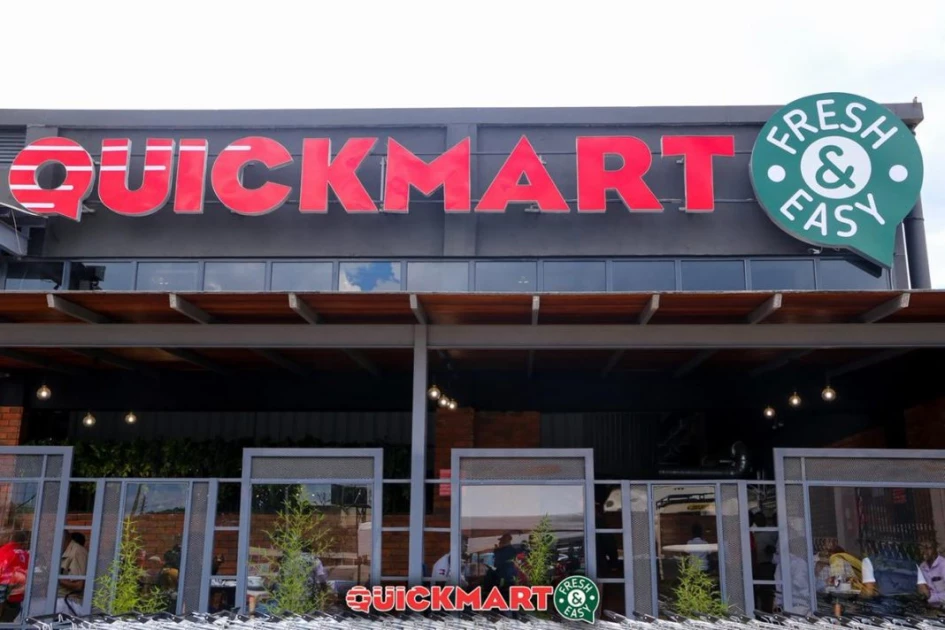
The listing demonstrates how businesses can use public investment to mobilise funds for expansion while giving investors an opportunity to own a stake in established companies. For Kenya’s agricultural cooperatives, which play a significant role in financing farmers, marketing produce and supporting value addition, the development raises important questions about alternative financing models and long-term business growth.
Quickmart’s successful share offer attracts KSh18.4 billion
Quickmart’s Initial Public Offering (IPO) attracted significant investor interest, raising KSh18.4 billion against a target of KSh15 billion. This represented a subscription rate of 122.7 per cent, exceeding the number of shares available by approximately KSh3.4 billion.
According to the IPO results released on November 6, 2026, the offer attracted 18,492 applications for approximately 2.45 billion shares, against the two billion shares offered at KSh7.50 each.
The offer was divided among retail investors, institutional investors, foreign investors and cornerstone investors. Foreign investors recorded the highest subscription rate at 298 per cent of their allocated shares, while Kenyan and East African retail investors recorded 132.6 per cent.
Quickmart began trading on the NSE on November 12, 2026, opening at KSh10 per share, above the IPO price of KSh7.50. The listing gave the retailer access to public capital markets and provided investors with an opportunity to trade shares in the supermarket chain.
However, an important distinction is that Quickmart’s IPO was structured as an offer for sale of existing shares, rather than a fresh issue of shares to raise expansion capital for the company. The shares were sold by Sokoni Retail Kenya Limited, the selling shareholder. This means the KSh15 billion target was not new capital injected directly into Quickmart’s operations
This distinction provides an important lesson for cooperatives: businesses must understand the difference between raising new capital for expansion and allowing existing shareholders to sell part of their ownership.
What agricultural cooperatives can learn from the listing
Agricultural cooperatives in Kenya have traditionally relied on member contributions, retained earnings, bank loans and development financing to support their activities.
While these sources remain important, they can limit the ability of cooperatives to finance large-scale investments, particularly when they want to establish processing facilities, acquire modern equipment, expand storage infrastructure or develop new markets.
The Quickmart listing demonstrates the importance of building businesses that can attract investors beyond their founders and existing shareholders.
For example, dairy cooperatives could explore more structured investment models to finance milk processing plants, cold storage facilities and distribution networks. Coffee and tea cooperatives could also use stronger corporate structures to attract long-term investment into processing, packaging and value addition.
Similarly, horticultural cooperatives could mobilise investment to establish aggregation centres, refrigerated transport systems and export-processing facilities.
Such investments could help farmers reduce post-harvest losses, improve product quality and access more profitable markets.
Capital markets could open new opportunities for Kenya’s cooperative sector
The possibility of bringing cooperatives closer to capital markets is already being explored in Kenya.
In July 2026, The EastAfrican reported that the NSE was working with stakeholders in the cooperative sector to develop infrastructure and guiding principles that could facilitate the listing of SACCO shares.
The discussions involve the government, Capital Markets Authority (CMA), Sacco Societies Regulatory Authority (SASRA), cooperative sector representatives and the NSE.
According to the report, Kenya had 7.39 million SACCO members in 2024, up from 3.08 million in 2014. This represents a substantial pool of potential investors who could participate in capital markets if appropriate structures are established.
However, SACCOs face legal and regulatory challenges that must be addressed before their shares can be freely traded on the NSE. SACCOs are registered under cooperative legislation, while companies seeking to list on the exchange must meet requirements under company and capital markets laws.
This means that cooperatives cannot simply copy the Quickmart model without considering their ownership structures, membership obligations and regulatory requirements.
For agricultural cooperatives, the opportunity lies in exploring suitable investment structures that preserve member ownership while allowing access to additional financing.
Strong governance is essential for attracting investors
One of the important lessons from Quickmart’s listing is the role of transparency, accountability and investor confidence in attracting capital.
Investors need reliable information before committing money to a business. They want to understand its financial performance, leadership structure, growth strategy, risks and ability to generate returns.
Agricultural cooperatives seeking to attract investment must therefore strengthen their financial management and corporate governance.
This includes maintaining accurate financial records, conducting independent audits, holding regular member meetings and ensuring that elected leaders are accountable for their decisions.
Cooperatives should also develop clear business plans showing how additional funds will be used and how investments will benefit members.
For instance, a dairy cooperative seeking financing for a milk processing plant should demonstrate its existing milk supply capacity, market demand, projected processing costs and expected revenue.
Such information can help financial institutions and potential investors assess the viability of the proposed investment.
Quickmart’s growth ambitions also illustrate the importance of having a clear expansion strategy. Following its listing, the supermarket chain announced plans to increase its outlets from 72 to 125 by 2030.
Investment opportunities for farmers and cooperative members
The growing connection between capital markets and the cooperative sector could also create opportunities for farmers to diversify their investments.
Traditionally, many farmers invest their savings in land, livestock, farm inputs and agricultural equipment. While these remain important investments, access to regulated investment opportunities could provide additional ways to grow their wealth.
Through appropriate investment channels, cooperative members could gain exposure to businesses operating in retail, manufacturing, food processing and agricultural value chains.
However, investing in listed shares carries risks. Share prices can rise or fall depending on company performance, market conditions and investor demand. Members should therefore understand investment risks before committing their savings.
For cooperatives, financial literacy programmes could help members understand shares, bonds, dividends, investment returns and capital markets regulations.
This would enable farmers to make informed financial decisions while supporting the development of a stronger investment culture within the agricultural sector.
The way forward for agricultural cooperatives
For Kenya’s agricultural sector to benefit from opportunities in capital markets, policymakers and cooperative leaders need to address the structural challenges that limit access to investment financing.
There is a need to strengthen cooperation between the Ministry of Cooperatives and MSMEs Development, CMA, SASRA and the NSE to develop financing frameworks that accommodate the unique ownership structures of cooperatives.
The development of appropriate investment products could help well-established agricultural cooperatives attract long-term financing without compromising the interests of their members.
Cooperatives should also consider professionalising their management, improving financial reporting and separating governance responsibilities from daily business operations.
Importantly, access to public investment should be guided by strong safeguards to protect farmers’ contributions and ensure that investment decisions deliver measurable benefits.
Quickmart’s successful NSE debut is therefore more than a milestone for Kenya’s retail industry. It offers a practical example of how an established business can attract public and institutional investor interest through the capital markets.
For agricultural cooperatives, the bigger lesson is that sustainable growth requires more than increasing membership and collecting contributions. It also requires building commercially viable institutions, strengthening governance and exploring innovative ways of financing expansion.
As Kenya continues to explore opportunities to connect cooperatives with capital markets, agricultural businesses could gain access to financing models that support value addition, improve market access and strengthen farmers’ incomes.

Author: Moureen Koech
Moureen Koech is a passionate Digital Journalist, an adept Agribusiness Writer with a keen eye for news and an impactful story-teller,whose stories provide key value to Agripreneurs and stakeholders in the Agricultural sector