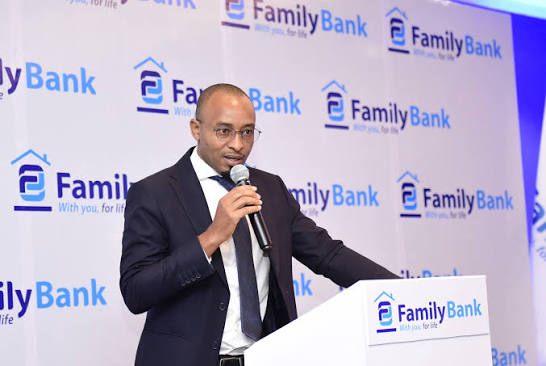
Family Bank Group’s profit after tax increased by 69 percent to Sh6.07 billion in the nine months ended September 2026, up from Sh3.60 billion recorded during a similar period last year, driven by higher interest income and growth in lending.
The lender’s unaudited financial results show that profit before tax rose by 62 percent to Sh7.26 billion from Sh4.50 billion, reflecting improved income generation during the period.
Total operating income increased by 26 percent to Sh18.64 billion from Sh14.74 billion, largely supported by a 37 percent growth in net interest income, which reached Sh15.02 billion.
Interest income rose to Sh22.03 billion from Sh17.72 billion, supported by increased earnings from loans and advances as well as investments in government securities.
Income from loans and advances stood at Sh13.14 billion, while interest earned from government securities amounted to Sh8.48 billion.
However, the bank recorded a slight decline in non-interest income, which includes fees, commissions and foreign exchange earnings. The income dropped to Sh3.62 billion from Sh3.79 billion recorded in September 2025.
Operating expenses increased by 11 percent to Sh11.39 billion from Sh10.24 billion, while loan loss provisions rose by 27 percent to Sh1.73 billion from Sh1.36 billion.
The higher provisions came amid an increase in the bank’s non-performing loans, pointing to growing pressure on its loan portfolio.
Gross non-performing loans increased to Sh18.93 billion from Sh15.60 billion a year earlier. Net non-performing loans also rose to Sh5.93 billion from Sh3.32 billion over the same period.
Despite the increase in bad loans, Family Bank recorded growth in its balance sheet, with total assets rising by 22 percent to Sh247.54 billion from Sh202.59 billion.
Customer loans and advances increased by 14 percent to Sh118.20 billion, while customer deposits grew by 24 percent to Sh182.35 billion from Sh146.84 billion.
The growth in deposits provided the lender with additional funding to support its lending activities.
Family Bank said it disbursed more than Sh91 billion to the private sector during the nine-month period, with over 70 percent of the funds directed towards micro, small and medium enterprises (MSMEs) and consumer banking.
Shareholders’ funds increased by 29 percent to Sh36.43 billion, reflecting an improvement in the bank’s capital position.
The lender also maintained a liquidity ratio of 61.6 percent, significantly above the statutory minimum requirement of 20 percent.
Its total capital to risk-weighted assets stood at 18 percent against the regulatory minimum of 14.5 percent, indicating that the bank remained above the required capital threshold.
Commenting on the performance, Family Bank Chief Executive Officer Nancy Njau said the results reflected the lender’s strategy and continued customer confidence.
“These results reflect the strength and clarity of our strategy as well as the confidence our customers continue to place in us. Following our successful listing on the Nairobi Securities Exchange, we entered an important new chapter in the Bank’s growth journey, underpinned by a stronger commitment to transparency, accountability and long-term value creation for our shareholders,” Njau said.
She added that the bank would continue investing in its workforce, technology and distribution network to strengthen service delivery and expand its financial solutions.
“As we continue investing in our people, technology and distribution network, our focus remains on delivering innovative financial solutions and exceptional service across the Retail, MSME and Commercial segments, while building a resilient and sustainable Bank,” she said.
The latest results cover the period following Family Bank’s listing on the Nairobi Securities Exchange (NSE), marking its transition into a publicly traded lender.
The listing placed the bank under increased public disclosure and accountability requirements as it seeks to expand its operations and deliver long-term value to shareholders.

Author: Andrew Walyaula
Andrew Walyaula is a seasoned multimedia journalist. Email: [email protected]