Few agricultural projects in Kenya have carried as much promise or as much disappointment, as Galana-Kulalu. Launched with the dream of ending food shortages, it spent years stuck in delays and controversy. Now private money is flowing in and a new commercial farming push is giving the scheme a second chance.
A troubled beginning
The Galana-Kulalu Food Security Project was launched in 2014 to reclaim one million acres of idle land and turn it into a breadbasket for Kenya. The early years did not go to plan. Bureaucratic delays, funding challenges and poor management left large parts of the project incomplete. The project stalled in 2019 after the government terminated its contractor, and it has been marred by controversy over alleged misappropriation of funds.
The scale of the ambition made the failure more painful. The scheme sits on about 1.7 million acres between the Galana and Tana rivers and the State initially said irrigating 1.2 million acres would end food shortages.
The shift to Public-Private Partnership
Officials eventually concluded that the state could not carry the project alone. The National Irrigation Authority said it lacked the financial ability to move the project to the next phase, so it would take a supervisory role while private investors develop the scheme. In January 2023 the project was revived under a PPP model that brought private investors in alongside government. Agri-tech firm Twiga Foods was among the first to start maize farming there under a 20,000-acre plan.
The Sh13 Billion expansion
The latest chapter is Selu Africa Limited. The company plans to invest Sh13 billion over three years to expand maize production, after recording yields of up to 35 bags per acre using irrigation and precision farming. It operates a 20,000-acre parcel in Kilifi County and grew its cultivated land from 500 acres in 2025 to 2,000 acres this year. It is targeting yields above nine tonnes per hectare as it scales up.
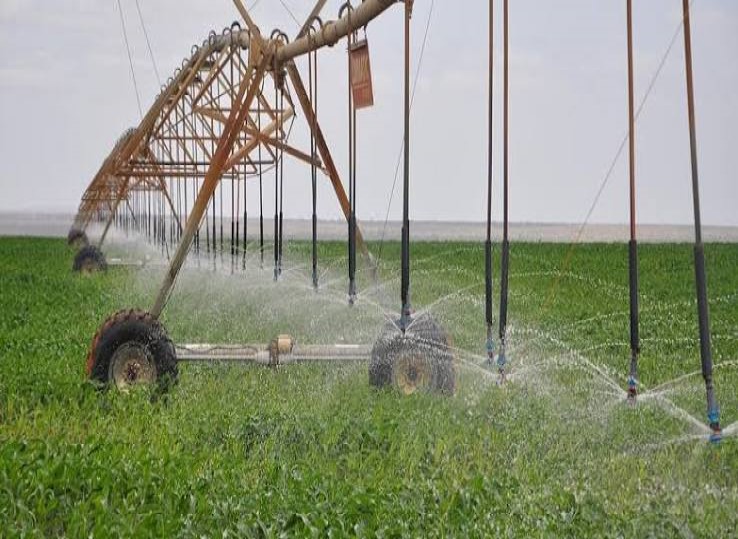
The farm leans heavily on technology. It uses irrigation sprinklers, agricultural drones, renewable energy and data collection to guide crop production and input use. It works with agricultural companies including AGCO, Campo and Bayer, while LEAF Africa supports research.
Why Equity Bank’s role matters
Commercial farming at this scale needs patient, large-scale credit, and that is where Equity Bank comes in. The bank says it is financing commercial farming as part of efforts to raise food production and reduce reliance on imports and it wants agriculture to make up 30 percent of its loan book. Its financing also covers businesses linked to farming, such as input suppliers, transporters and produce traders.
The bank’s argument is simple. Kenya spends hundreds of billions of shillings each year importing food, and Equity’s managing director calls that gap an opportunity. For lenders, a farm with measurable yields and modern data is easier to finance than the traditional smallholder plot with no records.
Infrastructure still matters
Private investors cannot do everything. Government still has to supply the basics, and progress there has been uneven. A Sh2.9 billion electrification project is about 40 percent complete and is meant to cut investors’ mechanisation costs, though it has been significantly delayed and its contractor warned that no further extensions would be granted. The government says it has identified investors to open up at least 100,000 acres on the Tana River side.
What it means for Agribusiness
Large farms create work well beyond the fields. The expansion is expected to raise demand for workers in farm operations, machinery, agronomy, transport and processing and some local workers have already gained experience in irrigation, pest control and fertiliser application.
For entrepreneurs, the openings are clear:
- Services: equipment hire, drone operation, spraying and farm repairs.
- Logistics: transport, storage and aggregation of grain.
- Processing: milling and packaging closer to the source.
- Inputs and training: supply of seed and fertiliser, and skills for local youth.
Risks to keep in mind
The revival is encouraging, but a few cautions are worth stating. Early yield figures come from one operator on a fraction of the land, so the results still need to hold at larger scale. Maize is exposed to weather, price swings and cheap imports. Delays in power and roads can push costs up. And the project’s history is a reminder that transparency and accountability matter as much as capital. Government planners have said the focus must move from outputs to outcomes.
Galana-Kulalu shows what happens when ambition outruns delivery and what might happen when private capital, technology and government infrastructure finally line up. If Selu’s yields hold and the roads and power arrive on time, the scheme could become a real engine for maize production and rural jobs. If not, it will join the list of promises Kenya has heard before. For farmers, investors and agribusiness owners, it is a project worth watching closely.

Author: Moureen Koech
Moureen Koech is a passionate Digital Journalist, an adept Agribusiness Writer with a keen eye for news and an impactful story-teller,whose stories provide key value to Agripreneurs and stakeholders in the Agricultural sector