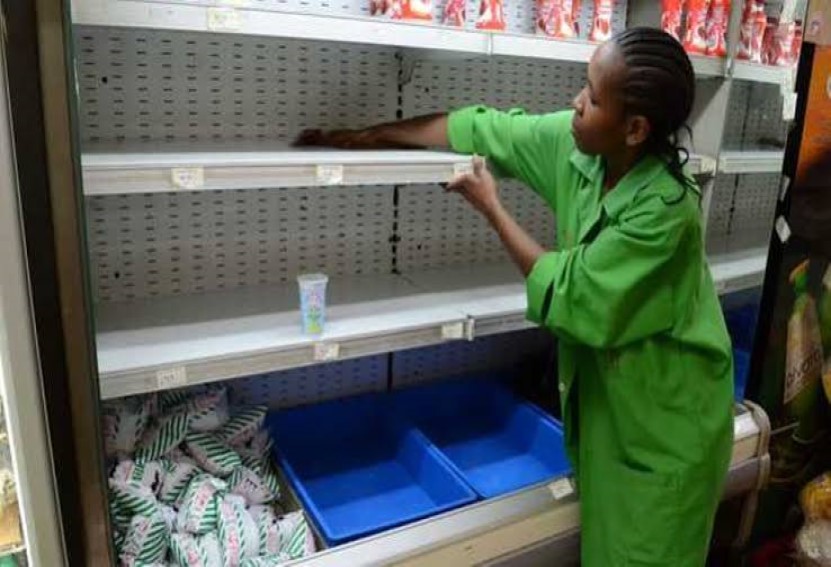
Milk is getting harder to find in parts of Kenya and the cause starts in the paddock, not the shop. A prolonged dry spell has thinned pasture, raised feed costs and cut the amount of milk reaching processors. For farmers, cooperatives and agribusiness owners, it is a warning and an opportunity at the same time
Why is there a milk shortage in Kenya
The main driver is dry weather. Agriculture CS Mutahi Kagwe said the shortage is largely linked to prolonged dry conditions that have reduced pasture, fodder and water, affecting animal productivity and the milk delivered to processors. When cows eat and drink less, they give less milk, and the effect travels quickly down the supply chain.
The pressure is widespread. Shrinking pasture and water supplies are affecting pastoralists in arid and semi-arid areas as well as dairy farmers in the highlands, another key milk-producing region. It is not a problem confined to one county.
What farmers are experiencing on the ground
The numbers from the field are stark. A farmer in Bisil, Kajiado County, said her daily output fell from 120 litres to 50 litres, forcing her to buy hay and move some animals to neighbouring counties in search of grazing. Hay itself has become costly. She said a bale sells for 100 to 150 shillings yet cannot sustain a mature animal for a day.
Another farmer who supplies raw milk to hotels in the Nairobi area says he cannot meet orders even from customers willing to pay more, because the milk is simply not there.
How the shortage is affecting cooperatives, processors and prices
Cooperatives sit between farmers and processors, so they feel the drop first. A Kajiado County official said at least five major women-led dairy cooperatives reported a 50 percent fall in milk deliveries from members during the dry period.
Processors are affected too. Kagwe said monthly deliveries to formal processors averaged about 83.45 million litres in 2025, compared with 74.09 million litres in September. That has hit UHT milk, the long-life product that normally helps stabilise supply.
Shoppers are seeing the effects. In Nairobi, popular brands have become harder to find, some shops are charging up to 100 shillings for a 500ml packet that normally sells for 79 to 89 shillings, and new cheaper brands have appeared at around 65 shillings.
Are farmers earning more?
Partly. Kagwe said farmers are getting better prices as supplies tighten, with the average gross producer price rising to about 53.88 shillings per litre in July, from an average of 49.58 shillings in 2025. But a higher price per litre means little when output has halved and hay bills are climbing. The farmers who benefit most are those with enough feed to keep their cows producing.
What the government plans to do
Officials have outlined several steps. Planned measures include expanding fodder production and conservation, continuing a subsidised artificial insemination programme, distributing milk coolers to organised farmer groups, and restructuring New KCC. The government is also facilitating regional movement of milk within the East African Community and encouraging processors to collect more milk from farmers and cooperatives.
One idea is getting attention but offers no quick fix. President Ruto’s proposal to introduce Indian water buffaloes is at an early stage and Kagwe described it as a medium- to long-term opportunity rather than a response to the current shortage.
Practical ways dairy farmers can drought-proof their farms
Weather cannot be controlled, but feed planning can. These are common-sense steps farmers and extension officers often recommend:
- Conserve fodder in good seasons. Make hay or silage when pasture is plentiful and store it for the dry months.
- Grow drought-tolerant fodder. Napier grass, fodder sorghum and legumes such as lucerne can extend feed supply.
- Plan feed budgets early. Calculate how much each cow needs per day and buy or store feed before prices peak.
- Protect water source. Harvest rainwater and keep troughs clean so animals keep drinking.
- Cull unproductive animals. Fewer, better-fed cows often outperform a larger, hungry herd.
- Join a cooperative. Groups can share coolers, bulk-buy feed and negotiate better prices.
Business opportunities in the dairy crisis
Every shortage creates demand. Hay and silage production, fodder seed supply, baling services and feed storage are all areas where entrepreneurs can step in. Milk coolers and collection services are also in demand as cooperatives try to reduce spoilage. Anyone who can supply reliable feed during the dry months has a ready market.
Turning the milk shortage into a lesson for Kenyan dairy
Kenya’s dairy sector has grown steadily, but this season shows how exposed it is to dry weather. The long-term answer is not only more cows or new breeds, but better feed planning, stronger cooperatives and farms built to handle dry spells. Farmers who prepare now will be in a stronger position when the next drought comes.

Author: Moureen Koech
Moureen Koech is a passionate Digital Journalist, an adept Agribusiness Writer with a keen eye for news and an impactful story-teller,whose stories provide key value to Agripreneurs and stakeholders in the Agricultural sector