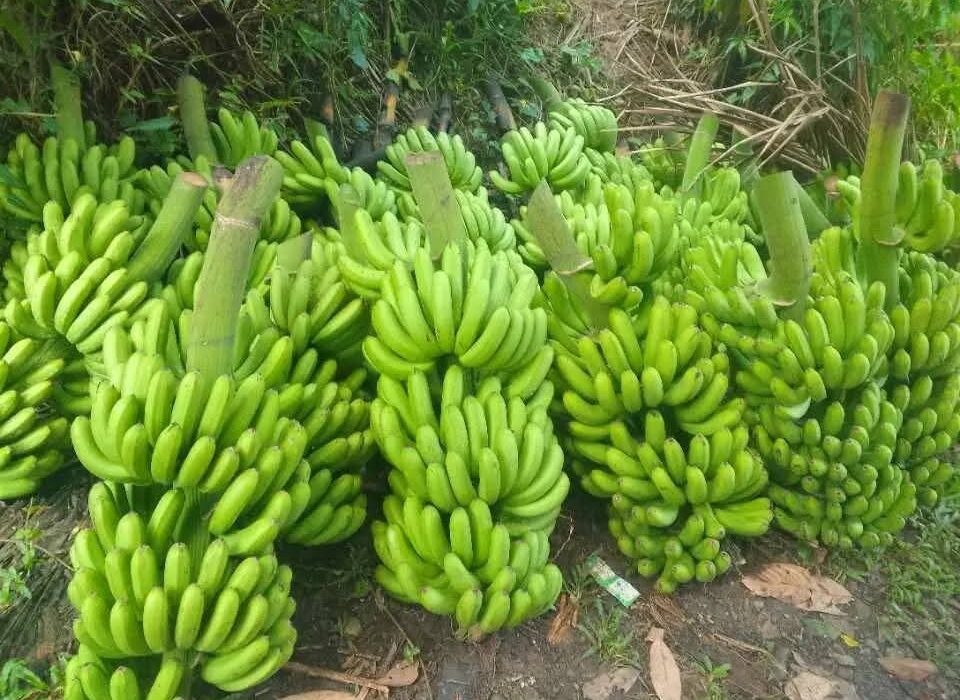
Banana farming remains one of the most profitable and reliable agribusiness ventures, especially in tropical regions. However, many farmers still struggle with issues such as small bunches, slow plant growth and high post-harvest losses. These challenges are often caused by poor farm practices rather than natural limitations.
Understanding the common mistakes in banana farming and how to correct them is the key to achieving bigger, healthier and more productive banana bunches.
Common mistakes that lead to poor banana bunches
Many farmers unknowingly adopt practices that reduce banana yields. One of the most frequent mistakes is planting bananas in shaded areas. Bananas require more than eight hours of direct sunlight every day to grow well. When they are planted under trees, near tall structures or in overcrowded fields, photosynthesis is reduced. This leads to weak plants, slow growth and poorly developed banana bunches. Adequate sunlight is essential for strong stems, large leaves, and proper fruit development.
Another major mistake farmers make is failing to manage suckers properly. A single banana plant produces many suckers, but allowing too many of them to grow divides the nutrients that the main plant needs to produce a big bunch. Without proper management, the mother plant becomes weak and yields drop significantly. Farmers should maintain only two to three healthy suckers per mat so that the plant has enough nutrients and space to produce large, quality bunches.
Poor nutrient management also contributes to weak banana production. Bananas are heavy feeders, meaning they need consistent access to essential nutrients throughout their growth cycle. Nitrogen is necessary for vegetative growth, potassium is responsible for fruit development and phosphorus supports strong root formation. When these nutrients are lacking, bananas grow slowly and produce small bunches. Applying compost, well-decomposed manure, and other organic materials helps enrich the soil, improve moisture retention and ensure the plant gets the nutrients it needs.
Disease mismanagement is another common challenge. Many farmers do not take fungal diseases like Panama wilt and Sigatoka seriously until significant damage has already occurred. These diseases spread quickly and can wipe out entire plantations if not controlled early. Infected plants often weaken, turn yellow or fail to produce healthy bunches. Removing infected plants promptly, practicing good field hygiene, and planting disease-resistant varieties can help reduce the spread of these destructive diseases.
How to boost banana yield and improve bunch quality
Improving banana yield starts with consistent and proper management. One of the most effective ways to boost production is to provide regular irrigation, especially during dry seasons. Bananas require constant moisture to remain healthy and any form of water stress slows growth and reduces bunch size. Maintaining even soil moisture through methods such as mulching or drip irrigation ensures bananas grow vigorously.
Organic fertilizers also play a big role in improving banana yields. Using organic materials such as banana peels, compost, or wood ash can greatly enhance soil fertility. Wood ash adds potassium, which is vital for fruit formation, while compost improves soil structure and supports microbial activity. When the soil is rich and well-nourished, banana plants develop stronger stems and produce larger bunches.
Proper harvesting techniques also determine the quality of the final product. Rough handling, cutting individual hands instead of the full bunch, or dropping the fruit during harvest leads to bruising and reduces market quality. Harvesting should be done carefully by cutting the entire bunch and lowering it gently to avoid damage. This ensures better fruit quality, longer shelf life and higher profits for the farmer.
Most farmers get poor banana bunches not because bananas are difficult to grow, but because of simple management mistakes that affect plant health and fruit development. Providing adequate sunlight, managing suckers correctly, enriching the soil with nutrients and controlling diseases all contribute to stronger plants and bigger yields. When combined with regular irrigation, organic fertilization and proper harvesting, these practices help farmers achieve healthy, high-quality banana bunches and maximize the profitability of their banana farms.

Author: Moureen Koech
Moureen Koech is a passionate Digital Journalist, an adept Agribusiness Writer with a keen eye for news and an impactful story-teller,whose stories provide key value to Agripreneurs and stakeholders in the Agricultural sector