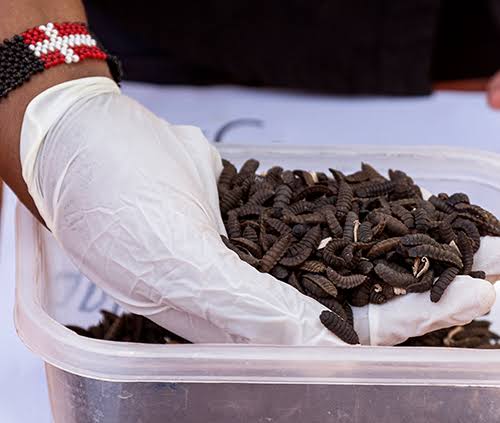
Feed is the biggest headache for livestock and fish farmers in Kenya and across Africa. Protein ingredients like fishmeal and soybean keep getting more expensive, squeezing profits and pushing many small farmers out of business. Black soldier fly (BSF) farming offers a practical fix. The larvae feed on organic waste and turn it into a protein-rich ingredient that poultry, fish and pigs eat readily. For farmers and young entrepreneurs, it is a low-cost way to cut feed bills and a business opportunity at the same time.
Why feed costs are hurting farmers
Small-scale poultry and fish farmers in Africa face rising feed prices, with feed such as fishmeal now accounting for nearly 70 to 80% of total production costs. Commercial feeds rely heavily on plant proteins like corn and soybean, and small-scale farmers often cannot afford them, which limits access and keeps livestock productivity low. When feed becomes too expensive, farmers feed less or buy poor-quality mixes and growth, egg production and income all suffer.
What is Black Soldier Fly Farming?
The black soldier fly (Hermetia illucens) is a harmless insect that does not bite, sting or spread disease. Adult females lay eggs near decaying organic matter, and the eggs hatch into larvae that eat voraciously. Within about two weeks, these larvae grow fat on waste such as vegetable scraps, fruit peels, brewery by-products and manure. They are then harvested and fed fresh to animals, or dried and ground into meal.
Farmers rear the larvae in simple boxes or trays, and the method is not labour intensive. Research in western Kenya found that an open rearing system is easy for local farmers to adopt and recommended it for smallholders.
Nutrition: A Strong Alternative to Fishmeal
BSF larvae are nutritious. Research by Kenyan institutions found protein content of about 45%, suitable for poultry, pigs, dairy cows and fish. The same study reported that BSF larvae had higher protein than locally available fishmeal, along with healthy fats, vitamins and minerals.
The results on farms are promising. A Kenyan study showed that fishmeal was replaced up to 100% with BSF larvae in pig feed, with a beneficial return on investment. In poultry, egg production rose by more than 50% in hens fed a diet where 20% of the fishmeal was replaced with BSF. Fish farmers also use the larvae and fingerlings do especially well on finely ground BSF powder.
A business opportunity, not just a feed source
BSF farming works on two levels. Farmers can rear larvae to feed their own birds and fish, cutting costs immediately. They can also sell larvae, dried meal and frass, the nutrient-rich waste left behind, which makes excellent organic fertilizer.
Real farmers are already doing this. A fish farmer in Mtwapa, Kilifi County, produces BSF larvae to supplement her fish feed, sells the surplus to other farmers and trains others on rearing. Most of her customers are poultry farmers who prefer live larvae. Her setup, around 30 rearing boxes, shows that a modest operation can serve a local market.
Larger projects are also growing. Research partners and companies across Kenya, Tanzania and Ethiopia are testing models that use BSF to convert biowaste into feed and lower costs for smallholder farmers.
Environmental benefits
BSF farming also tackles waste. Markets, hotels, restaurants and breweries generate large amounts of organic waste, and larvae turn it into useful products instead of letting it rot. An East African project found that BSF showed the greatest potential among insects, with no nuisance and converted waste into organic fertilizer and animal protein. This reduces pollution, odour and landfill pressure while creating value.
whether larvae can be produced profitably at scale for the African feed sector.
Farmers also need a steady supply of suitable waste, a warm climate or controlled conditions for breeding, and basic skills for managing the colony. Regulations on insect-based feed may also vary, so check current rules with the relevant authorities before selling commercially.
How to get started
Start small. Begin with a few rearing boxes and test locally available waste such as fruit peels, brewers’ grain or kitchen scraps. Train with an experienced farmer or research institution, and keep records of larvae output, feed saved and costs. Sell surplus to neighbouring poultry and fish farmers, then expand as demand grows. Joining a cooperative can also help with training, equipment and market access.
Black soldier fly farming turns waste into cheap, high-quality protein, tackling the biggest cost in livestock and fish production. For farmers, it means lower feed bills and healthier animals. For entrepreneurs, it opens a new business with real local demand. With simple methods, low start-up costs and growing research support, BSF farming is one of the smartest ways to build a more profitable and sustainable agribusiness.

Author: Moureen Koech
Moureen Koech is a passionate Digital Journalist, an adept Agribusiness Writer with a keen eye for news and an impactful story-teller,whose stories provide key value to Agripreneurs and stakeholders in the Agricultural sector