


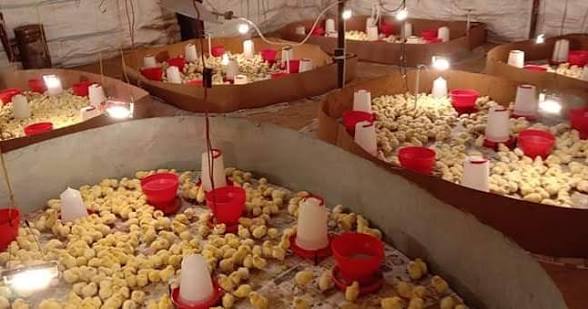
Poultry farming is rapidly evolving, and innovative housing systems are playing a major role in improving productivity, animal welfare and farm profitability. One design that is gaining attention among modern farmers is circular poultry housing, a simple yet powerful concept that is transforming how birds are raised, especially in free-range and semi-intensive systems.
The image described paints a vivid picture: a large, well-structured circular enclosure filled with active guinea fowls, managed in a clean, green environment. Beyond its visual appeal, this design reflects a deeper understanding of bird behavior, farm efficiency and sustainable agriculture.
What is Circular Poultry Housing?
Circular poultry housing is a system where birds are kept in a round enclosure instead of the traditional square or rectangular structures. Typically, the design includes:
- Wire mesh walls for security and ventilation
- Corrugated roofing around the edges for protection against sun and rain
- An open or partially open center to allow natural light and airflow
- Evenly spaced feeders and drinkers throughout the enclosure
This layout creates a balanced, airy, and highly functional environment that supports healthy bird growth.
Why Circular? The advantages are remarkable
1. Elimination of Corner Stress
One of the biggest challenges in conventional poultry housing is corner crowding. When birds are frightened by noise, predators or sudden movement, they instinctively rush into corners. This often leads to:
- Suffocation
- Trampling
- Injuries and death
Circular housing completely eliminates this risk because there are no corners. Birds can move freely in any direction, reducing panic behavior and significantly lowering mortality rates.
2. Superior Air Circulation
Ventilation is critical in poultry farming. Poor airflow leads to heat stress, high humidity, and the buildup of harmful gases like ammonia from droppings.
The circular design naturally enhances 360-degree airflow, allowing fresh air to move evenly across the entire enclosure. This helps to:
- Reduce heat buildup
- Control moisture levels
- Minimize respiratory diseases
- Improve overall bird comfort
Healthy air means healthier birds—and ultimately better productivity.
3. Even Feed and Water Distribution
In rectangular systems, dominant birds often take control of feeding areas, leaving weaker birds underfed. This results in uneven growth and poor flock performance.
In a circular setup, feeders and drinkers are distributed evenly across the space. This ensures:
- Equal access for all birds
- Reduced competition
- Uniform growth rates
- Improved feed efficiency
Every bird gets a fair chance to thrive.
Ease of management and monitoring
One of the most practical benefits of circular poultry housing is how easy it is to manage.
From a central position or even while walking along the perimeter a farmer can observe the entire flock without obstruction. This makes it easier to:
- Detect sick or weak birds early
- Monitor feeding behavior
- Identify injuries or stress signs
- Respond quickly to any issues
Early intervention is key in poultry farming, and this design gives farmers a major advantage.
Cost-effective and locally buildable
Circular poultry housing is not just effective, it’s also affordable. Farmers can construct it using locally available materials such as:
- Wooden poles
- Wire mesh
- Corrugated iron sheets
- Nails and binding wire
This makes it accessible for small-scale and rural farmers who may not have the resources for expensive commercial housing systems.
Additionally, the design can be scaled up or down depending on flock size, making it flexible for both beginners and experienced poultry keepers.
Ideal for sustainable and free-range systems
Circular housing fits perfectly into sustainable and semi-free-range farming models. Birds can be enclosed safely while still enjoying:
- Adequate space to move
- Fresh air and natural light
- Reduced stress levels
This leads to better meat and egg quality, which is increasingly important in today’s health-conscious markets.
The business advantage
Adopting circular poultry housing can directly improve farm profitability by:
- Reducing bird mortality
- Improving growth rates
- Lowering disease incidence
- Enhancing feed utilization
- Saving on construction costs
When birds are healthier and more productive, farmers earn more while spending less.
Circular poultry housing is more than just a structural design, it’s a smart farming innovation grounded in animal behavior and practical efficiency.
It proves that sometimes, the best solutions are the simplest ones. By eliminating corners, improving airflow, and ensuring equal access to resources, this system creates an environment where birds can truly thrive.
Healthier birds. Lower losses. Better management. Higher profits.
If you’re looking to upgrade your poultry farming system or start fresh with a cost-effective, high-impact design, circular poultry housing might just be the game-changer you’ve been waiting for.
Sometimes, the smartest solutions come without corners.

Author: Moureen Koech
Moureen Koech is a passionate Digital Journalist, an adept Agribusiness Writer with a keen eye for news and an impactful story-teller,whose stories provide key value to Agripreneurs and stakeholders in the Agricultural sector


