Dale Earnhardt had an estimated net worth of $70 million at the time of his death in 2001. The American professional stock car racing driver, team owner and businessman built his fortune through NASCAR winnings, sponsorship agreements, merchandise, business investments and ownership of racing teams.
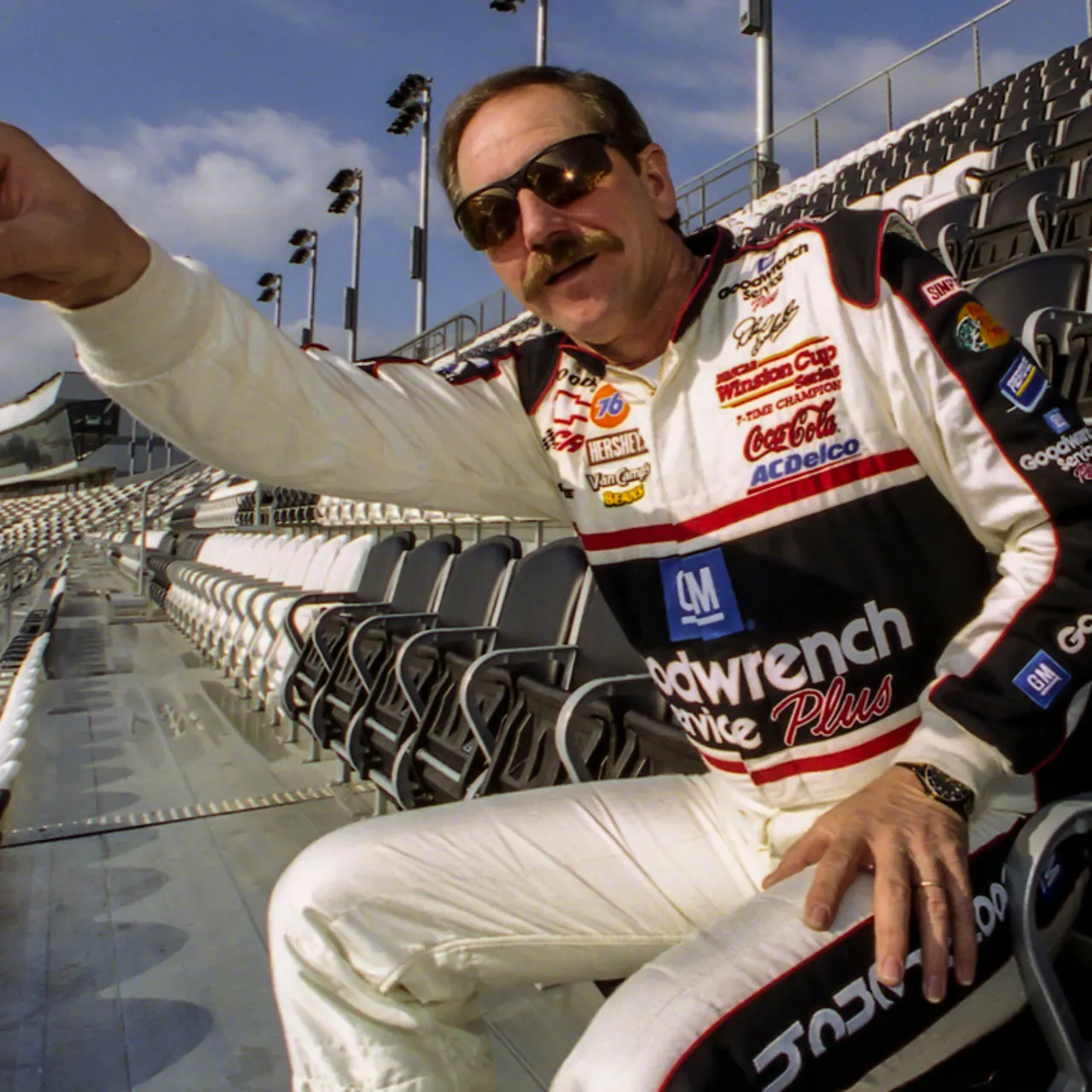
Known as “The Intimidator,” Earnhardt became one of the most successful drivers in NASCAR history. He won seven Winston Cup Series championships, tying Richard Petty’s record at the time, and recorded 76 victories in NASCAR’s premier division. He was particularly famous for driving the black No. 3 Chevrolet for Richard Childress Racing.
Earnhardt’s most memorable victory came in 1998, when he finally won the Daytona 500 after years of unsuccessful attempts. Beyond racing, he developed Dale Earnhardt Inc. (DEI), a motorsports and business operation that expanded his commercial interests through sponsorships, licensing and merchandise.
His career ended tragically on February 18, 2001, when he died following a crash on the final lap of the Daytona 500. He was 49. His influence on NASCAR continues through his racing achievements, business legacy and family.
- Dale Earnhardt Net Worth: $70 Million
- Date of Birth: April 29, 1951
- Place of Birth: Kannapolis, North Carolina
- Nationality: American
Early Life
Ralph Dale Earnhardt was born on April 29, 1951, in Kannapolis, North Carolina. He was the son of Martha and Ralph Earnhardt, a successful stock car driver who won NASCAR’s Sportsman championship in 1956.
Dale grew up in a working-class family surrounded by motorsports. He frequently accompanied his father to local racing events and developed an interest in automobiles at an early age.
At 12, he secretly entered one of his father’s race cars in a local event. His early interest in racing continued into his teenage years, despite his father’s concerns about the risks involved.
Earnhardt eventually left high school to pursue a career in motorsports. He worked different jobs to support himself while competing at local tracks and trying to secure opportunities in professional racing.
His father died of a heart attack in 1973. The loss was a major personal setback, but Earnhardt continued pursuing the career that had brought him into motorsports.
Early NASCAR Career
Earnhardt made his NASCAR Winston Cup Series debut in the 1975 World 600 at Charlotte Motor Speedway. Driving for Norman Negre, he finished 22nd.
He made occasional appearances over the next few years before securing a full-time ride with Rod Osterlund Racing in 1979.
His first full season was highly successful. Earnhardt won his first Cup Series race at Bristol Motor Speedway on April 1, 1979. He also recorded 11 top-five finishes and earned NASCAR’s Rookie of the Year award.
In 1980, he won five races and secured his first Winston Cup championship. The achievement made him the first driver to win Rookie of the Year and the championship in consecutive seasons.
Earnhardt’s career experienced some disruption in 1981 following ownership changes at Rod Osterlund Racing. He briefly drove for Richard Childress before joining Bud Moore Engineering.
In 1984, he returned to Richard Childress Racing. The partnership became one of the most successful relationships between a driver and team owner in NASCAR history.
Seven NASCAR Cup Series Championships
Earnhardt established himself as one of NASCAR’s dominant drivers during the 1980s and 1990s.
He won his second Winston Cup championship in 1986 after recording five victories. The following year, he won 11 races and secured his third title.
His aggressive driving style earned him the nickname “The Intimidator.” He was known for making bold passes, putting pressure on opponents and competing aggressively for position.
Earnhardt’s black No. 3 Chevrolet became one of the most recognizable cars in American motorsports. His success also helped strengthen the commercial value of his name and racing identity.
He won consecutive championships again in 1990 and 1991, bringing his total to five. After missing out on the title in 1992, he returned to championship form in 1993, winning six races.
In 1994, Earnhardt won four races and secured his seventh Winston Cup championship. He tied Richard Petty’s record for the most titles in NASCAR’s premier series.
He did not win another championship, but remained competitive. In 1995, he won five races, including the Brickyard 400 at Indianapolis Motor Speedway, and finished second in the championship standings behind Jeff Gordon.
Earnhardt ended his Cup Series career with 76 victories in 676 starts. His seven championships remain a major part of his legacy.
Dale Earnhardt’s Daytona 500 Victory
One of the most memorable moments in Earnhardt’s career came in February 1998, when he won the Daytona 500.
The race had eluded him for much of his career. He had made numerous attempts to win NASCAR’s most prestigious event, including several close finishes.
On February 15, 1998, Earnhardt finally secured the victory after 20 attempts. Driving the No. 3 Chevrolet for Richard Childress Racing, he led 107 laps and crossed the finish line first.
The victory was widely celebrated by fans, competitors and members of the NASCAR community. Drivers and crew members from other teams congratulated him after the race.
The Daytona 500 win became one of the defining achievements of his career and added to the commercial appeal of his racing brand.
Dale Earnhardt Inc.
Earnhardt’s fortune was not built entirely on driving. He also developed business interests through Dale Earnhardt Inc., the company he founded to manage his racing and related commercial activities.
DEI expanded into NASCAR team ownership and became involved in sponsorship arrangements, licensing and merchandise. The company fielded teams in different NASCAR divisions and helped develop drivers, including Earnhardt’s son, Dale Earnhardt Jr.
The business also benefited from the popularity of Earnhardt’s name and No. 3 racing identity. Fans purchased branded clothing, caps, collectibles and other products associated with the driver.
Merchandising became an important part of NASCAR’s commercial growth, and Earnhardt was among the sport’s most recognizable personalities. His image and racing identity attracted sponsors and helped create a market for products bearing his name.
He also had interests outside racing, including a Chevrolet dealership, real estate and agricultural operations. His farming activities included raising Black Angus cattle and operating poultry facilities.
These ventures diversified his income and gave him business interests beyond the racetrack.
Race Winnings
Earnhardt earned more than $40 million in reported NASCAR race winnings during his career, according to the International Motorsports Hall of Fame.
His earnings also included sponsorship payments and commercial partnerships. Major companies sought to associate their brands with his popularity, competitive reputation and loyal fan base.
Forbes estimated that Earnhardt earned $26.5 million in 1999, placing him among the world’s highest-paid athletes at the time.
His commercial value was supported by his consistent performance, recognizable appearance and strong connection with NASCAR fans.
Unlike drivers who depended mainly on race winnings, Earnhardt had several sources of income. His ownership interests, merchandise business and sponsorship arrangements helped him build a substantial fortune.
Personal Life
Dale Earnhardt was married three times and had four children.
He married Latane Brown in 1968 when he was 17. They had a son, Kerry, born in 1969, before divorcing in 1970.
In 1971, Earnhardt married Brenda Gee, the daughter of NASCAR car builder Robert Gee. They had two children, Kelley and Dale Earnhardt Jr., before ending their marriage in 1974.
Earnhardt married Teresa Houston in November 1982. Their daughter, Taylor Nicole, was born in December 1988.
Teresa became involved in the business operations of Dale Earnhardt Inc. Following his death, she assumed control of the company and its commercial interests.
Dale Earnhardt Jr. followed his father’s path into professional racing. He became one of NASCAR’s most popular drivers, winning the Daytona 500 in 2004 and 2014. He also became a team owner, author and television commentator.
Real Estate
Earnhardt owned property in and around Mooresville, North Carolina, where he maintained a large rural estate.
The property reflected his interest in farming, hunting and outdoor activities. It included a residence, agricultural land, wooded areas, garages and workshops.
His agricultural operations included Black Angus cattle and poultry. These interests were part of his life away from the demands of professional racing.
After his death, Teresa retained control of the family’s principal property interests. One notable holding was a tract of approximately 399 acres in eastern Mooresville.
In 2024 and 2025, the property became the subject of a proposed industrial development known as Mooresville Technology Park. The plan involved developing a large data centre campus and attracted opposition from some local residents and members of the Earnhardt family.
In August 2025, the developer and Earnhardt Farms withdrew the rezoning application. The proposed data centre project did not proceed.
Palm Beach Gardens Property
Earnhardt and Teresa also owned waterfront property in Palm Beach Gardens, Florida.
The couple purchased the property in June 1997 for $615,000. It offered access to the Intracoastal Waterway and suited Earnhardt’s interest in boating and fishing.
A new residence was completed on the site in 2003, two years after his death. The property included a swimming pool and private boat dock.
Teresa later sold the home in May 2021 for $4 million to former NHL player Clarke MacArthur and his wife, Jessica.
Dale Earnhardt’s Yacht
Earnhardt was an enthusiastic boating fan and owned several vessels during his lifetime.
One of his best-known projects was a custom-built 100-foot Hatteras yacht named Sunday Money. The name came from a song he co-wrote with country music duo Brooks & Dunn.
Earnhardt was personally involved in the yacht’s design, including its layout, materials and interior features. He died shortly before construction was completed.
The vessel was delivered after his death and later sold by Teresa. In 2020, yacht brokers advertised it for approximately $4.2 million.
Dale Earnhardt’s Death
Earnhardt died on February 18, 2001, following a crash on the final lap of the Daytona 500 at Daytona International Speedway.
He was 49 years old. The accident happened while he was driving his black No. 3 Chevrolet. He was pronounced dead after suffering fatal head injuries.
His death shocked the motorsports community and led to renewed scrutiny of safety standards in stock car racing.
NASCAR subsequently introduced major safety measures, including mandatory head-and-neck restraint systems for drivers. The sport also expanded the use of energy-absorbing barriers and other safety improvements at racing facilities.
The accident became a turning point in NASCAR’s approach to driver protection and crash prevention.
Awards
Earnhardt’s achievements earned him recognition as one of the greatest drivers in motorsports history.
He was inducted into the Motorsports Hall of Fame of America in 2002 and the International Motorsports Hall of Fame in 2006. In 2010, he became part of the inaugural class of the NASCAR Hall of Fame.
His honours also include multiple Driver of the Year awards and recognition as one of NASCAR’s 50 Greatest Drivers.
Earnhardt’s influence extended beyond his seven championships and 76 race victories. His aggressive style, distinctive black No. 3 Chevrolet and strong connection with fans helped shape NASCAR’s identity.

Author: Andrew Walyaula
Andrew Walyaula is a seasoned multimedia journalist. Email: [email protected]