Agriculture is changing rapidly as farmers adopt new technologies to improve productivity, reduce costs and respond to labour shortages. Among the technologies attracting growing attention are farm robotics and automation. These technologies are helping farmers perform repetitive, time-consuming and physically demanding tasks more efficiently.
Farm robotics refers to the use of robots and intelligent machines to carry out agricultural activities with limited human intervention. Automation, meanwhile, involves using technology, sensors, software and machinery to perform tasks automatically. Together, farm robotics and automation are creating new opportunities for farmers to improve efficiency while making better use of available resources.
What is farm robotics?
Farm robotics involves machines designed to perform specific agricultural tasks. These may include planting seeds, removing weeds, harvesting crops, monitoring fields and feeding livestock. Some agricultural robots operate autonomously, while others are controlled or supervised by farmers.
For example, robotic weeders can identify weeds growing among crops and remove them without requiring workers to manually inspect entire fields. Harvesting robots can also be developed to identify ripe fruits and carefully pick them while reducing damage to crops.
The technology is particularly useful for repetitive tasks that require considerable time and labour. As artificial intelligence, computer vision and sensors improve, agricultural robots are becoming increasingly capable of making decisions based on what they detect in the field.
How automation is being used on farms
Automation is already being applied in different areas of agriculture. Automated irrigation systems can use soil moisture sensors and weather information to determine when crops need water. Instead of irrigating an entire field according to a fixed schedule, farmers can provide water based on actual crop and soil conditions.
Automated feeding systems are also becoming useful in livestock farming. These systems can deliver feed according to predetermined schedules and quantities, helping farmers maintain consistent feeding routines while reducing manual work.
Greenhouses can also benefit from automation. Temperature, humidity, ventilation and irrigation can be monitored using sensors and controlled automatically. This allows farmers to create more suitable growing conditions while reducing unnecessary use of water and other resources.
Benefits of farm robotics and automation
One of the major benefits of farm robotics is improved productivity. Robots can perform certain activities for long periods without becoming tired. This can help farmers complete time-sensitive operations such as planting, spraying or harvesting more efficiently.
Automation can also reduce labour requirements for repetitive tasks. Labour remains an important cost for many agricultural enterprises, particularly during planting and harvesting seasons. Using machines for selected activities can help farmers manage labour more efficiently.
Another important benefit is precision. Automated equipment can apply water, fertiliser or crop protection products more accurately than traditional methods. This can reduce waste and potentially lower production costs.
Robotics can also improve worker safety. Agricultural workers may sometimes be exposed to difficult working conditions, heavy machinery, chemicals or repetitive physical tasks. Automating some of these activities can reduce exposure to certain risks.
Artificial intelligence and smart farming
Artificial intelligence is playing an increasingly important role in farm automation. Cameras and sensors can collect information about crops, animals and soil, while AI-powered systems can analyse this information and identify patterns.
For example, computer vision technology can help distinguish healthy crops from plants affected by pests, diseases or nutrient deficiencies. This information can allow farmers to respond earlier instead of waiting until damage becomes widespread.
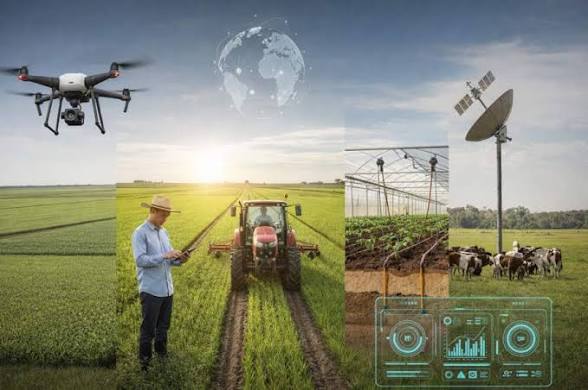
AI can also support autonomous machinery by helping machines navigate farms, identify obstacles and make decisions based on their surroundings. The combination of robotics, artificial intelligence, GPS and sensors is therefore creating increasingly sophisticated farming systems.
Challenges of farm robotics
Despite their potential, farm robots and automated systems are not suitable for every farmer or farming operation. One of the biggest challenges is the initial cost of purchasing and installing advanced equipment. Small-scale farmers may find some technologies too expensive, especially when they are still developing their businesses.
Maintenance and technical support can also be challenges. Farmers need access to technicians, spare parts and reliable electricity or connectivity for certain systems. Without proper maintenance, automated equipment can become expensive to repair or remain unused.
Farmers may also need training to operate and manage new technologies. Technology should therefore be introduced alongside appropriate training and technical support.
Opportunities for small-scale farmers
Farm robotics does not necessarily mean that every farmer needs to purchase an expensive autonomous tractor or harvesting robot. Smaller and more affordable forms of automation can provide significant benefits.
Farmers can begin with technologies such as automated irrigation controllers, soil moisture sensors, GPS-enabled equipment, milking systems, greenhouse controls or simple farm-management software. Cooperatives can also explore shared ownership models where expensive machinery is used by several farmers.
Agricultural service businesses may create another opportunity. Instead of every farmer purchasing a robot, a service provider could own the equipment and charge farmers for planting, spraying, weeding or harvesting services.
The future of farm automation
Farm robotics and automation are likely to become increasingly important as agriculture faces rising production costs, labour challenges, climate pressures and the need to produce more food efficiently.
For farmers, the goal should not simply be to adopt the newest technology. The most useful technology is one that solves a specific farm problem and provides measurable value. Farmers should consider their production systems, available capital, labour costs and technical capacity before investing.
As technology becomes more accessible, robotics and automation could help farms of different sizes improve efficiency, reduce waste and make better decisions. When combined with good agricultural practices and farmer knowledge, these technologies can contribute to a more productive and sustainable agricultural sector.
Farm robotics and automation are transforming the way agricultural activities are performed. From automated irrigation and livestock feeding to robotic weeding, harvesting and AI-powered crop monitoring, technology is helping farmers improve efficiency and precision.
Although high costs, maintenance and training remain challenges, farmers can start with simpler technologies that address their most pressing needs. Cooperatives and agricultural service providers can also make advanced equipment more accessible to small-scale farmers.
The future of agriculture will increasingly combine human knowledge with intelligent machines. Farmers who carefully select technologies that fit their operations can use automation to reduce waste, improve productivity and build more competitive and resilient agribusinesses.

Author: Moureen Koech
Moureen Koech is a passionate Digital Journalist, an adept Agribusiness Writer with a keen eye for news and an impactful story-teller,whose stories provide key value to Agripreneurs and stakeholders in the Agricultural sector