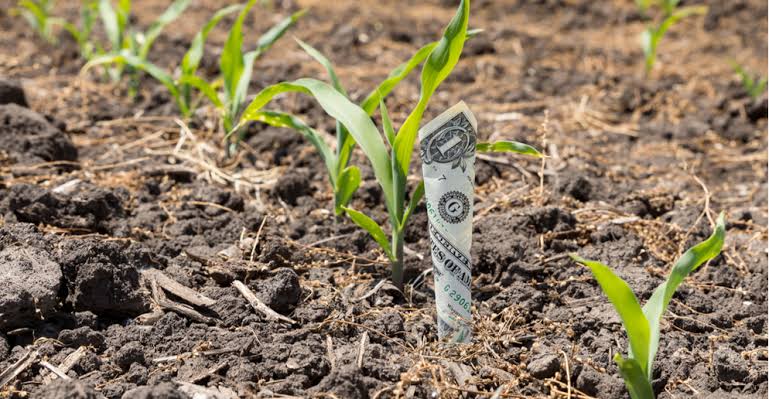
Few policies divide agribusiness experts as sharply as farm subsidies. Supporters see them as a lifeline that stabilizes incomes and protects national food supplies. Critics argue they distort markets, waste public money and reward the wrong behavior. Governments worldwide spend hundreds of billions of dollars each year supporting agriculture, so the question of whether subsidies help or harm deserves a careful look.
What are agricultural subsidies?
Agricultural subsidies are financial supports that governments provide to farmers and agribusinesses. They take many forms, including direct payments, input subsidies for fertilizer and seed, price supports, subsidized credit, insurance premium assistance and tax breaks. Some are tied to how much a farmer produces, while others are “decoupled,” meaning payments do not depend on the crop grown or the quantity harvested.
The goals behind these programs are usually similar: keep food affordable, protect farmers from unpredictable weather and prices, and maintain a stable rural economy. Countries differ widely in how they pursue these goals, from the European Union’s Common Agricultural Policy to India’s fertilizer and minimum support price systems and the farm bills used in the United States.
The case for subsidies
Supporters point out that farming is uniquely risky. Harvests depend on rainfall, pests, and global prices that farmers cannot control. Subsidies act as a safety net, helping producers stay in business after a bad season instead of leaving the land for good.
Food security is another major argument. Countries that want to avoid heavy dependence on imports often support domestic production, especially of staples such as rice, wheat and maize. Input subsidies can also help smallholders afford improved seed and fertilizer, which raises yields and incomes. Malawi’s fertilizer subsidy program, for instance, has been credited with boosting maize output in some years, though its cost and long-term efficiency remain debated.
Finally, subsidies can encourage useful behavior. Payments for conservation, cover crops, or efficient irrigation reward farmers for delivering environmental benefits that markets do not pay for on their own.
The case against subsidies
Critics raise several concerns, and the first is market distortion. When governments guarantee prices or subsidize specific crops, farmers may grow more of those crops than the market actually needs. This can create surpluses, and when those surpluses are sold cheaply on world markets, farmers in poorer countries struggle to compete.
Cost and fairness are also common complaints. In many countries, the largest share of support goes to the biggest farms, since payments are often linked to acreage or output. Small farmers, who may need help most, receive far less. Subsidies can also be capitalized into land prices and rents, meaning some of the benefit flows to landowners rather than working farmers.
Environmental damage is another issue. Heavy subsidies for fertilizer, irrigation water, or electricity can encourage overuse, leading to soil degradation, groundwater depletion, and pollution. In addition, long-running programs can create dependence, reducing pressure on farmers to innovate or diversify.
Trade rules and global impact
Subsidies do not stay inside national borders. Under World Trade Organization rules, governments are expected to limit the most trade-distorting forms of support, while allowing less distorting payments, such as research funding or income support unlinked to production. Disputes still arise, and developing countries frequently argue that wealthy nations’ support undercuts their exporters.
For agribusinesses, this makes policy watching a business skill. Changes in subsidy rules can shift crop prices, input costs, and export competitiveness almost overnight.
Toward smarter support
Many economists and policy groups now argue that the debate should not be “subsidies or no subsidies” but “which kind and for whom.” Several reform directions appear regularly in the discussion:
- Decoupled income support that gives farmers stability without pushing them toward overproduction.
- Targeting so that smaller and more vulnerable farms receive meaningful help.
- Payments for outcomes, such as carbon storage, biodiversity, and water quality.
- Investment in public goods, including rural roads, storage, extension services, and agricultural research, which often deliver strong long-term returns.
- Transparent, time-limited programs with clear performance reviews.
New Zealand’s decision to remove most farm subsidies in the 1980s is often cited by reform supporters as proof that farmers can adapt and thrive, although others note that its circumstances, including a strong export orientation, were unusual and may not translate elsewhere.
Government subsidies are neither purely helpful nor purely harmful. Well-designed support can protect farmers, strengthen food security, and reward sustainable practices, while poorly designed programs can distort markets, favor large operations, and damage the environment. The evidence suggests that design matters more than the mere existence of support. For agribusiness leaders, investors and policymakers, the smart approach is to understand how each program works, who benefits and how long it is likely to last.

Author: Moureen Koech
Moureen Koech is a passionate Digital Journalist, an adept Agribusiness Writer with a keen eye for news and an impactful story-teller,whose stories provide key value to Agripreneurs and stakeholders in the Agricultural sector