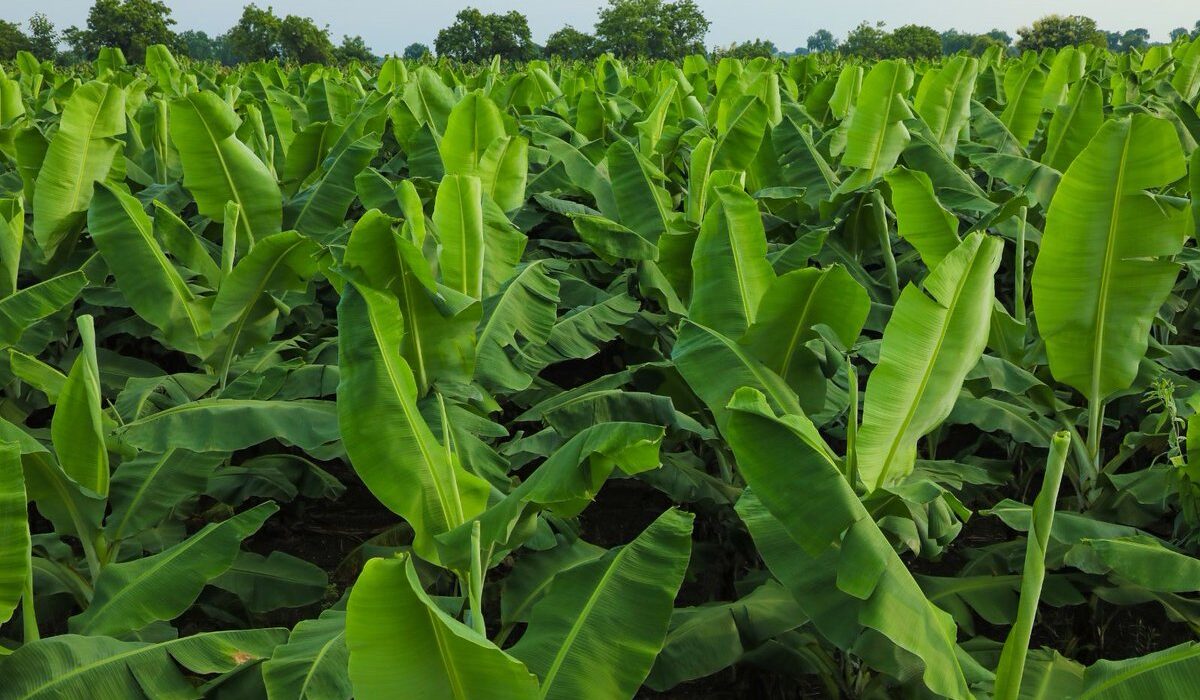
Bananas are among the most widely consumed fruits globally and remain a vital source of income, nutrition, and export revenue for many countries. According to the Food and Agriculture Organization (FAOSTAT, 2023), global banana production continues to grow, driven by expanding domestic demand, export markets, and improved agricultural practices. Understanding which countries lead in banana production helps highlight the importance of this crop in global food systems and its contribution to local economies. Below is an in-depth look at the world’s top banana producers and the factors shaping their success.
India: The world’s leading banana producer
India tops the global list with an impressive 31,920,000 tonnes of bananas produced in 2023. The country benefits from diverse climatic zones that support year-round production. Major banana-growing states such as Tamil Nadu, Maharashtra, Gujarat, and Andhra Pradesh use improved varieties and irrigation systems to maintain high yields. India’s production is mainly consumed domestically, making bananas a staple fruit across the country. Strong cultural demand, widespread cultivation, and resilient farming techniques explain India’s unmatched output.
Latin America’s major export powerhouses
Colombia
Producing 7,074,000 tonnes Colombia is one of the world’s largest exporters of bananas. Its fertile soils and well-developed agribusiness sector enable consistent high-quality production. Most Colombian bananas are shipped to Europe and North America, making the fruit a key contributor to the country’s export earnings.
Ecuador
Ecuador, with 6,500,000 tonnes, remains one of the most influential players in the global banana export market. Known for its premium Cavendish bananas, Ecuador exports a significant portion of its production, particularly to Russia, China, and the European Union. Its coastal climate provides ideal conditions for large-scale commercial farming.
Costa Rica, Guatemala, Panama, Nicaragua and Honduras
Costa Rica (3,950,000 tonnes + 1,550,000 tonnes) is another major exporter known internationally for its high-quality bananas. Countries like Guatemala 1,750,000 tonnes) and Honduras (1,600,000 tonnes) also anchor Central America’s role in the global banana supply chain. Their economies depend heavily on banana plantations managed by both local growers and multinational agribusiness companies.
Asia’s Dominant Producers
Philippines
The Philippines ranks high with 6,970,000 tonnes. It is a major supplier to Asian markets, particularly Japan, China, and South Korea. The Mindanao region is the core production zone, delivering both domestic and export-grade bananas.
Indonesia
Indonesia produces 6,200,000 tonnes, largely for domestic consumption. Its banana diversity ranging from Cavendish to local varieties makes it a crucial fruit in household diets and local markets.
Bangladesh, Vietnam and Malaysia
Bangladesh (5,800,000 tonnes) and Vietnam (3,100,000 tonnes) rely on bananas as both a food source and an income-generating crop. Malaysia’s 1,900,000 tonnes come from smallholders who supply domestic markets and regional trade routes.
Japan
Despite limited land, Japan produces 2,700,000 tonnes through intensive cultivation and greenhouse farming. Its production is focused mainly on local consumption, especially in Okinawa.
Africa’s growing banana sector
Africa has a strong presence on the list, reflecting the importance of bananas and plantains as staple foods.
Ghana
Ghana leads Africa with 4,300,000 tonnes, supported by favorable climates and improved varieties. The country also exports bananas to the EU through commercial plantations.
Kenya
Kenya produces 3,830,000 tonnes, making bananas one of the most consumed fruits and a major income source for smallholder farmers. Improved tissue-culture varieties have boosted yields nationwide.
Ethiopia, Tanzania, Burundi, Rwanda, Nigeria, Cameroon
These countries collectively produce millions of tonnes,Ethiopia 2,300,000), Tanzania (2,400,000), Burundi (2,200,000), Rwanda (2,150,000), Nigeria (2,100,000), and Cameroon (2,050,000 tonnes). Bananas and plantains are staple foods in East and Central Africa, forming an essential part of household nutrition and local markets.
South Africa
South Africa contributes 2,500,000 tonnes, supported by advanced farming systems and well-organized commercial farms.
Caribbean and Pacific Producers
Countries like Cuba (2,950,000 tonnes), Fiji (1,400,000 tonnes), Vanuatu (2,000,000 tonnes) and Suriname (1,850,000 tonnes) maintain strong production, largely for local consumption. Their climates support diverse varieties that are integral to cultural diets.
Latin America’s secondary contributors
Mexico (3,600,000 tonnes) and Peru 2,450,000 tonnes) have thriving banana industries. Nicaragua (1,650,000 tonnes) and Panama (1,800,000 tonnes) also play crucial roles in Central America’s supply chain.
Other Significant Producers
Thailand (1,700,000 tonnes), New Zealand (1,300,000 tonnes) and Cyprus (1,200,000 tonnes) also appear on the list, demonstrating bananas’ global adaptability, from tropical climates to controlled-environment agriculture.
Bananas remain a globally significant crop, powering economies, feeding populations and supporting millions of livelihoods. The FAO’s 2023 data highlights how production is concentrated in regions with tropical climates but also shows how innovation enables non-tropical countries to participate. With rising global demand, sustainable farming practices and expanded export markets, the banana industry will continue to grow, making these countries central players in the global fruit economy.

Author: Moureen Koech
Moureen Koech is a passionate Digital Journalist, an adept Agribusiness Writer with a keen eye for news and an impactful story-teller,whose stories provide key value to Agripreneurs and stakeholders in the Agricultural sector