President William Ruto has defended his administration’s agricultural reforms saying cheaper fertilizer, increased maize production and improved market access have helped lower food prices while boosting farmers’ earnings.
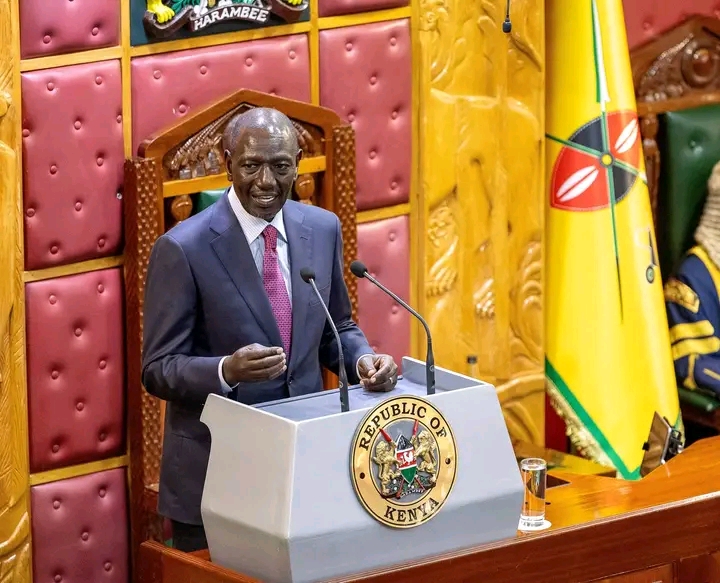
Speaking during his fourth State of the Nation Address to a joint sitting of Parliament on Wednesday, November 18, Ruto said the government’s agricultural interventions were aimed at addressing the cost of living by reducing production expenses, increasing food supplies and ensuring farmers receive better returns.
The President placed agriculture at the centre of his economic transformation agenda, arguing that improving productivity on farms was essential to reducing household expenditure and increasing rural incomes.
“Our economic proposition was simple: Reduce the cost for families and increase the income from what they do,” Ruto said.
He added that the government had deliberately pursued measures addressing both household spending and earnings rather than relying on isolated interventions to tackle the rising cost of living.
“We have never regarded the cost of living as a problem that can be solved by one intervention, one subsidy or one announcement. Its causes are interconnected and its solution must be comprehensive,” he said.
According to the President, the Bottom-Up Economic Transformation Agenda (BETA) has prioritised agricultural productivity as one of the key drivers of economic growth, food security and improved livelihoods.
Fertiliser subsidy and increased maize production
Ruto said the government had reduced the price of a 50-kilogramme bag of fertiliser from KSh7,500 in 2022 to KSh2,000 in 2026, making farm inputs more affordable for smallholder farmers.
He reported that the government had distributed 38.5 million bags of subsidised fertiliser, registered nearly nine million farmers and expanded access to improved seeds, soil testing and agricultural extension services.
The President said these interventions contributed to increased agricultural productivity, particularly in maize farming.
National maize production increased from 44.3 million bags in 2022 to 71 million bags in 2025, while maize imports declined from 9.9 million bags to 3.3 million bags over the same period.
To demonstrate the impact on individual farmers, Ruto cited Laban Cheptarus, a maize farmer in Rongai, Nakuru County, whose harvest increased from 75 bags to 125 bags on the same five acres between 2022 and 2025.
The President said the increased domestic supply had also contributed to lower maize flour prices, with the average price of a two-kilogramme packet of sifted maize flour declining from KSh230 in September 2022 to KSh152 in September 2026.
“Our determination is to sustain increased production so that food becomes more affordable and farmers continue earning better returns,” he said.
Coffee, tea and dairy farmers record improved earnings
Beyond maize, the President highlighted improvements in coffee, tea and dairy production, saying government interventions had increased farmers’ earnings and strengthened agricultural value chains.
In the coffee sector, Ruto said average cherry prices had increased from KSh69 to KSh130 per kilogramme.
National coffee export earnings also doubled from KSh26 billion to KSh52.1 billion.
He attributed the improvements to reforms in coffee sector governance, marketing and payment systems, which he said were designed to ensure farmers received better returns for their produce.
The President also reported that the Cherry Advance Revolving Fund had disbursed KSh15.07 billion to approximately 684,000 coffee farmers to help them meet their financial obligations as they awaited payments for their coffee deliveries.
In the tea sector, export earnings increased from KSh163 billion in 2022 to KSh187 billion in 2025.
Ruto attributed the growth to improved factory governance, transparency at the tea auction and reforms targeting deductions that affect farmers’ earnings.
The dairy industry also recorded growth, with national milk production increasing from 4.5 billion litres to 5.52 billion litres.
The President said dairy export earnings had more than doubled to KSh11.2 billion, while average farmgate milk prices had risen from KSh32 to a high of KSh60 per litre in October 2026.
He noted that affordable fertiliser had also supported livestock farmers by increasing access to silage production, helping improve feed availability.
Sugar industry recovery as farmers set to receive KSh1.2 billion bonus
The sugar industry was another major focus of the President’s agricultural address, with Ruto reporting improved production following government interventions in the sector.
He said cane crushed between January and October 2026 increased by 57 per cent, while sugar production rose by 60 per cent.
The industry is projected to produce more than 900,000 tonnes of sugar by the end of the year, which the President described as the highest annual production in Kenya’s history.
To ensure farmers benefit from the industry’s recovery, Ruto announced a KSh1.2 billion bonus package for sugarcane growers, with payments expected to begin next week.
“To fulfil our commitment that sugarcane farmers should share in the industry’s improving fortunes, a bonus package of KSh1.2 billion will be paid to farmers this year, and we’re beginning the disbursements next week,” he said.
He added that the payments would help restore livelihoods in sugar-producing communities.
“These payments will give practical meaning to our promise that reviving factories must restore livelihoods, put money in the pockets of our farmers, reward hard work, and bring prosperity back to our sugar-growing communities,” the President stated.
Government plans KSh57 billion investment in 600 modern markets
The President also identified inadequate market infrastructure and limited processing capacity as challenges affecting farmers’ ability to earn better returns.
He announced that the government was developing 600 modern markets across the country at a cost of KSh57 billion.
The facilities are expected to provide trading spaces, storage facilities and cold rooms to improve the handling and preservation of agricultural produce.
Ruto said the government had also invested KSh8.5 billion in County Aggregation and Industrial Parks across 34 counties, with 15 parks reported complete.
The facilities are intended to bring processing closer to agricultural production areas, allowing farmers to move beyond selling raw commodities and benefit from value addition.
“We are developing 600 modern markets across the nation at a cost of KSh57 billion to provide trading space, storage, and cold room facilities,” he said.
He added that the investments would reduce post-harvest losses, support local manufacturing and create employment opportunities within counties.
Livestock insurance and fisheries support
Ruto also highlighted interventions targeting pastoralist communities, particularly those affected by drought and livestock losses.
He said more than 245,000 pastoralists had benefited from livestock insurance and savings incentives under the De-risking, Inclusion and Value Enhancement of Pastoral Economies (DRIVE) programme.
The initiative has covered more than 3.3 million animals, helping protect pastoral households against drought-related economic losses.
In the fisheries sector, the President said investments in landing sites, cold storage facilities, markets and fishing equipment were helping fishing communities preserve their catches and secure better prices.
He cited the Shanga Ishakani Fishers Women Group in Lamu County, whose average octopus selling price reportedly doubled following improvements in fish preservation equipment.
These interventions form part of the government’s broader efforts to strengthen agricultural and livestock value chains beyond traditional crop-producing regions.
State of the Nation address focuses on economic recovery and household incomes
Agriculture was among several sectors highlighted in Ruto’s fourth State of the Nation Address, which broadly focused on economic recovery, household incomes, employment creation and equitable distribution of development opportunities.
According to the official Parliament report, the President described Kenya’s economic performance as a recovery, citing improvements in currency stability, inflation and foreign exchange reserves.
He said the shilling had stabilised at approximately KSh129 against the US dollar, compared with nearly KSh162 in 2022, while foreign exchange reserves had increased from US$7.37 billion to a peak of US$15.3 billion.
He also highlighted proposed tax relief measures, including exempting workers earning KSh32,333 or less per month from Pay As You Earn (PAYE), removing stamp duty on land transactions valued at KSh1 million or less and scrapping the 25 per cent import duty on mobile phones.
The President maintained that economic transformation must translate into practical improvements in the lives of ordinary Kenyans.
“Our nation is making a powerful comeback. Our economy is recovering its strength, our infrastructure is expanding, our education system is being revitalised, healthcare is reaching more citizens and new opportunities are opening for our young people to work, earn and prosper,” he said.
The agricultural announcements place renewed emphasis on reducing production costs, improving productivity, expanding processing capacity and strengthening market access.
For farmers, however, the long-term impact will depend on whether the announced interventions translate into reliable access to affordable inputs, timely payments, functioning processing facilities and sustainable markets.

Author: Moureen Koech
Moureen Koech is a passionate Digital Journalist, an adept Agribusiness Writer with a keen eye for news and an impactful story-teller,whose stories provide key value to Agripreneurs and stakeholders in the Agricultural sector