

Role of lighting in poultry farming
Lighting is one of the most important but often overlooked management practices in poultry farming. Proper lighting directly affects bird growth, health, behavior and overall productivity. Whether in small-scale backyard systems or large commercial operations, a well-designed lighting program can significantly improve feed intake, egg production and bird welfare. Both natural and artificial lighting are used in poultry houses, depending on the production system, housing design and age of the birds.
Importance of lighting in poultry production
Lighting influences the biological clock of poultry, also known as the circadian rhythm. This internal clock regulates feeding behavior, resting periods, hormone secretion and reproduction. When birds receive the right amount of light at the correct intensity and duration, their bodies function efficiently. Poor lighting, on the other hand, can cause stress, reduced growth rates, low egg production, and increased disease susceptibility.
Proper lighting helps birds locate feed and water easily, promotes uniform growth, and supports healthy development. It also allows farmers to manage bird activity levels, preventing excessive movement that can lead to injuries and energy loss.
Role of lighting in broiler farming
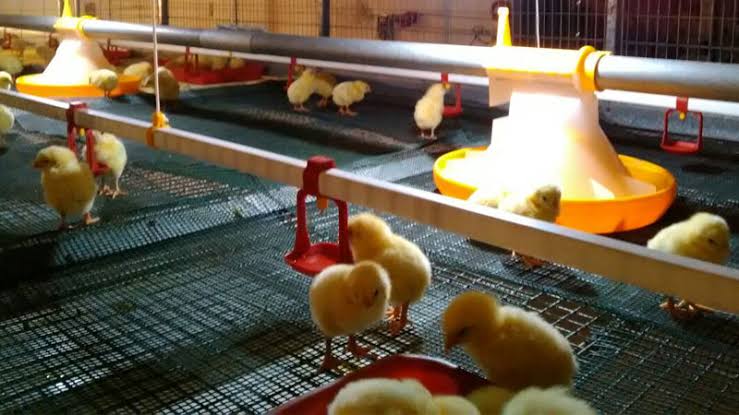
In broiler production, lighting plays a critical role in encouraging feed and water consumption, which directly affects growth rate and final body weight. During the first few days of life, chicks require continuous or extended lighting. This helps them quickly adapt to their environment and easily find feed and water, reducing early chick mortality.
As broilers grow, lighting programs are gradually adjusted. Controlled periods of darkness are introduced to allow birds to rest, which improves leg health, reduces stress and supports better feed conversion efficiency. Balanced lighting schedules help achieve uniform growth across the flock and reduce problems such as sudden death syndrome and leg disorders.
Role of lighting in layer farming
Lighting is especially crucial in layer farming because egg production is directly linked to light exposure. Layers require a consistent light duration, typically between 14 and 16 hours per day, to stimulate and maintain egg laying. Light triggers hormonal activity that controls ovulation, making lighting a key factor in reproductive performance.
Sudden changes in lighting duration or intensity can stress birds and disrupt egg-laying cycles. This may result in reduced egg production, poor egg quality, or irregular laying patterns. To avoid these problems, lighting schedules should be introduced and adjusted gradually, especially during the pullet-to-layer transition period.
Light duration and photoperiod management
Photoperiod refers to the number of hours of light birds receive in a day. Proper photoperiod management helps farmers control growth and production stages. Shorter light periods are often used during the rearing phase of pullets to prevent early sexual maturity. As birds approach laying age, light duration is slowly increased to stimulate egg production.
In broilers, a balanced photoperiod that includes both light and dark periods improves bird welfare and performance. Continuous light for long periods can cause fatigue and stress, while total darkness can reduce feed intake and growth.
Light intensity and its effects on poultry behavior
Light intensity is another important factor in poultry farming. Very bright light can increase aggression, feather pecking, and cannibalism among birds. Extremely low light, on the other hand, may reduce activity, feed intake, and overall performance.
Moderate and uniform light intensity creates a calm environment, encouraging normal feeding behavior while minimizing stress-related problems. Proper light distribution throughout the poultry house ensures all birds receive equal access to light, preventing crowding in brighter areas.
Light quality and energy efficiency
The quality and type of light used in poultry houses also matter. Modern poultry farms increasingly use energy-efficient LED bulbs. LED lighting provides consistent light output, consumes less electricity, and has a longer lifespan compared to traditional bulbs. This helps reduce operational costs while maintaining optimal lighting conditions.
Additionally, LED lights can be adjusted in terms of intensity and color, allowing farmers to customize lighting programs for different stages of bird growth and production.
Benefits of proper lighting management
Maintaining an effective lighting program offers numerous benefits to poultry farmers. These include improved growth rates, higher egg production, better feed efficiency, reduced stress and improved bird welfare. Proper lighting also helps minimize behavioral problems and enhances overall farm profitability.
Lighting is a powerful management tool in poultry farming that directly influences productivity and bird health. By carefully managing light duration, intensity and quality, farmers can create an environment that supports optimal growth, efficient egg production and improved animal welfare. Investing in proper lighting systems and schedules is essential for sustainable and profitable poultry production.

Author: Moureen Koech
Moureen Koech is a passionate Digital Journalist, an adept Agribusiness Writer with a keen eye for news and an impactful story-teller,whose stories provide key value to Agripreneurs and stakeholders in the Agricultural sector