


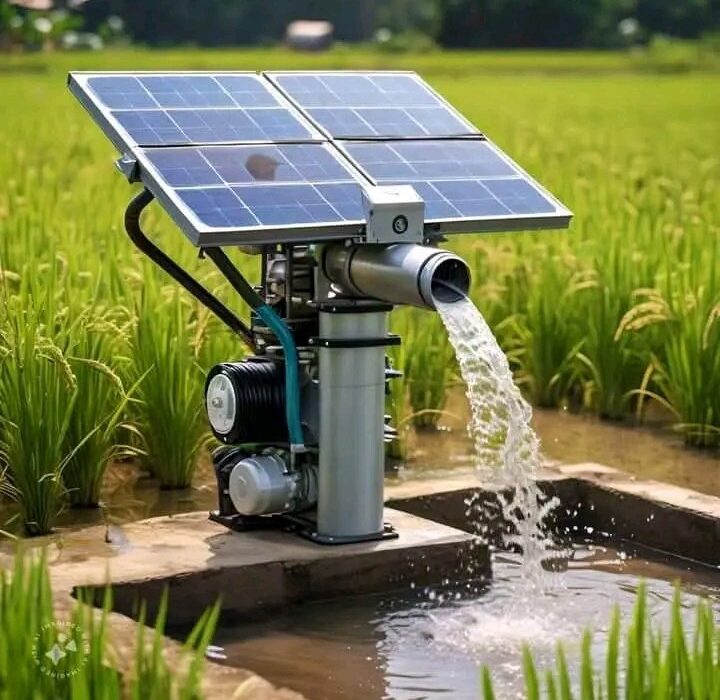
Agriculture remains the backbone of many rural economies, yet one challenge continues to limit production for millions of farmers, access to reliable irrigation. Across many farming regions, agriculture still depends heavily on seasonal rainfall, leaving crops vulnerable to drought, delayed rains and changing weather patterns. However, solar-powered irrigation is rapidly emerging as one of the most practical and sustainable solutions for modern farming.
Once considered too expensive, too remote or too dry to support consistent irrigation, many agricultural areas are now experiencing improved productivity thanks to solar technology. By harnessing sunlight to pump water directly to farms, solar irrigation is helping farmers reduce costs, increase yields and strengthen food security.
What is solar-powered irrigation?
Solar-powered irrigation is a farming system that uses energy generated from solar panels to operate water pumps. These pumps draw water from sources such as boreholes, rivers, dams, wells, or water storage tanks and distribute it to crops through irrigation systems.
Unlike diesel-powered pumps or electric irrigation systems that rely on unstable power supplies, solar irrigation operates using renewable energy from the sun. This makes it particularly suitable for regions with abundant sunlight and limited access to reliable electricity.
The mechanics are straightforward but highly effective. Solar panels absorb sunlight and convert it into electricity, which powers either a submersible pump placed underwater or a surface pump installed above ground. Water is then delivered directly to crops through drip irrigation, sprinklers or other watering methods.
Lower farming costs through free energy
One of the biggest advantages of solar irrigation is the significant reduction in operating expenses.
Traditional irrigation methods often depend on diesel fuel or grid electricity, both of which create recurring costs that reduce farm profitability. Fuel prices can fluctuate dramatically, and transporting diesel to remote agricultural areas further increases expenses.
Solar irrigation eliminates these recurring energy costs. Once the equipment is installed, farmers rely on sunlight as their primary energy source, reducing monthly irrigation expenses.
Although the initial investment can appear high, many farmers recover installation costs over time through reduced fuel purchases and increased agricultural output.
For smallholder farmers, this shift can mean the difference between subsistence farming and profitable commercial production.
Extending the growing season and increasing harvests
Reliable irrigation changes the entire farming calendar.
Instead of waiting for rainy seasons, farmers can plant according to market demand and maintain production during dry periods. This creates opportunities for continuous farming throughout the year.
Solar irrigation enables farmers to produce vegetables, fruits, grains, and cash crops even during traditionally dry months. In many cases, farmers move from harvesting once annually to producing multiple crop cycles.
This increase in production directly improves household income while strengthening food availability within communities.
Farmers also gain greater flexibility in selecting high-value crops that require consistent water supply but offer better market returns.
Improving household livelihoods
The impact of solar irrigation extends beyond agricultural output.
In many rural communities, significant amounts of time are spent collecting and transporting water manually. Solar-powered systems automate much of this work, freeing time for other productive activities.
Farmers can use the additional time to expand cultivation areas, manage livestock, process farm products, or pursue alternative income-generating activities.
Families also benefit socially. Reduced labor demands often allow children to spend more time in school rather than assisting with water collection and irrigation activities.
Reliable farm income can improve household nutrition, healthcare access, and overall living standards.
Environmental benefits of solar irrigation
Solar irrigation provides a cleaner alternative to conventional pumping methods.
Diesel irrigation systems release greenhouse gas emissions and contribute to air pollution. Solar systems operate without fuel combustion, helping reduce agriculture’s environmental footprint.
Additionally, solar irrigation is commonly paired with efficient water management methods such as drip irrigation and targeted watering techniques. These systems deliver water directly to plant roots, minimizing evaporation and reducing water waste.
Efficient irrigation supports long-term groundwater conservation and promotes more sustainable agricultural practices.
As climate change continues to affect rainfall patterns globally, renewable energy solutions such as solar irrigation offer an important pathway toward climate-resilient farming.
Challenges limiting adoption
Despite its benefits, solar-powered irrigation still faces several barriers.
The largest challenge remains the upfront investment required for equipment installation. Solar panels, pumps, pipes, mounting systems and water storage infrastructure can require substantial capital, especially for small-scale farmers.
Limited financing options and access to agricultural credit can slow adoption.
Technical knowledge is another challenge. Farmers often require training on installation, maintenance, water management and system optimization.
Water availability itself also remains important. Solar pumps cannot solve water scarcity where water sources are absent or severely depleted.
To maximize effectiveness, irrigation systems should be planned alongside water conservation practices and proper farm management.
The future of solar irrigation in agriculture
As solar technology becomes more affordable and governments increasingly support climate-smart agriculture, solar irrigation is expected to play an even greater role in food production.
Declining solar equipment costs, improved battery storage solutions, and expanding financing programs are making these systems accessible to more farmers.
For regions experiencing prolonged dry seasons and unreliable rainfall, solar-powered irrigation offers more than a technological upgrade, it creates a foundation for agricultural transformation.
By reducing costs, increasing productivity, improving livelihoods and protecting the environment, solar irrigation is helping farmers turn previously underutilized land into productive, income-generating farms all year round.
For many agricultural communities, the future of farming may depend not only on water, but on the power of the sun.

Author: Moureen Koech
Moureen Koech is a passionate Digital Journalist, an adept Agribusiness Writer with a keen eye for news and an impactful story-teller,whose stories provide key value to Agripreneurs and stakeholders in the Agricultural sector


