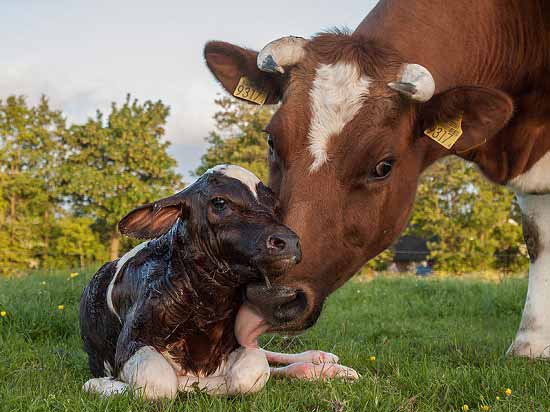
The period immediately after calving is one of the most important stages in dairy farming. A cow has gone through pregnancy, calving and significant changes in her nutritional requirements. At the same time, milk production begins increasing rapidly, creating a high demand for energy, protein, minerals and water.
What you feed a cow after calving can affect milk production, body condition, fertility and overall health. Poor feeding during this period can cause weight loss, low milk production and metabolic problems, while a well-balanced diet can help the cow recover and perform better.
Give the cow plenty of clean water
Water is one of the most important nutrients for a freshly calved cow. Milk contains a large amount of water, so a cow producing substantial quantities of milk needs regular access to clean drinking water.
After calving, make sure the cow can easily access fresh, clean water. Restricting water intake can reduce feed consumption and ultimately affect milk production.
Water troughs should be kept clean and positioned where the cow can drink comfortably. During hot weather, the need for water can increase considerably.
Provide good-quality forage
Good-quality forage should form the foundation of the cow’s diet after calving. Depending on the farming system, this may include Napier grass, well-managed pasture, silage, hay or other suitable forage.
The forage should be fresh, palatable and free from mould. Poor-quality or spoiled feed can reduce intake and may introduce health risks.
Farmers should avoid making sudden and major changes to the cow’s diet immediately after calving. Feed changes should generally be introduced gradually to allow the digestive system to adjust.
Increase energy carefully
After calving, milk production can rise faster than the cow’s ability to consume enough energy from forage. This can result in the cow using body reserves and losing weight.
Energy-rich feeds can therefore be important for high-producing dairy cows. Concentrates or other suitable energy sources may be introduced according to the cow’s milk production, body condition and overall ration.
However, giving excessive concentrates without enough fibre can disrupt rumen function and increase the risk of digestive problems. The goal should be a balanced ration rather than simply feeding large quantities of concentrates.
Give adequate protein
Protein supports milk production, body tissue repair and overall performance. A freshly calved cow producing milk needs an appropriate supply of dietary protein.
Protein can come from good-quality forage, legumes and properly formulated dairy concentrates. Suitable protein sources may include fodder legumes and commercial dairy feeds, depending on availability and the farm’s feeding programme.
The amount required will vary according to the cow’s size, milk yield, forage quality and stage of lactation. A livestock nutritionist or animal health professional can help formulate a suitable ration where necessary.
Do not forget minerals
Minerals are particularly important during the transition from pregnancy to lactation. Calcium and phosphorus, among other minerals, play important roles in the cow’s health and production.
Farmers should provide mineral supplementation appropriate for dairy cattle rather than assuming that forage alone will meet every nutritional requirement.
Special attention is needed around calving because calcium imbalance can contribute to serious health problems. Farmers should seek veterinary advice if a cow becomes unusually weak, has difficulty standing or shows other concerning signs after calving.
Introduce concentrates gradually
Farmers sometimes make the mistake of dramatically increasing concentrate feeding immediately after calving in an attempt to maximize milk production.
This can overwhelm the rumen and contribute to digestive disorders. Concentrate levels should be increased gradually while maintaining sufficient forage in the diet.
The appropriate amount depends on milk yield and the nutritional value of the forage. High-producing cows may require more concentrate than low-producing cows, but feeding should be based on the whole ration rather than milk production alone.
Use legumes and high-quality fodder
Leguminous forages can be useful sources of protein when incorporated appropriately into a dairy ration. Examples include lucerne and other suitable locally adapted forage legumes.
High-quality fodder can help improve the nutritional value of the diet and may reduce reliance on expensive purchased feeds.
Farmers should nevertheless ensure that any forage introduced into the diet is safe, properly harvested and free from mould or contamination.
Watch the cow’s body condition
A cow may naturally lose some body reserves after calving as milk production increases, but excessive weight loss is a warning sign.
Farmers should regularly observe the cow’s body condition, appetite, manure consistency, milk production and general behaviour. A cow that continues losing weight rapidly despite adequate feed may have an underlying nutritional or health problem.
Good feeding should support milk production without allowing the cow to become excessively thin.
Feed according to milk production
Not every cow requires the same ration. A high-producing cow generally has greater nutritional requirements than a cow producing a small amount of milk.
Farmers should therefore avoid using exactly the same feeding programme for every animal. Where possible, cows can be grouped according to production level, stage of lactation and nutritional requirements.
This can help reduce feed wastage and ensure that high-producing animals receive sufficient nutrients.
Watch for problems after calving
Feeding is only one part of managing a freshly calved cow. Farmers should closely monitor animals for signs of illness, including loss of appetite, unusual weakness, fever, abnormal discharge, swollen udders or sudden changes in milk production.
Problems such as retained placenta, mastitis, ketosis and milk fever can occur around the calving period and may require professional treatment.
A cow that refuses feed or water after calving should not simply be assumed to be tired. Early veterinary intervention can prevent a potentially serious problem from becoming worse.
Make feed planning part of dairy management
Successful dairy farmers do not wait until a cow has calved before thinking about feed. Fodder should be grown, harvested and stored before it is needed.
Farmers can establish fodder crops, conserve silage and hay and maintain adequate feed reserves for periods when pasture is limited. This reduces dependence on expensive purchased feeds and provides greater consistency in the cow’s diet.
Keeping feed records and monitoring milk production can also help farmers determine whether their feeding programme is delivering good results.
Knowing what to feed a cow after calving is essential for maintaining milk production, supporting recovery and protecting the cow’s health. A good feeding programme should provide adequate clean water, quality forage, appropriate energy and protein, and essential minerals.
Farmers should introduce concentrates gradually, avoid sudden dietary changes and monitor body condition and milk production. Most importantly, the ration should be balanced according to the individual cow’s requirements rather than simply increasing the amount of feed.
Good nutrition after calving can help a dairy cow recover faster, maintain healthy milk production and return to good reproductive performance. For farmers, this means a healthier animal and a more productive dairy enterprise.

Author: Moureen Koech
Moureen Koech is a passionate Digital Journalist, an adept Agribusiness Writer with a keen eye for news and an impactful story-teller,whose stories provide key value to Agripreneurs and stakeholders in the Agricultural sector