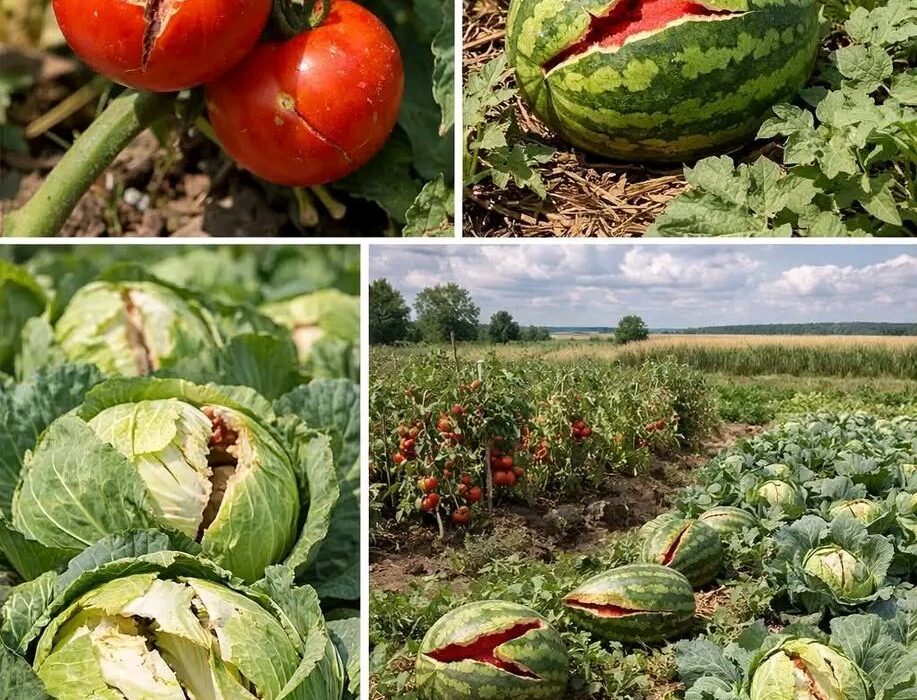
Cracking in watermelons, tomatoes and cabbage is a common problem that frustrates many farmers and reduces profits. Fruits and vegetable heads that split before harvest often lose market value, spoil faster and become more vulnerable to diseases and pests. Many farmers mistakenly assume cracking is caused by diseases or insect attacks, yet in most cases the problem results from environmental and management factors.
The good news is that crop cracking can be prevented through proper irrigation, balanced nutrition and timely harvesting. Understanding why these crops crack helps farmers improve quality, reduce losses and increase profitability.
What causes crop cracking?
Cracking occurs when crops absorb water faster than their outer tissues can stretch. The internal part of the fruit or head expands rapidly while the outer skin cannot keep up, eventually causing splits.
This problem is commonly triggered by sudden changes in water supply, nutrient imbalance, irregular irrigation and temperature fluctuations.
Periods of drought followed by heavy rainfall or excessive watering create conditions where crops rapidly absorb moisture and crack.
Managing water and maintaining steady growth conditions are the most effective ways to reduce cracking.
Why tomatoes crack
Tomatoes are among the most affected crops when it comes to cracking. Cracks may appear as circular splits around the stem or long vertical cracks along the fruit surface.
One of the main causes is irregular watering. When tomato plants experience dry conditions and suddenly receive large amounts of water, fruits absorb moisture rapidly and expand too quickly.
Excess nitrogen fertilizer also contributes to cracking by encouraging rapid fruit growth and softer tissues. While nitrogen promotes plant development, too much during fruiting can create uneven growth.
Heat stress is another contributing factor. Extremely hot weather increases water loss and weakens fruit skin, making tomatoes more vulnerable to splitting.
Overripe tomatoes left too long on the plant are especially likely to crack because they continue absorbing water even after reaching maturity.
How to prevent tomato cracking
Preventing tomato cracking starts with maintaining consistent soil moisture. Farmers should avoid allowing soil to become extremely dry before irrigation.
Drip irrigation systems work well because they deliver water steadily without causing sudden moisture changes.
Applying mulch around tomato plants helps conserve soil moisture and reduce temperature fluctuations.
Balanced fertilization is also important. Nitrogen should be applied according to crop growth stages while ensuring adequate potassium for stronger fruit development.
Tomatoes should be harvested promptly once they mature to avoid over-ripening and splitting.
Why watermelons crack
Watermelon cracking is another serious issue that affects fruit quality and market acceptance. Cracked fruits often become unsuitable for sale and may rot quickly.
Inconsistent irrigation is one of the leading causes of watermelon splitting. After periods of water stress, sudden irrigation or rainfall causes fruits to absorb excessive moisture rapidly.
Nutrient imbalance also contributes to cracking. Potassium plays an important role in regulating water movement and strengthening fruit tissues. Deficiencies reduce fruit elasticity and increase splitting.
Low boron levels may also affect cell wall development and increase the risk of cracks.
Rapid fruit growth combined with sudden temperature changes further increases pressure inside the fruit, resulting in splitting.
How to prevent watermelon cracking
Consistent irrigation is essential for healthy watermelon production. Farmers should maintain uniform moisture levels throughout fruit development.
Water should be applied gradually rather than in large amounts after dry periods.
Using mulch helps regulate soil moisture and reduce evaporation.
Balanced fertilization programs should include adequate potassium and micronutrients such as boron to strengthen fruit structure.
Good drainage is equally important because waterlogged soils increase irregular water uptake.
Farmers should monitor fruit maturity closely and harvest on time.
Why cabbage heads split
Cabbage splitting usually occurs during the final stages of growth when heads become fully developed.
Heavy rainfall after dry conditions is one of the most common causes. Mature cabbage heads absorb water rapidly and expand beyond the capacity of the outer leaves.
Late application of nitrogen fertilizer can worsen the problem by stimulating continued growth when heads should be hardening.
Delayed harvesting also increases splitting risk because mature heads continue growing in the field.
Some cabbage varieties naturally have higher resistance to splitting than others.
How to prevent cabbage splitting
Maintaining consistent moisture throughout the growing season helps reduce splitting.
Farmers should avoid excessive irrigation during maturity and improve drainage to prevent sudden water accumulation.
Nitrogen application should be reduced or stopped as cabbages approach maturity.
Timely harvesting is one of the most effective prevention methods because mature heads become more susceptible when left too long in the field.
In areas with heavy rainfall, farmers can slightly twist mature cabbage heads to partially reduce root water uptake and delay splitting.
General practices to prevent cracking in crops
Although tomatoes, watermelons and cabbage crack differently, several management practices work across all three crops.
Maintaining steady soil moisture is one of the most important solutions. Crops perform better when water is supplied consistently rather than irregularly.
Mulching helps retain moisture, regulate soil temperature and reduce rapid drying.
Balanced fertilizer application strengthens plant tissues and supports healthy growth without encouraging excessive expansion.
Improving drainage prevents waterlogging and sudden moisture surges.
Farmers should also monitor crop maturity and harvest promptly to reduce exposure to cracking conditions.
Economic impact of crop cracking
Crop cracking affects farmers beyond appearance. Split produce has lower market prices and shorter storage life.
Cracked fruits and vegetables are more likely to attract pests and develop fungal infections, increasing post-harvest losses.
For commercial farmers, poor-quality produce can reduce customer trust and affect long-term business relationships.
Preventing cracking improves crop quality, profitability and overall farm productivity.
Cracking in tomatoes, watermelons, and cabbage is mainly caused by sudden changes in water supply, nutrient imbalances, temperature stress and delayed harvesting rather than diseases.
Tomatoes crack due to irregular watering, excess nitrogen, and over-ripening. Watermelons split because of inconsistent irrigation and nutrient deficiencies, while cabbage heads crack mainly after heavy rain during maturity.
Farmers can reduce these losses by maintaining consistent soil moisture, applying balanced fertilizers, using mulch, improving drainage and harvesting at the right time.
With proper crop management, farmers can produce healthier, higher-quality harvests and improve profitability.

Author: Moureen Koech
Moureen Koech is a passionate Digital Journalist, an adept Agribusiness Writer with a keen eye for news and an impactful story-teller,whose stories provide key value to Agripreneurs and stakeholders in the Agricultural sector