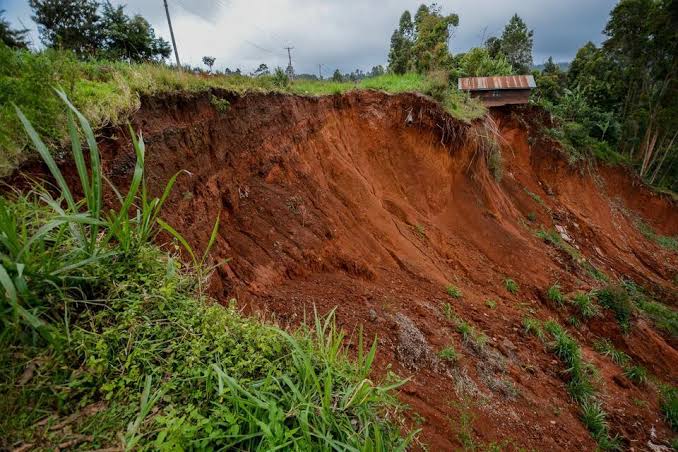
Soil is one of Kenya’s most valuable natural resources and the backbone of the country’s agricultural sector. From the tea farms of Kericho and the maize fields of Trans Nzoia to the coffee plantations of Murang’a and the vegetable farms of Nakuru, fertile soil supports millions of livelihoods and contributes significantly to national food security. However, this vital resource is under constant threat from soil erosion.
Soil erosion is the gradual removal of the fertile topsoil by water, wind or human activities such as deforestation, overgrazing and poor farming practices. The loss of topsoil is particularly worrying because it contains essential nutrients, organic matter, and beneficial microorganisms that crops need to grow. Once lost, nature can take hundreds of years to replace it.
With climate change causing more frequent heavy rains and prolonged dry seasons across Kenya, protecting farmland from erosion has never been more important. Fortunately, farmers can adopt several practical and affordable soil conservation techniques to safeguard their land while improving crop productivity.
Why soil erosion is a growing challenge in Kenya
Many Kenyan farmers cultivate crops on sloping landscapes, especially in counties such as Elgeyo Marakwet, Bomet, Nyeri, Kiambu, Murang’a, Kisii and parts of Nakuru. During the rainy seasons, intense rainfall often washes away valuable topsoil, leaving behind infertile land and reducing crop yields.
In arid and semi-arid counties such as Turkana, Marsabit, Samburu and Kajiado, strong winds contribute to wind erosion, especially where vegetation has been cleared or overgrazing has left the land bare.
The consequences of soil erosion include reduced soil fertility, lower farm productivity, poor water infiltration, increased fertilizer costs, silting of rivers and dams and environmental degradation. These challenges directly affect farmers’ incomes and Kenya’s ability to produce enough food.
1. Contour Plowing: Farming along the land’s natural shape
Contour plowing is one of the most effective soil conservation methods for Kenyan farmers cultivating sloping land. Instead of plowing straight up and down a hill, farmers plow across the slope, following the natural contour lines.
The furrows created by contour plowing act as barriers that slow the movement of rainwater. This reduces runoff, allowing more water to soak into the soil while preventing valuable topsoil from being washed away.
For maize, beans, potatoes, and vegetable farmers in Kenya’s highland regions, contour plowing helps conserve both soil and moisture, resulting in healthier crops and better yields.
2. Terrace farming: Protecting steep hillsides
Terrace farming has been practiced successfully for decades in many parts of Kenya, particularly in Central Kenya and the Rift Valley highlands. The technique involves transforming steep slopes into a series of flat, step-like terraces.
Each terrace slows down water movement and prevents runoff from gaining enough force to carry away soil. Terraces also increase water infiltration, making them especially valuable in areas experiencing irregular rainfall.
Properly maintained terraces can remain productive for generations, making them an excellent long-term investment for farmers cultivating steep land.
3. Contour bunding: Conserving water and soil
Contour bunding involves constructing small ridges made of soil, stones or grass along the contour lines of a field. These ridges slow surface runoff and trap rainwater before it can wash away fertile soil.
This technique is widely recommended for semi-arid parts of Kenya where every drop of rain counts. By increasing water infiltration, contour bunds improve soil moisture and support healthier crop growth even during dry spells.
Farmers can establish grass strips such as Napier grass along the bunds to provide additional soil stabilization while producing livestock fodder.
4. Afforestation and agroforestry: Planting trees for soil protection
Trees are among nature’s most effective defenses against soil erosion. Their roots bind soil together while their leaves reduce the impact of heavy raindrops on the soil surface.
Kenyan farmers can protect their farms by planting indigenous trees, fruit trees, and nitrogen-fixing species around farms, riverbanks and steep slopes. Integrating trees with crops through agroforestry also improves soil fertility, provides shade, enhances biodiversity, and creates additional income through timber, fruits or firewood.
Counties promoting tree-growing initiatives have demonstrated that increasing tree cover benefits both agricultural production and environmental conservation.
5. Cover cropping: Keeping the soil covered
Leaving farmland bare after harvesting exposes it to erosion by both rain and wind. Cover cropping solves this problem by planting fast-growing crops that protect the soil between main planting seasons.
Leguminous cover crops such as sunn hemp, mucuna, and desmodium help protect the soil while naturally fixing nitrogen, improving soil fertility for subsequent crops. Other cover crops also increase organic matter, enhance soil structure and suppress weeds.
For Kenyan farmers practicing conservation agriculture, cover crops have become an important strategy for maintaining healthy soils and improving long-term productivity.
6. Strip cropping: Reducing runoff across fields
Strip cropping involves planting different crops in alternating strips across a field. Dense crops such as fodder grasses or legumes are planted alongside row crops like maize or beans.
These alternating strips slow the movement of water and wind across the farm, reducing erosion while conserving moisture. Strip cropping also supports better pest management and increases biodiversity within farming systems.
When combined with crop rotation, strip cropping contributes to healthier soils and more resilient farms.
Additional soil conservation practices for kenyan farmers
Besides the six major techniques, farmers can further reduce soil erosion by adopting other sustainable farming practices. Applying organic manure and compost improves soil structure and increases its ability to absorb water. Mulching with crop residues reduces evaporation while protecting the soil from heavy rainfall.
Practicing minimum tillage helps preserve soil structure, while controlled grazing prevents livestock from stripping vegetation and exposing bare ground. Farmers should also avoid cultivating riverbanks and protect riparian areas with natural vegetation to reduce erosion and safeguard water sources.
Building climate-resilient farms through soil conservation
As climate change continues to increase the frequency of droughts and heavy rainfall in Kenya, soil conservation has become an essential component of climate-smart agriculture. Healthy soils retain more moisture during dry periods, reduce flood damage during heavy rains, and support stronger crop growth throughout the season.
Combining techniques such as contour plowing, terrace farming, cover cropping, agroforestry and contour bunding provides the greatest protection against erosion while improving farm productivity.
Healthy soil is the foundation of successful farming, food security, and environmental sustainability in Kenya. Every handful of topsoil lost to erosion represents years of natural soil formation that cannot easily be replaced.
By adopting proven soil conservation techniques such as contour plowing, terrace farming, contour bunding, afforestation, cover cropping, and strip cropping, Kenyan farmers can protect their land, improve water conservation, increase crop yields and build more resilient farming systems.
Protecting the soil today means protecting future harvests, strengthening rural livelihoods and ensuring that future generations inherit productive land capable of feeding the nation. After all, healthy soil is the foundation of life, and conserving it is one of the smartest investments any farmer can make.

Author: Moureen Koech
Moureen Koech is a passionate Digital Journalist, an adept Agribusiness Writer with a keen eye for news and an impactful story-teller,whose stories provide key value to Agripreneurs and stakeholders in the Agricultural sector