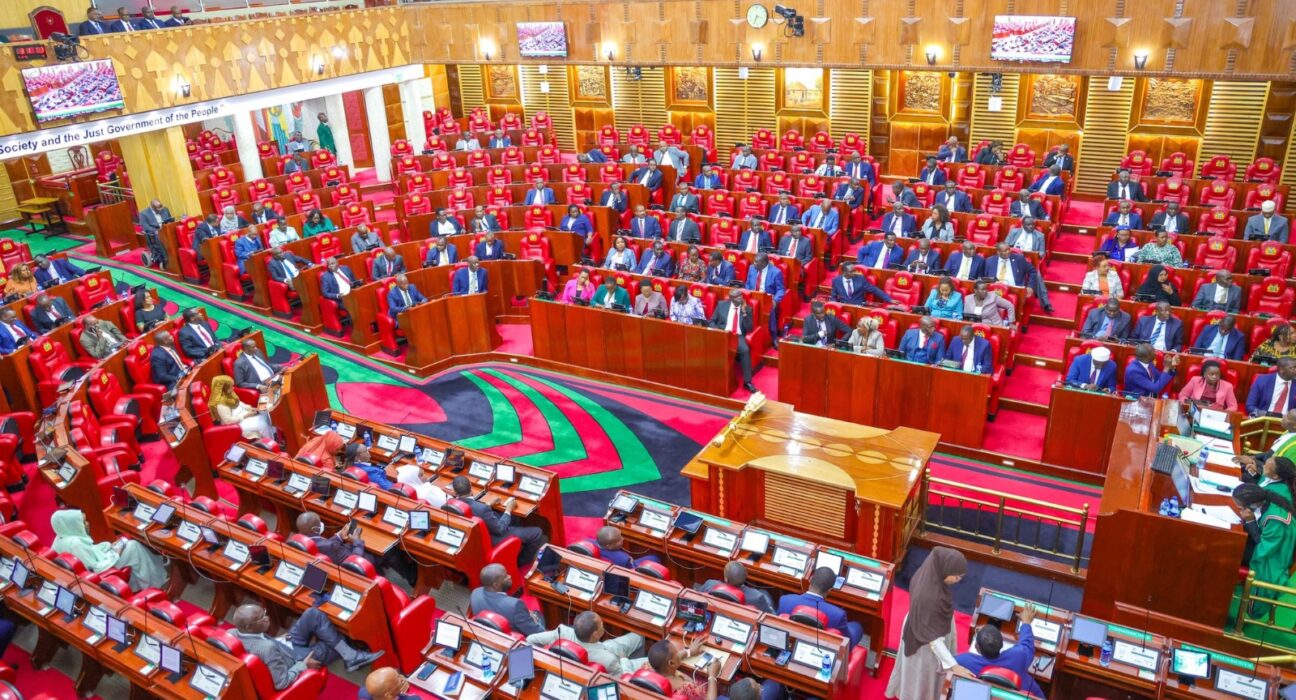
The National Assembly has issued a public clarification on the Sacco Societies (Amendment) Bill, 2025, dismissing what it describes as widespread misinformation circulating online about the proposed law.
In a public communication released on July 8, Parliament said the Bill remains under consideration and urged Kenyans to rely on official information instead of misleading claims.
The Bill was published on June 30, 2025, and has been undergoing the legislative process for the past year. It is currently before the Departmental Committee on Trade, Industry and Cooperatives, which is collecting views from members of the public and other stakeholders through public participation.
Once the public participation exercise is concluded, the committee will prepare a report incorporating recommendations and any proposed amendments before the Bill is considered by the House.
The National Assembly clarified that the Bill will not proceed directly to presidential assent after approval by MPs. Since it concerns county governments, it must first be considered by the Senate in accordance with the Constitution.
On the objectives of the proposed law, Parliament said the Bill seeks to strengthen the Sacco sector by promoting the growth of smaller Saccos, enhancing financial stability through liquidity requirements supervised by the Central Bank of Kenya, protecting members’ interests through stronger regulation by the Sacco Societies Regulatory Authority (SASRA), and curbing fraudulent investment schemes. It also aims to encourage collaboration among smaller Saccos while improving innovation, efficiency and financial inclusion through technology.
The National Assembly dismissed claims that the Bill creates a government-controlled “super Sacco.” Instead, it said the proposal provides for a secondary Sacco Society whose membership will be limited to primary Saccos to help them access payment platforms and investment opportunities for the benefit of their members.
Parliament also denied reports that the President will have powers to appoint management committees for Saccos. It clarified that the Bill contains no such provision, adding that management committees will continue to be appointed internally by individual Saccos, while boards of directors of secondary Saccos will be elected by member societies.
The House further rejected claims that the Bill would allow a “super Sacco” to lend money to the government or private individuals. According to Parliament, the proposed law expressly prohibits a secondary co-operative society from lending to natural persons.
The National Assembly also said reports claiming Sacco members would lose access to their savings upon resignation are false, noting that the Bill contains no provision restricting members from accessing their savings after leaving a Sacco.
Similarly, Parliament dismissed claims that members would only receive compensation of up to Sh100,000 if a Sacco collapses. Instead, it said the Bill strengthens the protection of members’ deposits by allowing claims for payment even where a Sacco’s licence has been revoked.
The House also denied allegations that a “super Sacco” would determine the liquidity of all Saccos, explaining that liquidity requirements will continue to be prescribed by SASRA and the Central Bank of Kenya under existing laws.
Parliament has encouraged Kenyans to obtain copies of the Bill and submit their views through the ongoing public participation process before the legislation proceeds to the next stages of consideration.

Author: Andrew Walyaula
Andrew Walyaula is a seasoned multimedia journalist. Email: [email protected]