Beans are one of the most widely grown legume crops, valued for their nutritional benefits, ability to improve soil fertility through nitrogen fixation and importance as both a food and cash crop. Whether grown on a small family farm or a large commercial operation, healthy bean plants are essential for achieving high yields and quality harvests. However, bean production is often threatened by diseases that can significantly reduce productivity if left unmanaged.
Bean diseases are caused by fungi, bacteria, viruses and unfavorable environmental conditions. They can affect the crop at any stage of growth, from germination to harvest, leading to poor plant establishment, stunted growth, reduced pod formation, and lower grain quality. Fortunately, many of these diseases can be prevented or effectively managed through good agricultural practices, early detection, and integrated disease management strategies.
Anthracnose
Anthracnose is one of the most destructive fungal diseases affecting common beans. It is caused by the fungus Colletotrichum lindemuthianum and thrives in cool, wet weather. The disease can attack leaves, stems, pods, and seeds, making it particularly damaging during rainy seasons.
Infected plants develop dark, sunken lesions on stems and pods, while leaves may show black or brown spots along the veins. Severely infected pods produce discolored and infected seeds, reducing both yield and seed quality.
Control begins with planting certified disease-free seeds and resistant bean varieties where available. Farmers should also rotate beans with non-legume crops for at least two to three seasons to reduce fungal spores in the soil. Removing and destroying infected crop residues after harvest helps minimize future infections. Fungicides recommended for anthracnose control may be applied when disease pressure is high.
Angular Leaf Spot
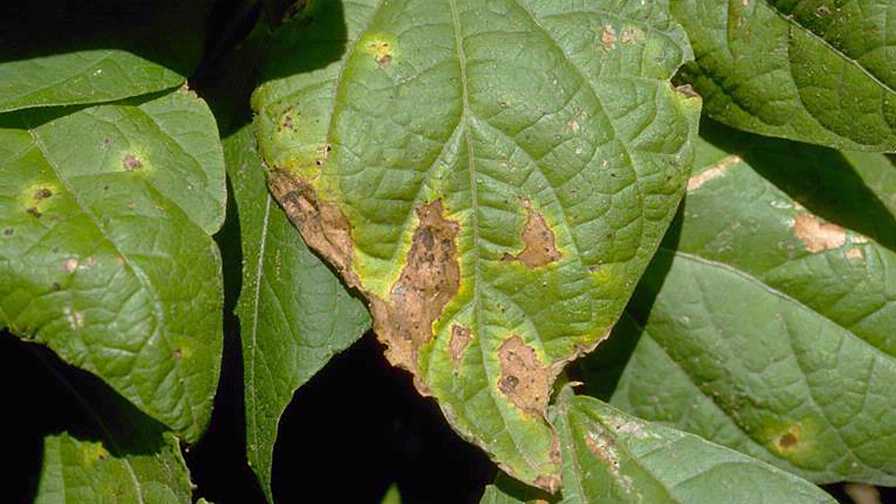
Angular leaf spot is another common fungal disease caused by Pseudocercospora griseola. It is widespread in warm, humid environments and can cause significant yield losses if not managed promptly.
The disease appears as angular brown or gray lesions on leaves, which are usually limited by the leaf veins. As the infection progresses, leaves turn yellow, dry up, and fall prematurely. Pods may also develop dark lesions that affect seed quality.
Effective control includes planting resistant varieties, using certified seeds, practicing crop rotation, and avoiding overhead irrigation that keeps foliage wet for extended periods. Proper spacing between plants improves air circulation, helping leaves dry more quickly after rainfall or irrigation.
Rust
Bean rust is caused by the fungus Uromyces appendiculatus and commonly develops in warm temperatures combined with high humidity. The disease primarily affects the leaves but may also infect stems and pods.
Symptoms include numerous small reddish-brown pustules on both sides of the leaves. As the disease advances, leaves yellow, dry, and fall prematurely, reducing the plant’s ability to produce food for developing pods.
Regular field scouting allows farmers to detect rust early before it spreads extensively. Resistant varieties offer the best long-term protection. Crop rotation, field sanitation, and timely application of suitable fungicides also help reduce disease severity.
Common bacterial blight
Common bacterial blight is caused by the bacterium Xanthomonas phaseoli pv. phaseoli. It spreads through infected seeds, crop residues, splashing rain, irrigation water and contaminated farm tools.
Early symptoms include small, water-soaked spots on leaves that enlarge into brown lesions surrounded by yellow halos. Pods may develop greasy-looking spots, while infected seeds become shriveled and discolored.
The most effective control measure is planting certified disease-free seed. Farmers should avoid working in bean fields when plants are wet, as this can spread bacteria. Crop rotation, removal of infected residues and disinfecting farm equipment also reduce disease transmission. Avoid excessive irrigation that wets the foliage.
Bean Common Mosaic Virus (BCMV)
Bean Common Mosaic Virus is one of the most widespread viral diseases affecting beans. It is mainly spread by aphids and infected seeds.
Affected plants develop light and dark green mosaic patterns on the leaves, leaf curling, stunted growth, and reduced pod production. In severe infections, plants may become distorted and produce very few marketable beans.
Since viral diseases cannot be cured once plants are infected, prevention is essential. Farmers should plant certified virus-free seed, grow resistant varieties, control aphid populations, and remove infected plants immediately to reduce further spread. Keeping weeds under control also eliminates alternative hosts for the virus and its insect vectors.
Root rot
Root rot is caused by several soil-borne fungi, including species of Fusarium, Rhizoctonia, and Pythium. The disease is most common in poorly drained soils where excess moisture creates favorable conditions for fungal growth.
Symptoms include poor seed germination, yellowing leaves, wilting, stunted growth and decaying roots. Severely affected plants often die before reaching maturity.
Proper drainage is the first line of defense against root rot. Farmers should avoid waterlogged fields, rotate crops regularly and plant in well-prepared, loose soil. Using healthy seed treated with recommended fungicides before planting can further reduce infection.
Powdery Mildew
Powdery mildew appears as a white, powder-like fungal growth on leaves, stems, and pods, particularly during warm, dry days followed by cool nights.
As the disease progresses, infected leaves become yellow and eventually fall off, reducing photosynthesis and limiting grain filling.
Maintaining adequate plant spacing, removing infected plant debris, and applying recommended fungicides when necessary can effectively manage powdery mildew. Resistant bean varieties also provide good protection.
General disease prevention practices
Preventing bean diseases is often more effective and less expensive than treating severe infections after they occur. Farmers should always begin by selecting certified, high-quality seeds from reputable suppliers. Healthy seed reduces the risk of introducing diseases into the field.
Crop rotation is another essential practice. Avoid planting beans or other legumes on the same land continuously, as many disease-causing organisms survive in the soil and crop residues for several seasons. Rotating with cereals such as maize, wheat, or sorghum helps break disease cycles.
Maintaining good field hygiene by removing infected crop residues, controlling weeds and cleaning farm tools minimizes the spread of pathogens. Balanced fertilizer application also promotes strong plant growth, making beans more resilient to disease pressure.
Regular field inspections allow farmers to identify symptoms early and take corrective action before diseases spread throughout the crop. Integrated disease management, which combines resistant varieties, cultural practices, biological controls and responsible pesticide use, provides the most sustainable approach to bean disease control.
Bean diseases remain one of the leading causes of reduced yields and poor grain quality, but they can be successfully managed with proper planning and timely intervention. Diseases such as anthracnose, angular leaf spot, rust, common bacterial blight, Bean Common Mosaic Virus, root rot and powdery mildew each present unique challenges, yet all can be minimized through preventive measures and sound agronomic practices.
By planting certified seeds, selecting resistant varieties, practicing crop rotation, maintaining field sanitation, monitoring crops regularly and responding quickly to disease outbreaks, farmers can protect their bean crops and achieve healthier plants, higher yields, and improved profitability. Investing in disease prevention is one of the most effective ways to ensure a successful bean farming enterprise.

Author: Moureen Koech
Moureen Koech is a passionate Digital Journalist, an adept Agribusiness Writer with a keen eye for news and an impactful story-teller,whose stories provide key value to Agripreneurs and stakeholders in the Agricultural sector