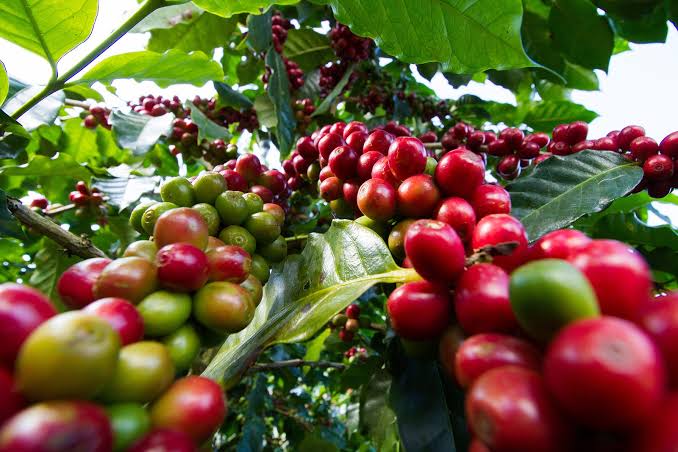
Kenya’s coffee sector is facing renewed uncertainty after the United Nations Conference on Trade and Development (UNCTAD) warned that weakening global coffee prices could dampen export earnings and reduce incomes for thousands of smallholder farmers who depend on the crop.
In its latest Global Trade Update (July/August 2026), UNCTAD notes that although international trade continues to grow overall, trade in coffee, tea and spices contracted during the first quarter of 2026, largely due to declining coffee prices after the commodity reached previous record highs.
The warning comes at a critical time for Kenya, where coffee remains one of the country’s top agricultural export earners and a major source of foreign exchange. More than 700,000 smallholder farmers cultivate coffee, with the country’s premium Arabica beans enjoying a strong reputation in specialty markets across Europe, North America and Asia.
According to UNCTAD, shifting global trade patterns, geopolitical tensions and changing demand are reshaping international commerce, leaving commodity-dependent economies increasingly vulnerable to price volatility. While sectors such as semiconductors, electric vehicles and digital technologies posted robust growth in early 2026, traditional agricultural commodities, including coffee, experienced weaker trade performance.
For Kenya, lower international prices could translate into reduced export revenues despite sustained demand for its high-quality coffee. Since most of the country’s coffee is exported as green beans, farmers remain heavily exposed to fluctuations in global commodity markets.
The development also revives calls for faster investment in value addition to increase earnings from the crop. Industry experts have consistently argued that exporting roasted, packaged and branded coffee instead of raw beans would enable Kenya to capture a larger share of the global coffee value chain while reducing vulnerability to swings in international prices.
Expanding domestic roasting capacity, strengthening specialty coffee branding and increasing direct trade with international buyers are among the strategies seen as critical to protecting farmer incomes.
Despite the global warning, Kenya’s coffee market has recently shown encouraging signs domestically. Trading at the Nairobi Coffee Exchange resumed strongly after the mid-year recess, with average auction prices rising significantly even as volumes declined, highlighting continued demand for the country’s premium Arabica beans.
However, analysts caution that strong auction performance at home may not fully shield the sector if international benchmark prices continue to soften over an extended period.
The International Coffee Organization (ICO), which monitors global coffee markets, has also reported continued fluctuations in international coffee prices as global supply and demand adjust following recent periods of exceptionally high prices and weather-related production disruptions in major producing countries.
Coffee stakeholders, including the Coffee Directorate, exporters, cooperative societies and the Nairobi Coffee Exchange, are expected to closely monitor global price movements in the coming months as they assess their impact on export volumes, farmer payouts and Kenya’s overall export performance.
The latest UNCTAD assessment reinforces the need for Kenya to diversify its export markets, strengthen local coffee processing and invest in premium branding to remain competitive in an increasingly volatile global trading environment.
While the report does not forecast a prolonged downturn in coffee markets, it underscores how quickly international price movements can ripple through export-dependent economies. For Kenya, sustaining the coffee sector’s long-term growth will depend not only on maintaining world-class production standards but also on accelerating value addition, expanding market access and improving resilience against global commodity price shocks.

Author: Moureen Koech
Moureen Koech is a passionate Digital Journalist, an adept Agribusiness Writer with a keen eye for news and an impactful story-teller,whose stories provide key value to Agripreneurs and stakeholders in the Agricultural sector