Livestock farming is one of the most important agribusiness activities in Kenya, providing income and livelihoods for thousands of farmers. From dairy cattle and goats to poultry, sheep and pigs, livestock can generate reliable income when properly managed. However, keeping animals does not automatically mean a farmer is making a profit.
Many farmers increase their herd or flock without calculating how much they are actually spending on feed, labour, veterinary services, housing, water and transportation. As a result, a livestock business can appear busy and successful while quietly losing money.
Knowing the signs of a struggling livestock business can help farmers take corrective action before losses become too large. Here are some of the major warning signs Kenyan livestock farmers should watch.
Your feed costs are eating into your profits
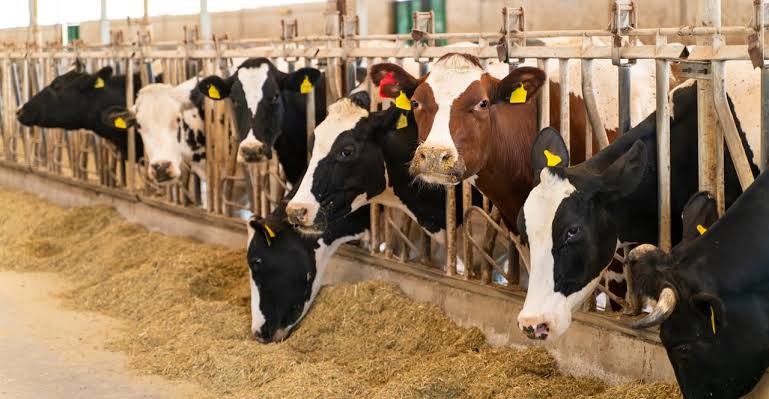
Feed is among the biggest expenses in livestock farming, especially for dairy cattle, poultry and pigs. When feed prices increase, farmers can quickly find themselves spending most of their income on animal nutrition.
For example, a dairy farmer may sell milk worth KSh 60,000 in a month but spend KSh 40,000 or more on concentrates, hay, silage and other feeds. After paying for labour, veterinary services, water, transport and other expenses, very little may remain as profit.
The answer is not always to purchase the cheapest feed. Poor-quality feeds can result in slow growth, low milk production and poor egg production, ultimately increasing the cost of production.
Farmers should calculate how much they spend on feed per animal and compare it with the income generated. Producing quality fodder on the farm, reducing feed wastage and improving feed storage can help lower costs.
Your animals are not growing or producing enough
Another major warning sign is poor livestock performance. If goats remain underweight, pigs take too long to reach market weight, dairy cows produce little milk or chickens lay fewer eggs than expected, the farm may be spending more money than it is generating.
Poor productivity can result from inadequate nutrition, parasites, diseases, poor genetics, overcrowding or unsuitable management practices.
For instance, keeping a dairy cow that consumes large quantities of feed but produces very little milk can significantly reduce farm profitability.
Farmers should regularly monitor animal growth and production. When performance falls, investigate the cause instead of simply increasing the amount of feed.
High animal mortality Is reducing your investment
Frequent animal deaths can quickly destroy the profitability of a livestock business. Every animal represents money invested in purchasing or breeding, feeds, medication, labour and housing.
This is particularly serious for farmers raising poultry, goats, pigs and calves because losing young animals can significantly affect future herd or flock growth.
Repeated deaths may be caused by disease, poor hygiene, inadequate nutrition, contaminated water, overcrowding or weak biosecurity.
Farmers experiencing unusual or repeated deaths should seek assistance from a qualified veterinarian or livestock professional to determine the cause. Treating animals blindly without identifying the underlying problem can become an expensive cycle.
You don’t know how much it costs to produce one animal
If you cannot calculate how much it costs to raise one goat, chicken, pig or calf, it is difficult to determine whether your livestock business is profitable.
Suppose a farmer sells a goat for KSh 8,000. That amount may appear attractive, but the actual profit depends on how much was spent on buying or breeding the goat, feed, medication, labour and transport.
Farmers should keep simple records and calculate production costs regularly.
For example:
Total production costs ÷ number of animals sold = average production cost per animal.
The same principle can be applied to milk, eggs and meat. A poultry farmer can calculate the cost of producing a tray of eggs, while a dairy farmer can determine the approximate cost of producing a litre of milk.
These calculations provide a much clearer picture of whether the enterprise is actually making money.
You keep borrowing money to cover daily farm expenses
Agricultural loans can help farmers purchase equipment, construct livestock housing or expand a profitable enterprise. However, constantly borrowing money to pay for routine expenses can be a warning sign.
If a farmer regularly takes loans to purchase feeds, pay workers or buy veterinary medicines while income remains unchanged, the underlying business model needs to be reviewed.
Before taking another loan, calculate whether the additional investment will generate enough income to repay the debt.
Sometimes the solution is not expansion but improving productivity, reducing unnecessary expenses and finding better markets.
You sell livestock whenever you need emergency cash
Livestock can act as a financial safety net, but repeatedly selling animals to meet household expenses can weaken the farming business.
A farmer may sell a productive dairy cow to pay school fees, dispose of breeding goats to cover a medical bill or sell chickens to meet an unexpected household expense.
The immediate financial problem may be solved, but the farm loses an asset that could have generated income in the future.
Separating household and farm finances can help. Farmers should also consider building an emergency savings fund so that valuable livestock are not sold whenever unexpected expenses arise.
You have no reliable narket for your animals
Producing livestock without having a clear market can result in poor returns.
A farmer may spend months feeding goats or pigs only to discover that local buyers are offering prices that barely cover production costs.
This is particularly risky when feed prices are high and animals are expensive to maintain.
Farmers should research their target market before expanding production. Depending on the enterprise, potential buyers may include livestock traders, butcheries, hotels, restaurants, processors, milk collection centres and individual consumers.
Having several potential buyers gives farmers more negotiating power and reduces dependence on one middleman.
Veterinary costs keep increasing
Veterinary care is necessary, but continuously spending large amounts treating sick animals can indicate deeper problems on the farm.
Repeated disease outbreaks may be linked to poor hygiene, inadequate vaccination, overcrowding, parasites, contaminated water or poor nutrition.
For example, spending money repeatedly treating preventable diseases can be more expensive than investing in better hygiene and preventive health management.
Farmers should work with qualified animal-health professionals to develop appropriate vaccination, parasite-control and disease-prevention programmes.
You keep adding animals without calculating profit
A bigger herd or flock does not automatically mean more money.
Consider a farmer who increases a goat herd from 20 to 50 animals. The additional goats will require more feed, water, housing, labour and veterinary care. If the income generated by the extra animals is lower than these additional costs, expansion will increase losses rather than profits.
Before buying more livestock, calculate whether you have enough land, feed, capital, labour and market access.
Growth should be based on profitability rather than simply increasing animal numbers.
You don’t keep farm records
Poor record-keeping is one of the biggest challenges facing livestock farmers.
Without records, a farmer may know how many animals are on the farm but have no idea how much money has been spent on feeding, medication, labour, breeding or transportation.
A simple notebook can make a major difference. Record feed purchases, animal births, deaths, veterinary expenses, breeding activities, production levels and sales.
At the end of every month, add up your income and expenses. This can reveal whether your livestock business is growing, breaking even or losing money.
How to turn around a loss-making livestock business
If your livestock business is showing several of these warning signs, the first step is to determine where the money is going.
Start by calculating your total monthly income and expenses. Identify the largest costs and examine whether they are generating sufficient returns.
For many farmers, improving profitability may involve producing more quality fodder, reducing feed wastage, improving disease prevention, culling consistently unproductive animals, improving breeding decisions or finding better-paying markets.
Farmers should also avoid making decisions based purely on sales revenue.
Don’t confuse revenue with profit
A livestock farmer may sell animals, milk or eggs worth KSh 200,000 in a year and assume the business is doing well. But if the total cost of production and other operating expenses amount to KSh 180,000, only KSh 20,000 remains before considering other applicable costs.
Revenue is the money generated from sales. Profit is what remains after expenses have been deducted.
This distinction is critical for farmers who want to build sustainable agribusinesses.
The goal should not simply be to increase the number of animals or the amount of produce sold. The goal is to increase the amount of money left after all production costs have been paid.
Livestock farming can be a profitable business in Kenya, but it requires proper financial management. High feed costs, poor animal performance, frequent deaths, rising veterinary expenses, emergency livestock sales, unreliable markets, excessive borrowing, uncontrolled expansion and poor record-keeping can all be signs that a livestock enterprise is losing money.
Farmers should regularly review their production costs and income rather than waiting until the business runs out of cash.
Keep accurate records, monitor animal productivity, control unnecessary expenses and identify reliable markets before expanding. Most importantly, remember that having more livestock does not necessarily mean having more profit.
A successful livestock farmer does not just count cows, goats, sheep, pigs or chickens. They also count costs, productivity, sales and the actual profit left at the end of the season.

Author: Moureen Koech
Moureen Koech is a passionate Digital Journalist, an adept Agribusiness Writer with a keen eye for news and an impactful story-teller,whose stories provide key value to Agripreneurs and stakeholders in the Agricultural sector