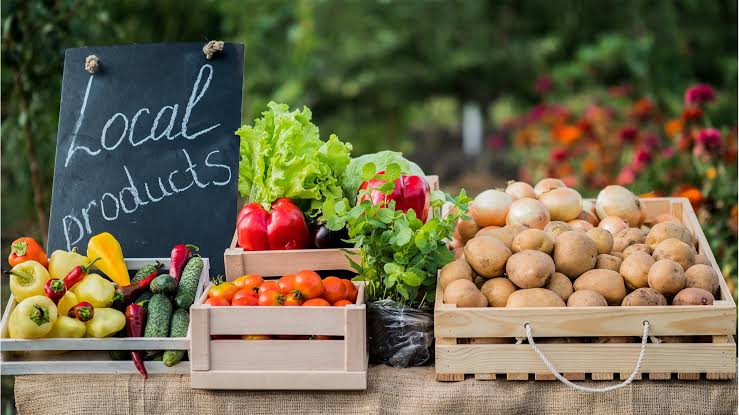
Many African countries spend billions of dollars every year importing food they could grow and process at home. Wheat, rice, edible oils, dairy products, sugar and processed foods all arrive from abroad, draining foreign exchange and leaving local farmers on the sidelines. Import substitution offers a different path: produce high-value food locally, keep the money in the economy and build stronger agribusinesses. For farmers, processors and young entrepreneurs, it is one of the biggest opportunities in the sector.
What is import substitution?
Import substitution means replacing imported goods with locally made alternatives. In agribusiness, it means identifying foods the country buys from abroad in large quantities and building the farms, factories and supply chains to produce them domestically. The focus is on high-value products, because these earn the most money per unit and create the most jobs.
The opportunity is large. Africa’s food market may be worth more than US$1 trillion a year by 2030, as imports are replaced with high-value, locally produced food. The World Bank has similarly projected that agriculture and agribusiness together could reach a US$1 trillion industry in Sub-Saharan Africa by 2030.
Why import substitution matters
It protects food security.Heavy dependence on imports leaves countries exposed to global shocks. The war in Ukraine showed how fragile agricultural value chains are and how much some regions rely on a few “breadbasket” exporters. Local production reduces this risk.
It saves foreign exchange.Every dollar spent on imported food is a dollar that leaves the economy. Producing locally reduces pressure on currencies and frees money for other development needs.
It creates jobs and income.Processing, packaging, transport and retail all employ people. When a country makes its own cooking oil instead of importing it, jobs are created across the entire chain, from farm to shelf.
It adds value for farmers.Farmers who supply local processors have a ready market and often get fairer, more stable prices than those who rely on informal sales alone.
High-value foods with strong potential
Several product categories stand out for local production.
Edible oils are a major import in many countries. Sunflower, soybean, palm and groundnut oils can be grown and pressed locally and the by-products can feed livestock. Wheat and rice have large import bills and expanding local production, milling and storage can capture a share of the market. Dairy products such as milk powder, yoghurt and cheese are heavily imported in some regions, while local milk is often wasted due to poor cooling and transport. Poultry, eggs and fish also offer strong opportunities, with fish farming helping replace frozen imports. Processed foods, including fruit juices, sauces, snacks, baby foods and flours, can be produced by small and medium enterprises using local raw materials.
Staple chains such as rice, maize, cassava and soybean are already being targeted by several African countries as investment priorities.
Challenges holding back local production
Import substitution is not automatic. Local producers face real obstacles. Many struggle with high production costs, unreliable electricity and expensive financing. Quality and consistency are another problem, since supermarkets and manufacturers need steady volumes that meet standards. Cheap imports can undercut local prices, and weak storage, poor roads and fragmented logistics raise costs further. Processing equipment is often expensive, and many farmers lack the skills or market links needed to supply formal buyers.
How to make it work
Support local processing.Investment in milling, pressing, packaging and cold storage turns raw crops into products that can compete with imports.
Link farmers to buyers. Contract farming and cooperatives give processors reliable supply and give farmers a guaranteed market. Fixing weak logistics between farm and market is key, as experts have noted that smallholder productivity is rising while the midstream value chain remains fragmented.
Improve quality and standards. Meeting national standards, proper packaging and consistent branding help local products win consumer trust.
Provide affordable finance.Credit, grants and equity are essential. Funding is growing, as programs now offer equity, debt and grants for agribusiness value chains and smallholder support.
Use smart policy. Governments can help through fair tax treatment, investment in roads and power and support for research and seed development, while avoiding measures that raise food prices for consumers.
Opportunities for Young Agripreneurs
For entrepreneurs, every imported food product is a potential business idea. Start by studying what your area buys from outside, then ask whether it can be produced or processed locally. A small oil press, a poultry unit, a milk-cooling hub or a snack-processing business can all start small and grow. Join cooperatives, build relationships with farmers and focus on quality from day one.
Import substitution is about more than replacing foreign goods. It builds resilient food systems, keeps money circulating at home and gives farmers and entrepreneurs a growing market. With investment in processing, better logistics, fair policies and access to finance, Africa can turn its import bill into local jobs, income and food security. The demand is already there, and the businesses that seize it first will shape the future of the continent’s food economy.

Author: Moureen Koech
Moureen Koech is a passionate Digital Journalist, an adept Agribusiness Writer with a keen eye for news and an impactful story-teller,whose stories provide key value to Agripreneurs and stakeholders in the Agricultural sector