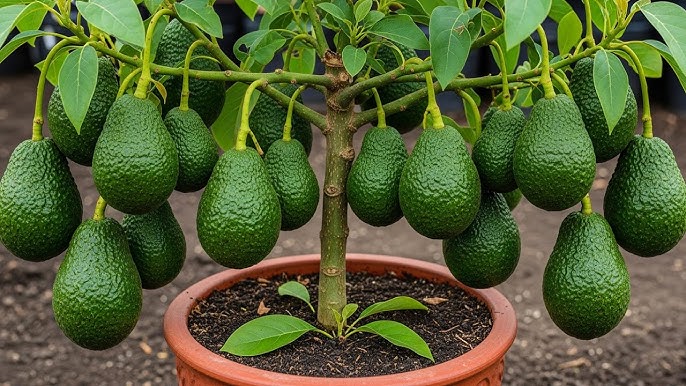
Avocado farming has long been associated with large orchards, vast land requirements and years of waiting before the first harvest. However, a new and innovative approach is transforming this narrative, avocado container farming. This modern farming method is not only increasing productivity but also making avocado cultivation accessible to smallholder farmers, urban growers and entrepreneurs with limited space.
From compact potted trees loaded with fruit to neatly packed crates ready for market, container farming is redefining how avocados are grown, harvested, and sold. It is a practical, sustainable solution that aligns with the growing demand for efficient and climate-smart agriculture.
Understanding Avocado container farming
Avocado container farming involves growing dwarf or grafted avocado trees in large pots or containers instead of planting them directly in the ground. These containers are usually placed in controlled environments such as greenhouses, shade nets, rooftops or even small backyard spaces.
Unlike traditional avocado trees that can grow up to 10–15 meters tall, container-grown varieties remain compact and manageable. Despite their smaller size, they are highly productive and capable of producing quality fruits within a shorter time frame, typically between 2 to 3 years after planting.
This method allows farmers to closely monitor plant health, nutrient intake and environmental conditions, leading to improved yields and consistent fruit quality.
What container avocado farming looks like
A typical container avocado farming setup showcases compact trees thriving in large pots, often arranged neatly in rows within a greenhouse or shaded structure. These trees carry clusters of healthy, dark green avocados along their branches, demonstrating their high productivity despite limited space.
Close observation reveals well-formed fruits with the characteristic rough, pebbly skin that signals maturity and quality. Harvesting is done carefully using pruning tools to avoid damaging the tree, ensuring continuous production cycles.
The final stage is equally rewarding, crates filled with fresh, market-ready avocados, ready for sale or export. This entire process highlights the efficiency and profitability of container farming.
Why container farming is a game-changer
1. Space Efficiency and Accessibility
One of the biggest advantages of container avocado farming is its ability to maximize limited space. Traditional avocado farming requires large tracts of land, which can be a barrier for many farmers.
With container farming, avocados can be grown in small areas such as balconies, rooftops, courtyards or compact greenhouse setups. This opens up opportunities for urban agriculture and allows more people to participate in agribusiness without the need for extensive land.
2. Faster Fruiting and Early Returns
Time is a critical factor in farming investments. Traditional avocado trees may take several years to begin fruiting. In contrast, container-grown dwarf varieties can start producing fruit within 2 to 3 years.
This significantly reduces the waiting period for farmers, enabling quicker returns on investment and making avocado farming more attractive, especially for young entrepreneurs and small-scale growers.
3. Water Efficiency and Conservation
Water scarcity is a growing concern in agriculture, particularly in arid and semi-arid regions. Container farming addresses this challenge through precise irrigation methods such as drip systems.
These systems deliver water directly to the plant’s root zone, minimizing wastage and ensuring optimal moisture levels. Compared to traditional irrigation methods, this approach can dramatically reduce water usage while maintaining healthy plant growth.
4. Full Control Over Soil and Nutrients
Avocado trees are highly sensitive to soil conditions, especially drainage and pH levels. Poor soil quality can lead to stunted growth or even plant death.
Container farming eliminates this risk by allowing farmers to create a customized growing medium. By mixing the right combination of soil, compost, and other organic materials, growers can provide ideal conditions for avocado trees regardless of the natural soil quality in their area.
5. Mobility and Climate Flexibility
Another unique benefit of container farming is mobility. Unlike trees planted in the ground, container-grown avocados can be moved as needed.
Farmers can reposition plants to maximize sunlight, protect them from extreme weather conditions, or even move them indoors during cold periods. This flexibility makes it possible to grow avocados in regions where traditional farming would not be viable.
6. Higher Yield per Square Meter
Container farming allows for higher planting density compared to conventional methods. Multiple trees can be grown in a small space, increasing the overall yield per square meter.
This makes it an efficient farming model, especially for commercial production where maximizing output is essential for profitability.
The role of container farming in sustainable development
Avocado container farming is more than just a modern technique, it is a powerful tool for sustainable development. It supports efficient resource use, reduces environmental impact and promotes inclusive agricultural practices.
By using less water and preventing soil degradation, this method contributes to environmental conservation. At the same time, it empowers smallholder farmers and urban growers to engage in high-value agriculture without the traditional barriers of land and climate.
For communities with limited agricultural resources, container farming offers a practical pathway to food security and economic growth. It shortens the journey from planting to profit, making agribusiness more accessible and sustainable.
Avocado container farming is revolutionizing the way avocados are produced across the world. By combining innovation with sustainability, it addresses many of the challenges faced in traditional agriculture, limited land, water scarcity and climate constraints.
Whether you are a small-scale farmer, an urban gardener or an agribusiness investor, this method presents a viable and profitable opportunity. As demand for avocados continues to grow globally, container farming stands out as a smart, future-focused solution for sustainable agricultural development.

Author: Moureen Koech
Moureen Koech is a passionate Digital Journalist, an adept Agribusiness Writer with a keen eye for news and an impactful story-teller,whose stories provide key value to Agripreneurs and stakeholders in the Agricultural sector