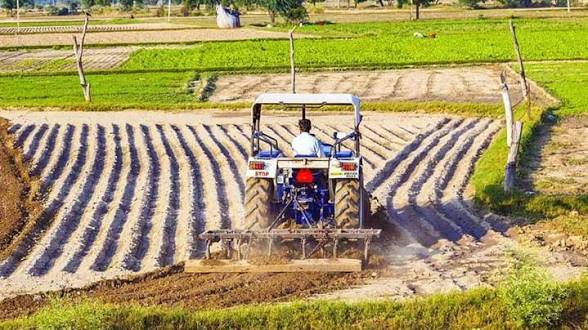
Farm mechanisation is the use of agricultural machinery and equipment to perform farming activities that may otherwise require significant amounts of manual labour. Tractors, planters, harvesters, irrigation equipment, threshers and other machinery can help farmers improve the efficiency of different stages of agricultural production.
As agricultural labour costs increase and farmers seek ways to produce more efficiently, mechanisation has become an important part of modern farming. It can benefit both small-scale and large-scale farmers when the appropriate equipment is selected and properly managed.
Increases farm productivity
One of the major benefits of farm mechanisation is its potential to increase productivity. Agricultural machinery can complete tasks such as land preparation, planting and harvesting faster than manual labour.
For example, a tractor can prepare a relatively large area of land within a shorter period than farmers working with hand tools. This allows farmers to cultivate larger areas or dedicate more time to other important farm activities.
Mechanisation can therefore help farmers improve the amount of agricultural output they obtain from available land and labour.
Saves time
Timely completion of farm activities is critical in agriculture. Delays in land preparation, planting or harvesting can affect crop performance and potentially reduce yields.
Farm machinery allows farmers to complete labour-intensive activities more quickly. This is particularly useful during busy agricultural seasons when many farmers need labour and equipment at the same time.
Faster operations can help farmers follow their production schedules and complete important tasks within appropriate periods.
Reduces labour requirements
Agriculture can be highly labour-intensive, particularly when activities such as ploughing, planting, weeding and harvesting are carried out manually.
Mechanisation can reduce the amount of manual labour required for certain activities. This can be particularly useful where agricultural labour is expensive or difficult to find.
Rather than eliminating the need for workers entirely, mechanisation can allow available labour to focus on tasks that require human skills, supervision and decision-making.
Improves efficiency
Machinery can improve the efficiency and consistency of various agricultural operations. Properly calibrated equipment can help farmers carry out activities at more uniform rates and depths.
For example, mechanical planters can place seeds according to specific spacing requirements, while certain fertiliser application equipment can distribute inputs more consistently.
Improved efficiency can contribute to better use of seeds, fertilisers, water and other farm resources.
Supports timely planting and harvesting
Weather conditions often determine when farmers should undertake certain agricultural activities. Planting too early or too late can affect crop development, while delays during harvesting can result in losses.
Farm mechanisation allows farmers to complete large-scale operations within shorter periods. This can make it easier to take advantage of favourable weather conditions.
Timely harvesting can also help reduce the risk of crops remaining in the field for too long, particularly when weather conditions are changing.
Reduces physical strain
Farming involves physically demanding activities that can place significant strain on workers. Mechanisation can reduce the amount of heavy manual work required on farms.
Machinery can perform tasks such as ploughing, lifting, transporting and harvesting, reducing the physical burden on farmers and farm workers.
This can be especially useful for older farmers and agricultural enterprises where labour-intensive activities are difficult to sustain over long periods.
Improves farm scale and commercialisation
Mechanisation can make it easier for farmers to expand production and operate agriculture as a commercial enterprise. When farmers have access to suitable machinery, they can potentially cultivate larger areas and handle greater quantities of produce.
Larger production volumes may create opportunities to supply institutional buyers, processors, wholesalers and other commercial markets.
However, expansion should be based on available markets, finances, labour and other resources rather than machinery alone.
Reduces post-harvest losses
Some agricultural machinery is specifically designed to improve post-harvest handling. Equipment such as threshers, shellers, dryers, graders and sorting machines can speed up the processing of harvested products.
Faster and better handling can reduce the amount of produce damaged during processing and storage. Proper equipment can also improve the quality and consistency of agricultural products before they reach the market.
Reducing post-harvest losses can help farmers retain more of the value generated by their production.
Encourages modern farming practices
Farm mechanisation can support the adoption of modern agricultural techniques. Machinery can be integrated with technologies such as GPS, precision agriculture, automated irrigation and digital farm management systems.
These technologies can provide farmers with greater control over production activities and resource use.
For example, precision equipment can help farmers apply inputs according to specific field conditions rather than treating an entire farm in exactly the same way.
Creates agricultural business opportunities
Farm mechanisation can also create opportunities beyond individual farm ownership. Entrepreneurs can establish machinery-hire businesses that provide tractors, planters, harvesters and other equipment to farmers who cannot afford to purchase their own machines.
Equipment leasing and contracting services can make mechanisation more accessible to small-scale farmers while creating income opportunities for machinery owners.
Farm mechanisation can improve agricultural productivity, save time, reduce physical labour and support timely completion of important farming activities. It can also improve efficiency, reduce some post-harvest losses and create opportunities for agricultural businesses such as equipment leasing and machinery-hire services.
However, farmers should select machinery based on their actual production needs, farm size, available capital and expected returns. Equipment also requires proper operation, maintenance and storage to remain useful over time.
When appropriately planned and managed, farm mechanisation can contribute to more efficient, productive and commercially sustainable agricultural enterprises.

Author: Moureen Koech
Moureen Koech is a passionate Digital Journalist, an adept Agribusiness Writer with a keen eye for news and an impactful story-teller,whose stories provide key value to Agripreneurs and stakeholders in the Agricultural sector