Fruit farming has become one of the most profitable agribusiness ventures in Kenya and across Africa. With the increasing demand for healthy foods, fresh juices, and export produce, commercial fruit farming continues to attract both small-scale and large-scale farmers. Fruits are not only important for nutrition but also provide farmers with reliable income throughout the year. Many fruit crops have strong local and international markets, making them ideal for agribusiness investment.
Commercial fruit farming can generate high profits when farmers select the right fruit varieties, use proper farming methods and target good markets. Some fruits mature quickly and provide returns within months, while others offer long-term income for many years after planting. Farmers interested in fruit farming should consider climate conditions, market demand, water availability, and disease resistance before choosing which fruits to grow.
Avocado Farming
Avocado farming is currently among the most profitable fruit businesses in Africa. The global demand for avocados has increased rapidly due to their nutritional benefits and use in healthy diets. Hass avocado is the most preferred variety because it has a long shelf life and strong export demand.
Avocado trees thrive in areas with moderate rainfall and well-drained soils. Once the trees mature, farmers can harvest large quantities of fruits every season. Export markets in Europe, Asia, and the Middle East continue to create huge opportunities for avocado farmers.
Commercial avocado farming requires quality grafted seedlings, proper spacing, pruning, and pest control. Farmers should also apply manure and fertilizers regularly to improve yields. With good management, avocado farming can provide income for many years.
Passion fruit farming
Passion fruit farming is another highly profitable agribusiness due to the strong demand for juice processing and fresh consumption. Passion fruits are rich in vitamins and antioxidants, making them popular among consumers.
Purple passion fruits grow well in cooler highland areas, while yellow passion fruits perform better in warmer climates. The crop matures relatively fast and can begin producing within eight to twelve months after planting.
Farmers should install strong support structures because passion fruit vines require support for proper growth. Irrigation during dry seasons helps maintain high production. Disease management is also essential because fungal infections and pests can reduce yields.
Passion fruit farming can generate continuous income because harvesting occurs several times a year. Farmers who supply hotels, supermarkets, and juice processors often earn higher profits.
Mango farming
Mango farming remains one of the most common and profitable fruit businesses in Kenya. Mangoes are highly consumed locally and are also processed into juices, jams, and dried fruits.
Improved mango varieties such as Apple, Kent, Tommy Atkins and Ngowe are preferred for commercial production due to their high yields and market demand. Mango trees adapt well to semi-arid regions and can survive dry conditions better than many crops.
Farmers should control pests such as fruit flies, which are among the biggest challenges in mango farming. Proper pruning and irrigation improve fruit quality and productivity. During off-season periods when supply is low, mango prices usually increase significantly, giving farmers better returns.
Banana farming
Bananas are among the most consumed fruits in Africa, making banana farming a stable and reliable business. Bananas have a ready market in homes, schools, restaurants, and supermarkets throughout the year.
Tissue culture bananas are highly recommended because they produce higher yields and have better disease resistance compared to traditional varieties. Banana farming requires fertile soils, adequate moisture, and proper nutrient management.
Farmers can earn additional income through value addition by making banana crisps, flour, juice and wine. Since bananas mature at different times, farmers enjoy continuous harvesting and regular cash flow throughout the year.
Strawberry farming
Strawberry farming is a high-value agribusiness suitable for farmers with limited land. Strawberries are highly demanded in hotels, supermarkets, bakeries, and juice processing industries.
The fruits mature quickly and can begin generating income within a few months after planting. Strawberry farming is especially profitable near urban areas where demand is high.
Farmers should use mulching and irrigation to maintain soil moisture and improve fruit quality. Proper pest and disease management is also important because strawberries are sensitive to fungal infections.
Due to their short shelf life, farmers benefit more by selling strawberries directly to consumers or processing them into jam and juice products.
Pineapple farming
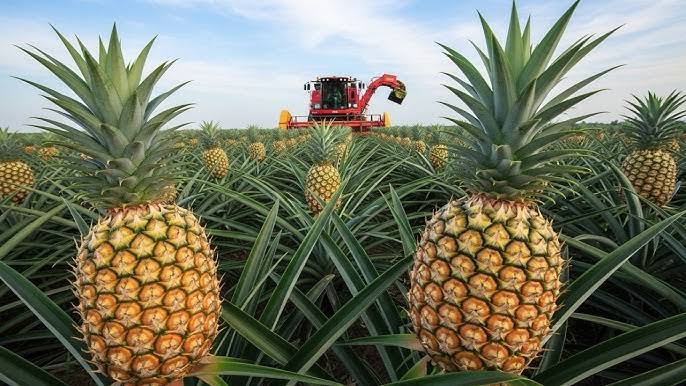
Pineapple farming is another profitable fruit business with strong local and export demand. Pineapples are widely consumed fresh and are also used in juice processing and food industries.
The crop grows well in warm climates with well-drained soils. Pineapples are relatively drought tolerant and can perform well even in areas with moderate rainfall.
Commercial pineapple farming requires proper land preparation, spacing, and weed control. Farmers who practice good management can achieve high yields and attractive profits. Value addition through drying and juice processing further increases income opportunities.
Papaya farming
Papaya farming offers quick returns because papaya trees mature faster than most fruit crops. Farmers can begin harvesting within eight to ten months after planting.
Papayas are highly nutritious and have strong demand in fresh fruit markets and juice processing industries. Improved papaya varieties produce large fruits with better market value.
Papaya plants require warm temperatures, fertile soils and proper drainage. Farmers should monitor diseases and pests closely because papayas are vulnerable to viral infections and fungal diseases.
With proper management, papaya farming can generate steady income throughout the year because harvesting occurs continuously.
Dragon fruit farming
Dragon fruit farming is becoming increasingly popular due to its high market value and health benefits. The fruit is rich in antioxidants, vitamins and fiber, making it attractive to health-conscious consumers.
Dragon fruit plants are drought tolerant and suitable for dry areas with irrigation. The fruits have a unique appearance and often fetch premium prices in supermarkets and export markets.
Although the initial investment may be higher due to support structures, dragon fruit farming can generate excellent profits once production begins.
Commercial fruit farming is one of the best agribusiness opportunities for farmers seeking long-term profits and sustainable income. Fruits such as avocados, passion fruits, mangoes, bananas, strawberries, pineapples, and dragon fruits have strong demand in local and international markets.
Success in fruit farming depends on selecting the right fruit varieties, maintaining proper crop management, controlling pests and diseases and accessing reliable markets. Farmers who adopt modern farming techniques and practice value addition can maximize profits and build successful agribusiness ventures.

Author: Moureen Koech
Moureen Koech is a passionate Digital Journalist, an adept Agribusiness Writer with a keen eye for news and an impactful story-teller,whose stories provide key value to Agripreneurs and stakeholders in the Agricultural sector