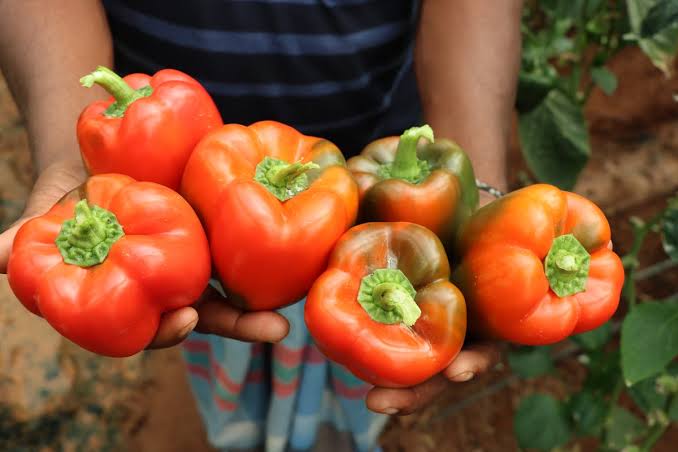
Capsicum farming has become one of the most profitable vegetable farming ventures in many parts of the world. Also known as sweet pepper or bell pepper, Capsicum is widely grown for both local consumption and export markets. Its high demand in supermarkets, hotels and fresh produce markets makes it an attractive agribusiness opportunity for farmers.
In countries such as Kenya, capsicum farming is gaining popularity because the crop can be grown both in open fields and greenhouses. With proper management, farmers can achieve high yields and generate significant profits.
Why capsicum farming is profitable
Capsicum is a high-value vegetable crop that offers good returns compared to many traditional crops. The crop matures relatively fast, usually within three to four months after planting, allowing farmers to earn income within a short period.
Another advantage of capsicum farming is its strong market demand. The vegetable is widely used in restaurants, homes, and food processing industries. Capsicum is also rich in vitamins A and C, which increases its popularity among health-conscious consumers.
In addition, farmers can grow different varieties of capsicum such as green, red and yellow peppers, which often sell at premium prices in urban markets.
Suitable conditions for capsicum farming
Capsicum grows well in warm climates with moderate rainfall. The crop performs best in temperatures ranging between 18°C and 30°C. Extremely high temperatures can reduce flower formation and fruit quality.
The crop grows well in well-drained, fertile soils rich in organic matter. Sandy loam soils with a slightly acidic to neutral pH are ideal for capsicum production.
Proper irrigation is important because capsicum plants require consistent moisture for healthy growth. Drip irrigation is often recommended because it helps conserve water while supplying moisture directly to plant roots.
Costs of capsicum farming
The cost of capsicum farming depends on factors such as farm size, production system and location. Farmers growing capsicum in greenhouses usually spend more compared to those using open-field methods.
Some of the common costs involved in capsicum farming include:
Land Preparation
Before planting, the land must be cleared, ploughed and prepared to create a suitable environment for crop growth. Farmers may also add manure or compost to improve soil fertility.
Seeds or Seedlings
Farmers must purchase high-quality capsicum seeds or seedlings from reliable suppliers. Hybrid seeds often produce higher yields but are more expensive than traditional seeds.
Fertilizers and Manure
Capsicum plants require adequate nutrients for healthy growth and fruit development. Farmers often apply both organic manure and inorganic fertilizers to ensure balanced nutrition.
Irrigation
Water management is another important cost. Farmers may invest in irrigation systems such as drip irrigation to maintain consistent soil moisture levels.
Pest and Disease Control
Capsicum plants are vulnerable to pests such as aphids, whiteflies and thrips, as well as diseases like bacterial wilt and powdery mildew. Farmers need to use pesticides or integrated pest management techniques to protect the crop.
Labor
Labor costs include activities such as transplanting seedlings, weeding, pruning, irrigation, harvesting and sorting produce for sale.
For example, in Kenya, the estimated cost of producing capsicum on one acre in open-field farming may range between,KSh 80,000 and KSh 150,000 depending on the production method and input costs.
Capsicum yields per Acre
Capsicum can produce high yields when farmers use improved seeds and good farming practices. The yield varies depending on the variety grown, soil fertility and crop management techniques.
In open-field farming, farmers can harvest between 8 and 12 tonnes of capsicum per acre. However, greenhouse farming can produce significantly higher yields, sometimes reaching 20 to 30 tonnes per acre under proper management.
Capsicum plants usually start producing fruits about 70 to 90 days after transplanting. The harvesting period may continue for several weeks, allowing farmers to harvest multiple times.
Capsicum market prices
Capsicum prices vary depending on market demand, supply, and seasonal factors. Prices are generally higher during dry seasons when vegetable supply is limited.
In Kenyan markets, capsicum prices may range between KSh 80 and KSh 200 per kilogram, depending on the quality and variety of the produce. Colored capsicum varieties such as red and yellow peppers often fetch higher prices than green peppers.
Farmers who supply supermarkets, hotels, or export markets can often earn better prices compared to those selling in local markets.
Profit potential in capsicum farming
Capsicum farming can generate attractive profits if farmers manage production efficiently and access good markets. For example, if a farmer produces 10 tonnes of capsicum per acre and sells at an average price of KSh 100 per kilogram, the total revenue could reach KSh 1,000,000.
After subtracting production costs, the farmer may still make a significant profit from the crop. Greenhouse capsicum farming may generate even higher returns due to higher yields and premium market prices.
However, profitability depends on proper crop management, pest control, and reliable market access.
Tips for successful capsicum farming
Farmers interested in capsicum farming should consider several factors to maximize productivity and profits. Using high-quality seeds, maintaining proper irrigation, and practicing good pest management are essential for healthy crop growth.
Farmers should also conduct market research before planting to ensure there is demand for their produce. Establishing connections with supermarkets, wholesalers, and restaurants can help guarantee consistent sales.
Post-harvest handling is also important because capsicum is a delicate crop that can spoil quickly if not handled properly.
Capsicum farming is a profitable agribusiness opportunity for farmers who are willing to invest in proper crop management and market planning. The crop grows relatively quickly, produces high yields and enjoys strong market demand in many regions.
With good farming practices and access to reliable markets, capsicum farming can provide farmers with a sustainable source of income while contributing to food supply in local and regional markets.

Author: Moureen Koech
Moureen Koech is a passionate Digital Journalist, an adept Agribusiness Writer with a keen eye for news and an impactful story-teller,whose stories provide key value to Agripreneurs and stakeholders in the Agricultural sector