Every season, farmers make decisions that shape their income: what to plant, when to spray, how much fertilizer to apply, and when to harvest. For decades, the advice behind those decisions came from extension officers, agro-dealers, and neighbors.
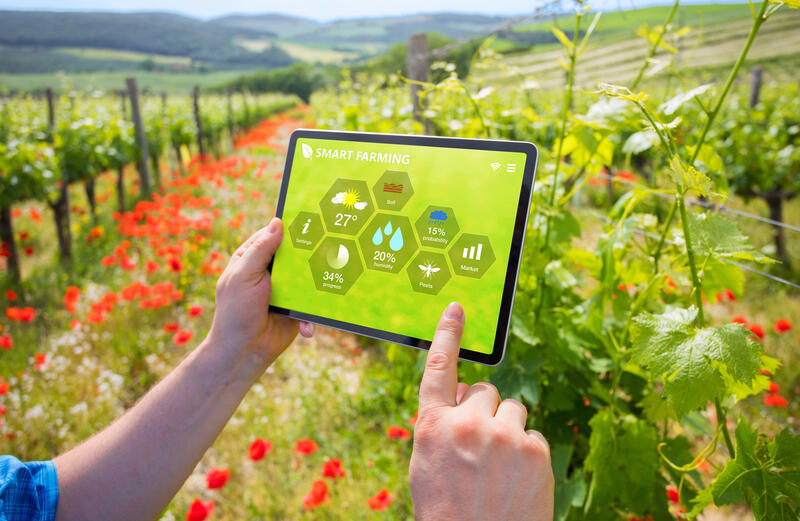
Today, a new layer of support is emerging in the form of farmer-led digital advisory services and AI crop diagnostics. Together, they are putting expert-level knowledge into the hands of farmers through a smartphone.
What is digital advisory in agriculture?
Digital advisory refers to the delivery of agricultural information through mobile apps, SMS, voice messages, WhatsApp groups, and online platforms. The information can cover weather forecasts, planting calendars, pest alerts, market prices and best practices for specific crops. Unlike traditional extension, which depends on an officer physically reaching a farm, digital advisory can serve thousands of farmers at once, at a fraction of the cost.
What makes the newest generation of these services different is that they are increasingly farmer-led. Instead of one-way messages from institutions, farmers share their own observations, photos, and experiences. Peer networks, farmer groups, and lead farmers act as trusted voices, which improves adoption because people tend to follow advice from someone who farms in similar conditions.
How AI crop diagnostics works
AI crop diagnostics uses machine learning models trained on large collections of plant images to identify diseases, pest damage, and nutrient deficiencies. A farmer photographs a affected leaf or plant using a smartphone, uploads it to an app, and receives a diagnosis within seconds, often with recommended treatment options. Some tools work offline and sync once a connection is available, which matters in areas with weak network coverage.
The accuracy of these tools has improved significantly as datasets have grown. Conditions such as maize lethal necrosis, cassava mosaic disease, tomato blight, and fall armyworm damage can now be flagged early, before they spread across a field. Early detection is the difference between treating a few plants and losing an entire harvest.
Key benefits for farmers and agribusinesses
The most obvious benefit is faster, better-informed decisions. A farmer who identifies a disease within a day rather than a week can act while treatment is still cheap and effective. This reduces crop losses, lowers unnecessary chemical use, and protects profit margins.
Cost savings are another advantage. Many farmers spend money on inputs that are not needed, or the wrong ones, because they cannot diagnose a problem accurately. Precise diagnosis helps them buy only what the crop requires. For agribusinesses, including input suppliers, buyers, and processors, healthier harvests mean more consistent quality and supply, which strengthens the whole value chain.
Digital advisory also improves inclusion. Voice-based services in local languages allow farmers with limited literacy to access advice. Women and young farmers, who often have less access to traditional extension, can benefit from tools they can use privately and at their own pace.
The role of farmer-led models
Farmer-led approaches address a common weakness of technology projects, which is that tools built far from the field often fail to match local needs. When farmers help design content, validate recommendations, and share results, the advice becomes more relevant and more credible. Lead farmers can translate technical recommendations into practical steps, while farmer cooperatives can use digital tools to coordinate planting, bulk input purchases, and collective marketing.
Feedback loops are also valuable. When thousands of farmers upload crop photos and report outcomes, the data improves the AI models and reveals pest and disease patterns across regions. Governments and agribusinesses can use this information to plan responses to outbreaks before they become crises.
Challenges that still need attention
Despite the promise, there are real obstacles. Internet connectivity and smartphone ownership remain uneven in many rural areas. Digital literacy gaps mean some farmers need training before they can use apps confidently. AI models can also perform poorly on crop varieties or conditions that were not well represented in their training data, which can lead to wrong diagnoses.
Data ownership and privacy deserve attention too. Farmers should know who owns the images and information they share and how it is used. Trust is essential, and platforms that are transparent about data use will have an advantage in earning long-term adoption. Finally, digital tools work best alongside human support, not as a replacement. Extension officers and agronomists remain important for complex problems and for building confidence in new technology.
What agribusinesses can do
Agribusinesses have a clear opportunity to support this shift. Input companies can integrate diagnostic tools with product recommendations and delivery. Buyers and processors can offer advisory services to their contracted farmers to improve quality and yields. Financial institutions can use advisory data to better assess risk and design suitable loans or insurance products. Partnerships between technology providers, farmer groups, governments, and private companies tend to produce the most sustainable results.
Farmer-led digital advisory and AI crop diagnostics are changing how agricultural knowledge is shared. By combining local experience with fast, accurate technology, they help farmers protect their crops, cut costs, and improve incomes. The challenges of connectivity, training, and data trust are real, but they can be solved through thoughtful design and strong partnerships. For farmers and agribusinesses alike, investing in these tools is a practical step toward a more productive and resilient future.

Author: Moureen Koech
Moureen Koech is a passionate Digital Journalist, an adept Agribusiness Writer with a keen eye for news and an impactful story-teller,whose stories provide key value to Agripreneurs and stakeholders in the Agricultural sector