Livestock feed pellets are a highly efficient and nutritious way to feed animals. They are made by combining raw materials such as cereals, seeds, straws, legumes, minerals, vitamins and additives to create a balanced and palatable diet. Pelletized feed reduces waste, improves digestion and ensures animals get consistent nutrition.
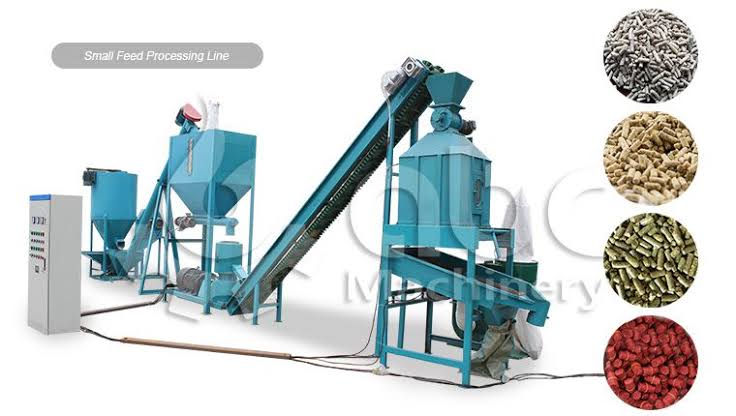
If you’re planning to produce your own feed, using a pellet mill is one of the easiest and most convenient methods. Below is a detailed guide on how to make livestock feed with a pellet mill.
What is a pellet mill?
A pellet mill is a machine used to compress and shape finely ground feed materials into small, dense pellets. These pellets are easy to store, transport and feed to livestock such as poultry, cattle, goats, pigs and rabbits.
Step 1: Preparation of raw materials
The first step in making livestock feed pellets is preparing your raw materials. These ingredients should be stored properly in silos, tanks or dry storage areas to prevent contamination and spoilage.
This stage involves:
- Assembling all ingredients
- Weighing them according to a feed formulation
- Crushing or pre-processing where necessary
The choice of ingredients should depend on the specific nutritional needs of your livestock. For example, dairy cows require more protein and calcium, while poultry may need higher energy feeds. Consulting a livestock nutritionist is highly recommended to create a balanced formula.
Proper measurement is critical. Always weigh ingredients accurately based on your feed design and the capacity of your pellet mill machine.
Step 2: Initial Crushing (Grinding)
After preparation, the raw materials are crushed using a feed hammer mill. This process reduces large particles into smaller, uniform sizes, making it easier to mix and pelletize.
Key benefits of crushing include:
- Improved mixing of ingredients
- Better digestibility for animals
- Enhanced pellet quality
At this stage, dry additives such as vitamins and minerals can also be introduced into the mix.
Step 3: Mixing with Molasses
Once the raw materials are ground, a liquid binder commonly molasses is added to the mixture. Molasses serves several purposes:
- Improves palatability (makes feed more attractive to animals)
- Acts as a binding agent to hold pellets together
- Adds energy content to the feed
The molasses should be evenly distributed throughout the mixture to ensure consistency in the final pellets.
Step 4: Second and Final Crushing
The mixture is then passed through a secondary grinding or mixing process to achieve a fine, uniform powder. This step ensures:
- Smooth pellet formation
- Better compression in the pellet mill
- Uniform nutrient distribution
A feed mixing machine is typically used at this stage to achieve the desired consistency.
Step 5: Pellet Making
This is the core stage of the process where the actual pellets are formed.
The finely ground mixture is fed into the pellet mill machine, where:
- Heat and pressure are applied
- The material is forced through a die
- Pellets are shaped and cut into uniform sizes
The size of the pellets can be adjusted depending on the type of livestock. For example:
- Small pellets for poultry and rabbits
- Larger pellets for cattle and goats
After extrusion, the pellets are usually hot and soft. They must be cooled and dried to remove excess moisture before storage.
Step 6: Cooling and Drying
Fresh pellets contain moisture and heat, which can lead to spoilage if not handled properly. Cooling and drying help to:
- Harden the pellets
- Extend shelf life
- Prevent mold growth
You can use a pellet cooler or simply spread the pellets in a clean, dry, and ventilated area for natural cooling.
Step 7: Packaging and Storage
Packaging is the final step in livestock feed production. The pellets are:
- Weighed using a weighing machine
- Packed into bags or containers
- Sealed and labeled
Proper packaging protects the feed from moisture, pests and contamination.
Store the finished feed in a dry, rodent-proof environment. Good storage practices ensure the feed remains safe and nutritious until it is used or sold.
Important tips for successful feed pellet production
1. Choose the Right Equipment
There are different types and sizes of pellet mills available. Your choice should depend on your production scale, whether small-scale farming or commercial production.
2. Maintain Feed Quality
Always use high-quality raw materials. Poor-quality inputs can lead to low-quality feed and may harm your livestock.
3. Consult a Nutritionist
Different animals have different dietary requirements. A livestock nutritionist can help you formulate the right feed for optimal growth and productivity.
4. Ensure Proper Storage
Both raw materials and finished pellets should be stored correctly to avoid contamination, spoilage or poisoning of livestock.
5. Regular Machine Maintenance
Keep your pellet mill and other equipment clean and well-maintained to ensure efficiency and long-term performance.
Making livestock feed with a pellet mill is a smart and cost-effective way to improve animal nutrition and farm productivity. By following the correct process, from raw material preparation to packaging you can produce high-quality feed that meets your livestock’s needs.
With the right knowledge, proper equipment, and attention to detail, feed pellet production can also become a profitable agribusiness. Whether you are a small-scale farmer or planning large-scale production, mastering this process gives you a strong advantage in modern livestock farming.

Author: Moureen Koech
Moureen Koech is a passionate Digital Journalist, an adept Agribusiness Writer with a keen eye for news and an impactful story-teller,whose stories provide key value to Agripreneurs and stakeholders in the Agricultural sector