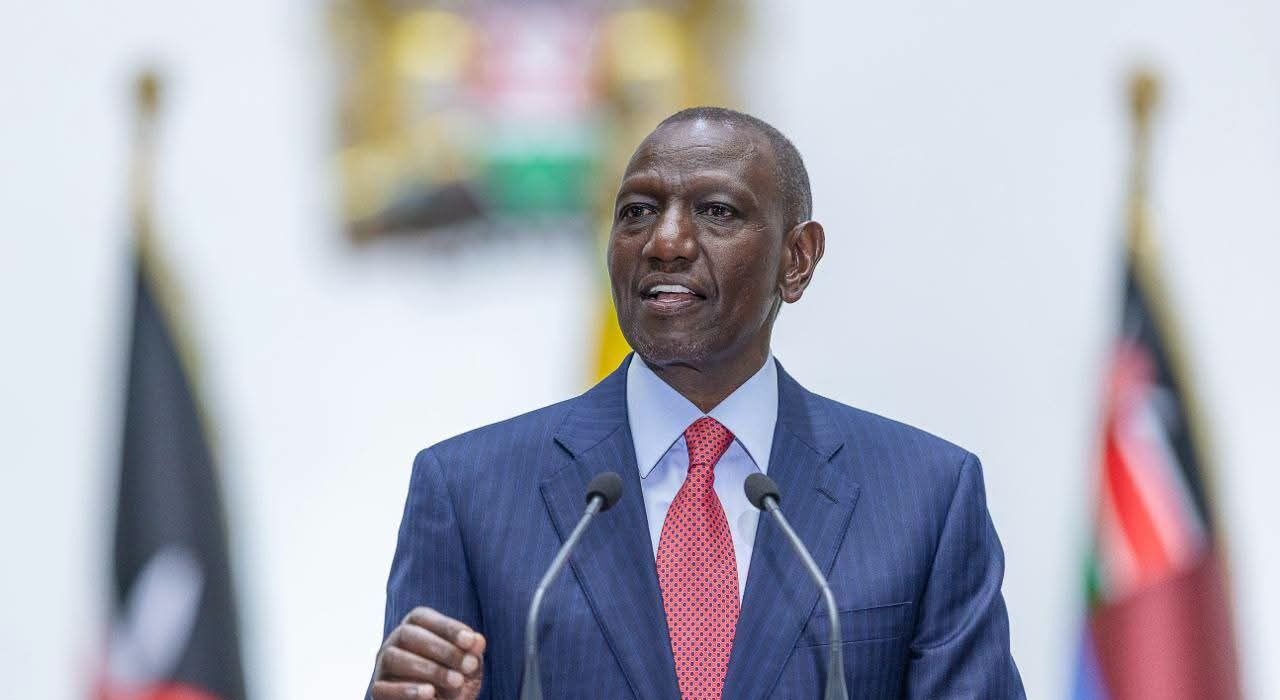
President William Ruto has announced fresh measures to support Kenya’s farming sector, pledging to lower the cost of fertiliser and certified seeds from next year as the government seeks to help farmers recover from widespread crop losses caused by poor rainfall.
Speaking during a church service at ACK Church in Moiben, Uasin Gishu County, on Sunday, the President said many farmers had suffered significant losses after the long rains underperformed in several parts of the country, leaving households with poor harvests and threatening food security.
Ruto urged farmers to prepare for the September-October short rains, assuring them that the government would intervene to make key agricultural inputs more affordable in a bid to increase production.
“The government will intervene to ensure farmers produce more,” the President said, adding that fertiliser and seed prices would be reduced from next year to encourage higher agricultural output and cushion the country against potential food shortages.
The announcement comes at a time when many farming regions have experienced below-average rainfall, disrupting planting and crop development during the main growing season. The poor performance of the rains has heightened concerns over food availability and farm incomes, particularly in Kenya’s grain-producing counties.
Agriculture remains one of Kenya’s largest economic sectors, contributing about one-fifth of the country’s Gross Domestic Product directly and supporting millions of livelihoods through crop, livestock and horticultural production. Weather-related shocks therefore have far-reaching implications for household incomes, food prices and the broader economy.
Beyond adverse weather, farmers have also faced concerns over the circulation of counterfeit farm inputs. Last week, detectives recovered approximately 3,500 bags of suspected fake fertiliser during an operation in Uasin Gishu County and arrested three suspects, with investigations continuing. The incident has renewed calls for stricter regulation of agricultural inputs to protect farmers from financial losses and poor yields.
The President said the planned reduction in fertiliser and seed prices forms part of a wider government strategy aimed at cushioning farmers while strengthening national food security amid increasingly unpredictable weather patterns.
Ruto also outlined plans to expand irrigation infrastructure through the National Infrastructure Fund, saying the government intends to reduce Kenya’s dependence on rain-fed agriculture by investing heavily in water harvesting projects.
According to the President, the programme will finance the construction of 50 mega dams, 200 medium-sized dams and more than 1,000 micro dams across the country. The projects are expected to increase water storage, expand irrigation and improve agricultural production, particularly in arid and semi-arid regions that are frequently affected by drought.
The irrigation strategy aligns with the government’s broader agricultural transformation agenda, which targets bringing an additional 2.5 million acres under irrigation over the next five to seven years. Officials say the investment is intended to improve food security, reduce reliance on erratic rainfall and position Kenya as a net exporter of agricultural products.
The renewed focus on irrigation comes as climate variability continues to pose one of the greatest challenges to Kenyan agriculture. Experts have increasingly called for investments in climate-smart farming practices, efficient water management and quality farm inputs to improve resilience against recurring droughts and changing rainfall patterns.
Ruto maintained that expanding irrigation, lowering production costs and improving farmers’ access to quality inputs will be central to the government’s efforts to stabilise food production and protect rural livelihoods in the coming years.
The President also used the occasion to defend his proposal for Vision 2060, saying the country’s next long-term development blueprint would succeed Vision 2030 and provide a framework for Kenya’s future growth through public participation, dismissing claims that the initiative is linked to the 2027 General Election.

Author: Moureen Koech
Moureen Koech is a passionate Digital Journalist, an adept Agribusiness Writer with a keen eye for news and an impactful story-teller,whose stories provide key value to Agripreneurs and stakeholders in the Agricultural sector