Pawpaw (papaya) farming remains one of the most attractive fruit enterprises for farmers due to its fast maturity, strong market demand and ability to produce fruits throughout the year. However, many farmers experience disappointment after investing time and resources into establishing an orchard only to realize that most of their trees are male and therefore produce little or no fruit.
This challenge is more common than many people think. A farmer may plant dozens or even hundreds of seedlings expecting high yields, only to end up with a field containing mostly non-fruiting trees. Understanding how pawpaw plants develop and selecting seedlings correctly is one of the most important steps toward establishing a profitable orchard.
Understanding the different types of pawpaw plants
One of the unique characteristics of pawpaw is that it has different sex forms. Unlike many fruit trees where every plant bears fruit, pawpaw plants can develop into three major categories:
- Male plants
- Female plants
- Hermaphroditic (bisexual) plants
Each of these plant types plays a different role in fruit production.
Male plants mainly produce flowers that generate pollen but do not normally produce fruits. Female plants produce fruits after receiving pollen from male flowers. Hermaphroditic plants contain both male and female reproductive structures in the same flower and can self-pollinate while also producing fruits.
For commercial farming, hermaphroditic plants are often considered the most desirable because they combine pollination ability with high fruit production.
Why farmers end up with too many male pawpaw trees
One of the biggest misconceptions in pawpaw farming is assuming that seedlings purchased from a nursery will automatically produce fruits. Unfortunately, the sex of a pawpaw plant cannot be accurately identified at the seedling stage.
This means that selecting healthy-looking seedlings alone does not guarantee future productivity.
Pawpaw sex expression is influenced by genetics and environmental conditions. Even seeds collected from productive trees may not always produce the same type of offspring.
Environmental stress can also influence flower development. Conditions such as drought, heat stress, and fluctuating temperatures may increase the development of male flowers or alter flower expression in some plants.
As a result, a farmer may plant 100 seedlings and later discover that only a small percentage are productive female or bisexual trees.
Proper selection of pawpaw seedlings for better yields
To improve the chances of establishing a productive orchard, farmers should adopt a more strategic approach rather than relying entirely on random nursery selection.
One of the recommended methods is establishing your own seedling nursery using seeds collected from multiple healthy and productive fruit sources. This approach increases genetic diversity and improves the likelihood of obtaining productive plants.
During nursery establishment:
- Select seeds from healthy, vigorous plants.
- Prefer seeds from productive orchards with desirable fruit qualities.
- Avoid seeds from weak or diseased trees.
- Use well-drained nursery media to encourage strong root development.
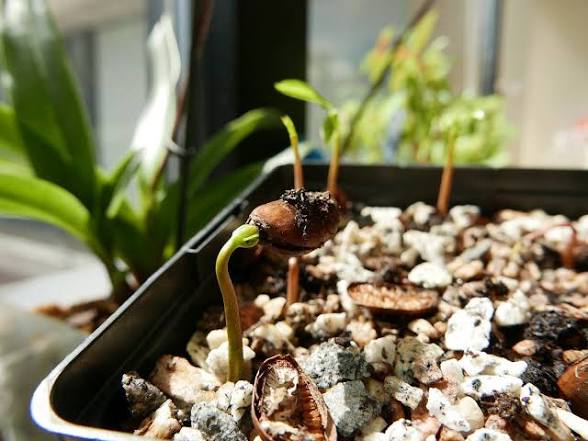
Once seedlings are established and reach approximately 20–30 cm in height, they are ready for transplanting.
However, instead of planting one seedling per hole, farmers are encouraged to transplant multiple seedlings together.
Plant several seedlings per hole
This practice surprises many farmers, but it significantly improves orchard success.
Rather than planting a single seedling in each hole, plant about 5–7 seedlings together per planting station.
The reason for this approach is simple: since the sex cannot be identified early, planting several seedlings increases the chances that at least one or two will eventually become productive bisexual or female plants.
Provide enough spacing between planting holes according to your production system and maintain good soil fertility to support healthy establishment.
Regular watering and weed control during early growth stages also improve survival rates.
Roguing: The secret to a highly productive orchard
Roguing refers to the process of removing unwanted plants once flowering begins.
When the pawpaw trees start producing flowers, carefully observe the flower structures and identify which plants are most productive.
At this stage:
- Remove excess male plants.
- Retain the strongest bisexual plants.
- Keep only the healthiest and most vigorous trees.
Ideally, maintain two productive bisexual plants per planting hole.
Where many female plants dominate the orchard, retain approximately one male plant for every 10–12 female plants to ensure sufficient pollination.
This balance allows proper fruit set while maximizing productive tree numbers.
Farmers who skip roguing often end up with overcrowded orchards and lower overall fruit production.
Successful pawpaw farming starts long before the first harvest, it begins with selecting the right seedlings and managing plant sex correctly.
Because pawpaw plants cannot be accurately sexed during the seedling stage, farmers should avoid assuming every nursery seedling will become productive. Establishing your own nursery, planting several seedlings per hole, and carrying out proper selection during flowering can dramatically improve orchard performance.
A well-managed orchard with the right proportion of bisexual, female, and male plants can deliver consistent harvests and better profits, while poor selection may leave farmers with beautiful trees but very few fruits.
Proper seedling selection and timely roguing remain some of the most powerful practices for turning pawpaw farming into a successful and productive agribusiness.

Author: Moureen Koech
Moureen Koech is a passionate Digital Journalist, an adept Agribusiness Writer with a keen eye for news and an impactful story-teller,whose stories provide key value to Agripreneurs and stakeholders in the Agricultural sector