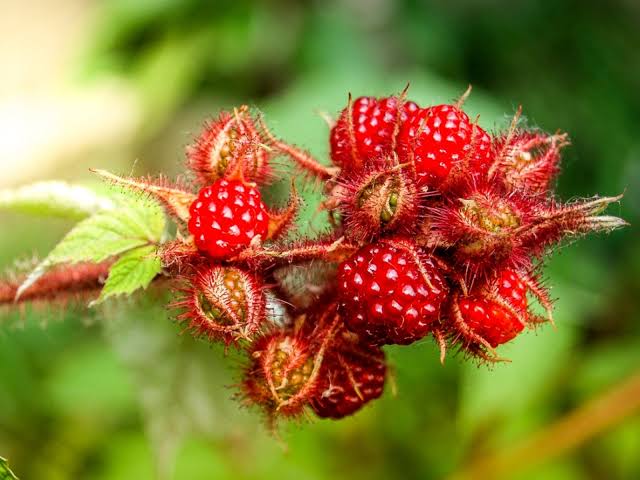
Wineberry farming in Kenya is an emerging specialty-fruit opportunity for farmers looking to diversify beyond traditional horticultural crops. Known for its attractive bright-red fruits and sweet-tart flavour, wineberry belongs to the Rubus group, which also includes raspberries and blackberries. Its distinctive appearance and potential for fresh consumption and value addition make it an interesting crop for farmers targeting premium and niche markets.
However, successful wineberry farming requires more than simply planting seedlings. Farmers need to understand the crop’s climate requirements, soil conditions, water needs, spacing, pruning, pest management and marketing opportunities before establishing a commercial crop.
What is wineberry?
Wineberry is a bramble-type berry that produces juicy, brightly coloured fruits. The berries can be consumed fresh or processed into a variety of products, including jams, juices, smoothies, desserts, yoghurt products, baked foods and frozen fruit products.
The crop can therefore provide opportunities for both fresh-fruit marketing and value addition. For small-scale farmers, this can be particularly useful because processing can create additional income streams and help reduce losses when fresh berries cannot be sold immediately.
Why consider wineberry farming in Kenya?
One of the main attractions of wineberry farming is its potential as a specialty fruit. Premium berries can attract consumers who are willing to pay more for quality, freshness and unique fruit varieties. Farmers can target supermarkets, hotels, restaurants, bakeries, fruit shops, food processors and direct consumers.
Wineberry can also contribute to farm diversification. Instead of relying entirely on conventional crops, farmers can introduce specialty fruits that serve different market segments. Value addition provides another opportunity because the fruits can be processed into products with a longer shelf life.
Nevertheless, profitability should not be assumed simply because a crop is considered high-value. Farmers should first research production costs, expected yields, prevailing prices, transportation expenses and reliable buyers in their area.
Suitable areas for wineberry farming in Kenya
Wineberry is generally associated with cool to moderate growing conditions, making some Kenyan highland areas worth considering. Potential locations include Kiambu, Nyeri, Nyandarua, Murang’a, the Meru and Embu highlands, Nakuru, Nandi, Kericho and Uasin Gishu.
Actual suitability will depend on elevation, temperature, rainfall, soil type, water availability and the specific planting material being used. Farmers should therefore assess their local conditions rather than assuming that every location within these counties will be suitable.
Conducting a soil test before establishing a commercial plantation is also important. Soil testing helps identify nutrient deficiencies and pH problems that can be corrected before planting.
Soil requirements for wineberry
Wineberry performs best when planted in fertile, well-drained soil with good organic matter. The soil should retain adequate moisture while allowing excess water to drain away.
Farmers should avoid waterlogged areas because excessive moisture around the roots can contribute to poor plant development and root-related problems. Incorporating well-decomposed organic manure can improve soil structure, moisture management and fertility.
Adequate sunlight is also important for healthy growth and fruit development. Before planting, clear weeds and unwanted vegetation and prepare the field thoroughly.
Planting wineberry seedlings
Proper land preparation is an important first step in establishing a productive wineberry farm. Start by testing the soil and correcting nutrient or pH problems where necessary. Well-decomposed organic manure can then be incorporated into the soil.
Planting should be done using healthy, vigorous planting material. The spacing should provide enough room for plants to develop while allowing sunlight penetration, airflow and easy access for harvesting, pruning and pest management.
Because wineberry plants can develop vigorous growth, farmers may also need a suitable support or trellis system. The exact design should depend on the planting material and production method.
Trellising and Pruning
Trellising can make wineberry production easier by keeping the plants organised and preventing excessive growth from spreading across the ground. A well-managed support system can improve airflow, make harvesting easier and reduce fruit contact with soil.
Regular pruning and training are equally important. Removing unwanted, weak or overcrowded growth helps improve airflow and makes it easier to inspect plants for pests and diseases.
Good pruning also improves access to the crop during harvesting and other farm operations. Farmers should develop a consistent training and pruning routine instead of waiting until the plants become overcrowded.
Water Management in Wineberry Farming
Adequate water is necessary during active growth, flowering and fruit development. In areas where rainfall is unreliable, supplementary irrigation can help maintain consistent plant growth and fruit production.
Drip irrigation can be considered where resources allow because it delivers water directly to the root zone. However, irrigation should be carefully managed. The objective is to maintain adequate soil moisture without creating waterlogged conditions.
Mulching can also help conserve soil moisture and suppress weeds while contributing organic matter as it decomposes.
Pest and disease management
Wineberry farmers should regularly inspect their plants for signs of pests and diseases. Early detection makes problems easier to manage and can prevent damage from spreading throughout the plantation.
Farmers should maintain good field hygiene, remove severely affected plant material and maintain adequate spacing and airflow. Avoiding unnecessary overhead irrigation can also help reduce prolonged leaf wetness where fungal diseases are a concern.
Any pesticide or crop-protection product should be selected and used according to the identified pest or disease, label instructions and applicable agricultural regulations. Integrated pest management should be prioritised rather than relying entirely on chemical control.
When does wineberry start fruiting?
The time required for wineberry plants to begin producing fruit can vary depending on the planting material, growing conditions, soil fertility, water availability and management practices.
Farmers should therefore avoid relying on a single fixed maturity period. Establishment during the early stages is particularly important because healthy plants are more likely to develop strong growth and productive fruiting structures.
Where can farmers sell wineberries?
Market research should begin before planting large numbers of seedlings. Potential buyers include supermarkets, hotels, restaurants, bakeries, juice businesses, yoghurt processors, fruit shops, food processors and individual consumers.
Fresh berries are highly perishable, so post-harvest management is critical. Farmers need to consider harvesting, sorting, packaging, cooling and transportation as part of the production plan.
Direct marketing through social media, farm-gate sales and relationships with restaurants or specialty fruit retailers can also help farmers reach consumers looking for unique berries.
Wineberry seedlings and commercial opportunities
Wineberry farming in Kenya presents an interesting opportunity for farmers interested in specialty fruit production and horticultural diversification. With the right climate, suitable soil, quality planting material, good crop management and a reliable market, the crop can become part of a diversified farm enterprise.
The key to successful wineberry farming is to plant according to your environment, manage the crop carefully and identify your market before investing heavily. With proper planning, this unique berry can offer farmers another avenue into Kenya’s growing specialty-fruit and value-addition sector.

Author: Moureen Koech
Moureen Koech is a passionate Digital Journalist, an adept Agribusiness Writer with a keen eye for news and an impactful story-teller,whose stories provide key value to Agripreneurs and stakeholders in the Agricultural sector