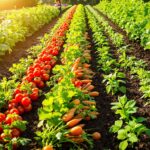
Crop rotation is one of the oldest and most effective farming practices used to maintain soil fertility and improve crop productivity. It involves growing different types of crops on the same piece of land in a planned sequence over several planting seasons. Instead of planting the same crop repeatedly, farmers rotate crops to improve soil health, reduce pests and increase yields.
In modern agriculture, crop rotation remains a key practice for sustainable farming. It helps farmers reduce production costs while maintaining high productivity and protecting the environment.
Understanding crop rotation
Crop rotation works by alternating crops with different nutrient requirements and growth patterns. For example, a farmer may plant maize in one season, followed by beans in the next and then vegetables in another season.
Different crops interact with the soil in different ways. Some crops, such as legumes, improve soil fertility by adding nitrogen, while others may use large amounts of nutrients. By rotating crops, farmers can balance nutrient use and prevent soil exhaustion.
This practice also helps break cycles of pests and diseases that often build up when the same crop is grown continuously.
Improves soil fertility
One of the main benefits of crop rotation is improved soil fertility. Continuous farming of the same crop depletes specific nutrients from the soil, leading to reduced productivity over time.
Crop rotation helps restore soil nutrients naturally. For instance, legumes such as beans and peas have the ability to fix nitrogen from the atmosphere into the soil. This increases nitrogen levels, which benefits crops that require high amounts of this nutrient.
By maintaining balanced soil fertility, farmers can achieve better crop growth and higher yields.
Reduces pest and disease problems
Pests and diseases often target specific crops. When the same crop is grown repeatedly in one area, pests and diseases build up in the soil and become more difficult to control.
Crop rotation disrupts the life cycles of these pests and diseases. When a different crop is planted, the pests that depend on the previous crop cannot survive or reproduce effectively.
This reduces the need for chemical pesticides and lowers production costs while promoting healthier crops.
Improves soil structure
Different crops have different root systems. Some crops have deep roots that penetrate the soil, while others have shallow roots that spread near the surface.
Rotating crops with different root structures helps improve soil structure by increasing aeration and reducing soil compaction. This allows water and nutrients to move more freely through the soil.
Improved soil structure also supports better root development and enhances overall plant growth.
Controls weeds naturally
Weeds can compete with crops for nutrients, water, and sunlight. When the same crop is grown repeatedly, certain types of weeds may become dominant.
Crop rotation helps control weeds by changing the growing conditions. Different crops have different growth habits and planting times, which disrupt weed growth cycles.
Some crops grow quickly and cover the soil, reducing the space available for weeds to grow. This natural weed control reduces the need for herbicides.
Enhances crop yield
By improving soil fertility, reducing pests, and controlling weeds, crop rotation contributes to higher crop yields. Healthy soil provides the necessary nutrients and environment for crops to grow effectively.
Farmers who practice crop rotation often experience better productivity compared to those who grow the same crop continuously. Higher yields translate into increased income and improved food security.
Reduces dependence on chemical inputs
Crop rotation reduces the need for chemical fertilizers and pesticides. Since the soil remains fertile and pest populations are controlled naturally, farmers can use fewer chemical inputs.
This not only lowers production costs but also protects the environment and promotes sustainable farming practices. Reduced chemical use also improves the safety and quality of food products.
Supports sustainable farming
Sustainability is becoming increasingly important in agriculture. Crop rotation helps conserve soil health, protect natural resources, and maintain long-term productivity.
By preserving soil fertility and reducing environmental impact, crop rotation ensures that farmland remains productive for future generations. It is an essential practice for farmers who want to achieve sustainable and profitable agriculture.
Crop rotation is a simple yet powerful farming practice that offers numerous benefits. It improves soil fertility, reduces pests and diseases, enhances soil structure, and increases crop yields. By rotating crops, farmers can reduce production costs and promote environmentally friendly farming.
For both small-scale and commercial farmers, adopting crop rotation is a smart strategy for maintaining healthy soils and achieving long-term success in agriculture. As agriculture continues to evolve, crop rotation remains a key practice for sustainable and productive farming systems.

Author: Moureen Koech
Moureen Koech is a passionate Digital Journalist, an adept Agribusiness Writer with a keen eye for news and an impactful story-teller,whose stories provide key value to Agripreneurs and stakeholders in the Agricultural sector