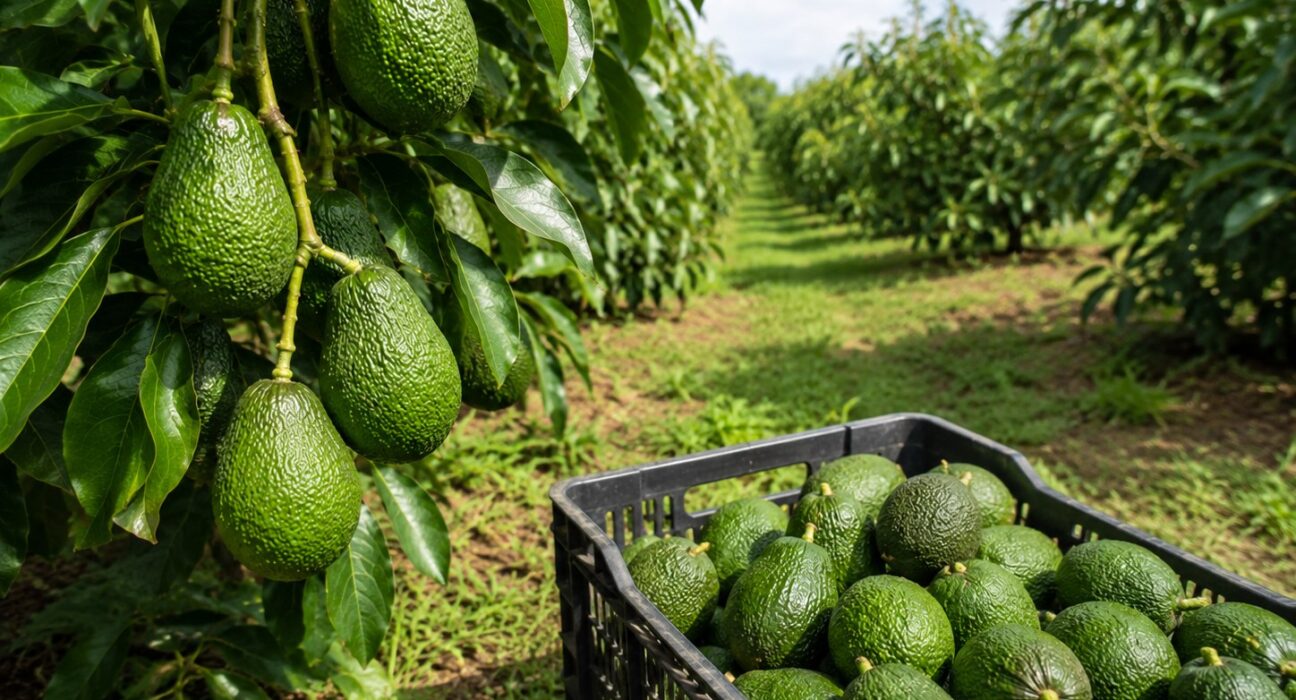
Choosing the right planting material is one of the most important decisions an avocado farmer can make. The quality of your seedlings determines how quickly your orchard becomes productive, the quality of fruits you harvest and the profitability of your investment. While seed-grown avocado trees are often cheaper and more readily available, they come with several disadvantages that can delay returns and reduce productivity.
For both commercial and small-scale farmers, grafted avocado seedlings are the preferred choice because they combine the desirable characteristics of proven fruiting varieties with strong, healthy root systems. This results in earlier fruit production, better yields, and more consistent fruit quality. Understanding the benefits of grafted seedlings and knowing how to identify quality planting material can help you establish a successful avocado orchard from the start.
What is a grafted avocado seedling?
A grafted avocado seedling is created by joining two different plants into one. The lower part, known as the rootstock, is grown from a seed and provides a strong and healthy root system. The upper part, called the scion, is taken from a mature avocado tree that has proven characteristics such as high yields, excellent fruit quality and good market performance.
Once the graft heals, the two parts grow as a single tree. This method allows farmers to enjoy the strength of the rootstock while preserving the desirable qualities of the selected avocado variety, such as Hass or Fuerte.
Faster fruiting means quicker returns
One of the greatest advantages of grafted avocado seedlings is their ability to produce fruits much earlier than seed-grown trees. Since the scion comes from a mature fruit-bearing tree, the new plant retains its fruiting characteristics and reaches production much sooner.
Most grafted avocado trees begin producing fruits within two to three years after planting under proper management. In contrast, seed-grown trees often take seven to ten years or even longer before they start bearing fruit. For farmers investing in avocado production as a business, this shorter waiting period translates into faster returns on investment and improved cash flow.
Consistent fruit quality
Seed-grown avocado trees do not always produce fruits similar to the parent tree because of natural genetic variation. Even if the seed comes from a high-quality avocado, the resulting tree may produce fruits that differ in size, flavour, shape, oil content or productivity.
Grafted seedlings eliminate this uncertainty. Since the scion is taken directly from a selected mother tree, every grafted tree produces fruits with the same desirable characteristics. This consistency is especially important for farmers supplying supermarkets, exporters, processors and other premium markets where uniformity is highly valued.
Higher yields and better productivity
Grafted avocado seedlings are propagated from carefully selected mother trees known for high productivity. As a result, they generally produce more fruits and maintain consistent performance over many years.
Uniform growth also makes orchard management easier. Trees mature at a similar rate, allowing farmers to carry out irrigation, fertilization, pruning, pest control and harvesting more efficiently. This not only improves productivity but also reduces labour costs and simplifies farm management.
Stronger growth and better adaptability
Quality grafted seedlings are raised on vigorous rootstocks that promote healthy growth and quick establishment after transplanting. Strong root systems improve water and nutrient uptake, enabling trees to grow faster and remain productive for many years.
Depending on the rootstock used, grafted trees may also have better tolerance to certain soil-borne diseases and environmental stresses. Although no seedling is completely resistant to all challenges, healthy grafted plants generally perform better than poorly selected seed-grown trees.
How to identify quality grafted avocado seedlings
Buying quality seedlings is just as important as choosing grafted trees. Poor-quality planting material can lead to weak growth, low productivity, and increased disease problems. Before purchasing avocado seedlings, farmers should inspect them carefully.
Check the Graft Union
A quality grafted seedling should have a clearly visible graft union where the scion and rootstock were joined. The graft should be well healed without cracks, swelling or signs of disease. A smooth and healthy graft union indicates successful propagation and increases the chances of strong growth after planting.
Look for Healthy Leaves
The leaves should be dark green, fresh, and free from pests, yellowing, holes or disease symptoms. Healthy foliage is a sign that the seedling has been well cared for and is growing vigorously.
Inspect the Stem
The stem should be straight, strong, and free from injuries or deformities. Avoid seedlings with broken stems, excessive bending, or signs of mechanical damage, as these may struggle after transplanting.
Examine the Root System
A healthy root system is essential for successful establishment. The roots should be well developed without circling excessively inside the nursery bag. Root-bound seedlings often experience slow growth after transplanting because their roots fail to spread properly into the surrounding soil.
Confirm the Variety
Always ensure the seedling is correctly labelled with its variety. Popular commercial varieties such as Hass and Fuerte have different market characteristics, flowering patterns, and pollination requirements. Buying correctly identified seedlings helps farmers plan their orchards more effectively.
Consider the Age of the Seedling
The ideal grafted avocado seedling is usually between six and twelve months old. At this age, the plant is well hardened, vigorous and ready for transplanting. Very young seedlings may not survive field conditions, while overly mature seedlings can become root-bound if left too long in nursery containers.
Buy from reputable nurseries
The safest way to obtain quality grafted seedlings is by purchasing from licensed and reputable nurseries. Reliable nurseries propagate seedlings from certified, high-yielding mother trees and follow proper nursery management practices to ensure healthy, disease-free planting material.
A productive avocado orchard starts with choosing the right seedlings. Although seed-grown trees may cost less initially, they often require years before fruiting and cannot guarantee consistent fruit quality or high yields. Grafted avocado seedlings offer numerous advantages, including early maturity, uniform growth, reliable fruit quality, and higher productivity, making them the preferred choice for modern avocado farming.
By learning how to identify healthy, well-grafted seedlings and purchasing planting material from reputable sources, farmers can establish orchards that are more productive, easier to manage and more profitable in the long term. Investing in quality seedlings is one of thesmartest decisions any avocado farmer can make for sustainable success.

Author: Moureen Koech
Moureen Koech is a passionate Digital Journalist, an adept Agribusiness Writer with a keen eye for news and an impactful story-teller,whose stories provide key value to Agripreneurs and stakeholders in the Agricultural sector