Egg incubation is one of the most important processes in poultry farming. Proper incubation methods help farmers achieve healthy chicks, improve hatchability rates and increase farm productivity. Whether using natural or artificial incubation, success depends on maintaining the right conditions throughout the hatching period.
Understanding different egg incubation methods allows poultry farmers to choose the most suitable approach based on flock size, available resources, and production goals. With proper management, egg incubation can become a profitable and efficient part of poultry production.
What is egg incubation?
Egg incubation is the process of maintaining fertilized eggs under controlled environmental conditions until they hatch into chicks. During incubation, the embryo inside the egg develops gradually until it is ready to emerge.
Successful incubation requires proper temperature, humidity, ventilation, and regular turning of eggs. Any major imbalance in these conditions can reduce hatchability and affect chick quality.
Importance of proper egg incubation
Proper incubation is essential for healthy chick production. Good incubation practices increase hatch rates, reduce embryo mortality and produce stronger chicks that grow faster.
Healthy chicks are more resistant to diseases and adapt better to farm conditions. Poor incubation, on the other hand, can result in weak chicks, deformities or complete hatching failure.
For commercial poultry farmers, effective incubation directly affects profitability and farm performance.
Natural Egg Incubation Method
Natural incubation is the traditional method where a broody hen sits on fertilized eggs until they hatch. The hen provides warmth, turns the eggs naturally and protects them during the incubation period.
This method is commonly used in small-scale and backyard poultry farming because it requires little investment. It is simple and does not require electricity or specialized equipment.
However, natural incubation has limitations. A hen can only incubate a small number of eggs at a time, making it unsuitable for large-scale production. Hatch rates may also vary depending on the health and behavior of the broody hen.
Artificial Egg Incubation Method
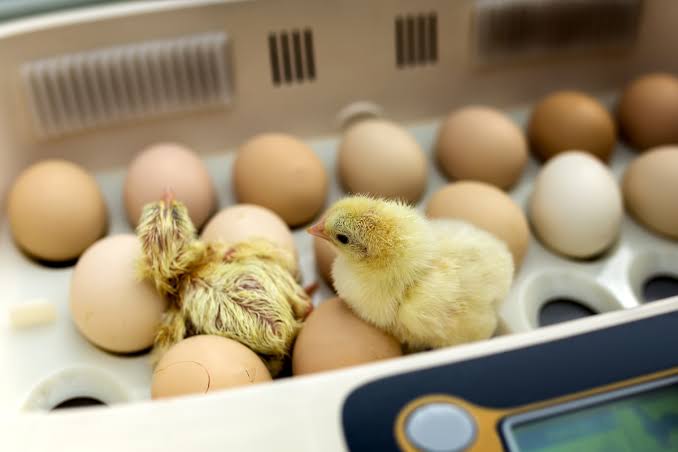
Artificial incubation uses machines called incubators to provide controlled conditions for hatching eggs. This method is widely used in commercial poultry farming because it allows farmers to hatch many eggs at once.
Artificial incubators control:
- Temperature
- Humidity
- Ventilation
- Egg turning
This method increases hatchability and allows continuous chick production throughout the year. It also reduces dependence on broody hens.
Artificial incubation is more efficient and productive, especially for farmers aiming to expand poultry operations.
Still-Air Incubators
Still-air incubators are simple machines that rely on natural air circulation inside the incubator. Heat moves slowly within the machine without the help of fans.
These incubators are usually cheaper and suitable for small-scale farmers or beginners. However, temperature distribution may not be uniform throughout the incubator, requiring careful monitoring.
Farmers using still-air incubators must regularly check temperature and humidity to ensure proper embryo development.
Forced-Air Incubators
Forced-air incubators use fans to circulate warm air evenly inside the machine. This creates more stable temperature conditions and improves hatchability.
These incubators are commonly used in commercial hatcheries because they:
- Support large egg capacity
- Maintain consistent conditions
- Improve chick quality
Although they are more expensive than still-air incubators, forced-air systems are more reliable and efficient.
Importance of temperature control
Temperature is one of the most critical factors during egg incubation. Embryos require stable warmth for proper development.
Chicken eggs are generally incubated at around 37.5°C. Temperatures that are too high or too low can harm embryo growth and reduce hatch rates.
Excessive heat may cause deformities or embryo death, while low temperatures can delay hatching and weaken chicks.
Regular monitoring of incubator temperature is essential for sucessful incubation.
Humidity management during incubation
Humidity controls moisture loss from eggs during incubation. Proper humidity levels help embryos develop correctly and prevent eggs from drying out.
Low humidity may cause excessive moisture loss, making it difficult for chicks to hatch. High humidity can reduce air space inside the egg and increase embryo mortality.
Humidity levels should be adjusted during different stages of incubation, especially during the final days before hatching.
Importance of egg turning
Egg turning is necessary to prevent the embryo from sticking to the shell membrane. Turning also helps distribute nutrients evenly inside the egg.
In natural incubation, the hen turns eggs automatically. In artificial systems, farmers must turn eggs manually or use automatic turning systems.
Eggs are usually turned several times daily during most of the incubation period. Turning is stopped shortly before hatching begins.
Ventilation and Airflow
Developing embryos require oxygen to survive. Proper ventilation ensures fresh air enters the incubator while carbon dioxide is removed.
Poor ventilation can lead to oxygen shortage and embryo death. Good airflow also helps maintain stable temperature and humidity conditions inside the incubator.
Farmers should ensure incubators are placed in well-ventilated rooms away from direct sunlight or extreme temperatures.
Selecting eggs for incubation
Not all eggs are suitable for incubation. Farmers should select clean, healthy, and properly shaped fertilized eggs.
Good incubation eggs should:
- Be medium-sized
- Have strong shells
- Be free from cracks and dirt
Dirty or damaged eggs increase the risk of bacterial contamination and poor hatchability.
Eggs should also be stored properly before incubation to maintain embryo viability.
Candling eggs during incubation
Candling is the process of checking embryo development using a light source. It helps farmers identify infertile eggs or dead embryos during incubation.
Candling is usually done after several days of incubation. Healthy developing embryos show visible blood vessels and movement inside the egg.
Removing infertile or dead eggs helps maintain proper hygiene and improves hatch success.
Common egg incubation problems
Several factors can affect incubation success. Poor temperature control, incorrect humidity, inadequate ventilation, and improper egg handling are common causes of low hatch rates.
Power failures, dirty incubators, and poor-quality eggs can also reduce chick survival. Regular monitoring and proper management help minimize these problems
Egg incubation plays a major role in successful poultry production. Whether using natural or artificial methods, maintaining the correct environmental conditions is essential for healthy chick development.
Artificial incubation offers higher efficiency and larger production capacity, while natural incubation remains suitable for small-scale farmers. By controlling temperature, humidity, ventilation and egg turning properly, farmers can improve hatchability and produce stronger chicks.
With good management practices, egg incubation can greatly increase poultry farm productivity and profitability.

Author: Moureen Koech
Moureen Koech is a passionate Digital Journalist, an adept Agribusiness Writer with a keen eye for news and an impactful story-teller,whose stories provide key value to Agripreneurs and stakeholders in the Agricultural sector