Mulberry fruit farming is gradually gaining popularity among farmers looking for profitable and nutritious fruit crops. Known for its sweet taste, rich nutritional value, and multiple market opportunities, mulberry cultivation presents an attractive agribusiness option for both small-scale and commercial farmers.
Mulberry fruits are widely consumed fresh, dried, or processed into juices, jams, wines and health products. The tree is also valued because its leaves are traditionally used in silk production and livestock feeding. With increasing consumer demand for healthy fruits, mulberry farming has become a promising venture.
What is Mulberry Fruit?
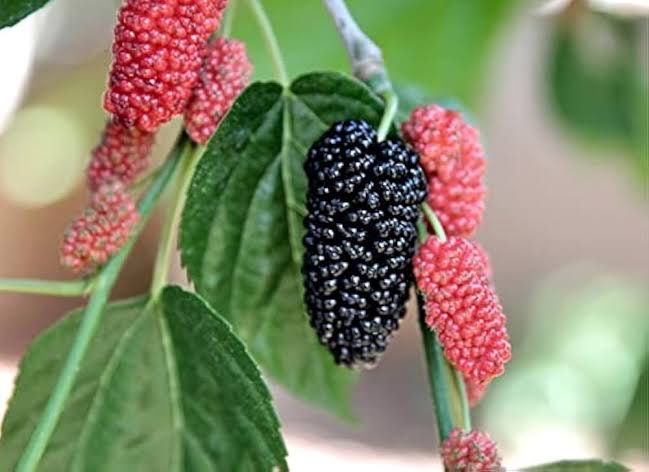
Mulberry is a fast-growing deciduous tree belonging to the Morus species. The fruit resembles elongated blackberries and changes color as it ripens from green to red, purple, black or white depending on the variety.
Common varieties include:
- Black Mulberry (Morus nigra)
- White Mulberry (Morus alba)
- Red Mulberry (Morus rubra)
Among these, black mulberry is highly preferred for fruit production because of its sweeter flavor and commercial value.
Climatic requirements for mulberry farming
Mulberry trees adapt well to a wide range of climatic conditions but perform best in warm and moderately cool regions.
Ideal conditions include:
- Temperature: 18°C–30°C
- Annual rainfall: 600–2,500 mm
- Altitude: 500–2,500 meters above sea level
- Full sunlight exposure
Mulberries are drought tolerant once established but require adequate moisture during flowering and fruit development.
Suitable soil for mulberry cultivation
Mulberry grows well in fertile, deep, and well-drained soils rich in organic matter.
Recommended soil conditions:
- Soil pH: 6.0–7.5
- Loamy or sandy-loam soils
- Good drainage to prevent root diseases
Before planting, conduct a soil test to determine nutrient levels and necessary amendments.
Land Preparation and Planting
Prepare the land by clearing weeds and ploughing thoroughly. Dig planting holes measuring approximately 60 cm by 60 cm and mix topsoil with well-decomposed manure.
Planting procedure:
1. Select healthy seedlings or grafted plants.
2. Fill planting holes with enriched soil.
3. Place seedlings upright.
4. Cover roots firmly.
5. Water immediately after planting.
Recommended spacing:
- Fruit production: 3 m × 3 m
- Intensive orchards: 2.5 m × 2.5 m
Proper spacing improves air circulation and allows easier management.
Propagation Methods
Mulberry trees can be propagated using several methods.
Seed Propagation
Seeds are raised in nurseries before transplanting. This method takes longer and may not maintain parent characteristics.
Stem cuttings
This is the most common and preferred method. Mature healthy branches are cut and planted directly.
Grafting
Grafting is ideal for commercial farmers because it ensures uniform fruit quality and earlier production.
Irrigation and water management
Although mature mulberry trees can tolerate dry periods, regular watering increases fruit quality and yields.
Watering recommendations:
- Irrigate immediately after planting.
- Maintain moderate moisture during flowering.
- Reduce excessive watering during fruit ripening.
Drip irrigation is highly effective because it conserves water and reduces disease pressure.
Fertilizer application
Mulberry responds well to organic and balanced fertilizer application.
Suggested nutrient management:
- Apply compost or farmyard manure annually.
- Use nitrogen-rich fertilizers to encourage growth.
- Apply phosphorus and potassium for flowering and fruit development.
Split fertilizer applications throughout the growing season for better nutrient absorption.
Mulberry orchard management
Pruning
Regular pruning helps maintain tree shape and stimulates new fruit-bearing branches.
Pruning benefits:
- Better sunlight penetration
- Increased air circulation
- Improved fruit size and quality
Remove dry, diseased and overcrowded branches.
Weed Control
Keep the orchard weed-free to reduce competition for nutrients and moisture.
Use:
- Mulching
- Manual weeding
Controlled herbicide application where necessary
Common pests and diseases in mulberry farming
Like many fruit crops, mulberries are affected by pests and diseases.
Common Pests
- Aphids
- Fruit flies
- Spider mites
- Mealybugs
Control measures:
- Field sanitation
- Biological control
- Recommended pesticides
Common Diseases
- Powdery mildew
- Leaf spot
- Root rot
Prevention measures:
- Proper spacing
- Good drainage
- Timely pruning
- Fungicide application when necessary
Regular monitoring helps prevent severe infestations.
Harvesting mulberry fruits
Mulberry trees begin producing fruits approximately 1–3 years after planting depending on variety and management practices.
Signs of maturity:
- Full color development
- Soft texture
- Sweet taste
Harvesting should be done carefully because ripe fruits bruise easily.
Fruits are usually harvested by hand every few days during the production season.
Yield potential and profitability
A mature mulberry tree can produce significant yields annually under proper management.
Commercial advantages include:
- Multiple harvests per season
- Strong market demand
- Value addition opportunities
Farmers can sell fresh fruits or process them into:
- Juice
- Jam
- Dried snacks
- Wine
- Syrups
Value addition often increases profitability.
Marketing opportunities for mulberry farmers
Mulberry fruits are gaining demand in:
- Local fruit markets
- Supermarkets
- Hotels and restaurants
- Health food stores
- Juice and beverage industries
Farmers can also explore direct online sales and agritourism opportunities.
Mulberry fruit farming offers farmers an opportunity to diversify income while supplying nutritious fruits to the market. The crop requires moderate investment, adapts to different growing conditions, and provides multiple income streams through fresh sales and processing.
With proper variety selection, orchard management, irrigation and pest control, mulberry cultivation can become a profitable long-term agribusiness venture for both new and experienced farmers.

Author: Moureen Koech
Moureen Koech is a passionate Digital Journalist, an adept Agribusiness Writer with a keen eye for news and an impactful story-teller,whose stories provide key value to Agripreneurs and stakeholders in the Agricultural sector