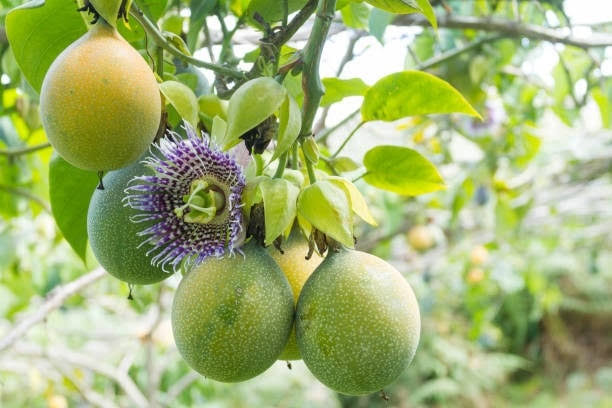
Passion fruit farming has become an attractive agribusiness opportunity for Kenyan farmers looking for a high-value fruit crop. The crop can be grown by small-scale farmers and when properly managed, can provide income from a relatively small piece of land.
However, passion fruit farming is not simply about planting vines and waiting for harvest. Farmers have to invest in quality planting materials, trellising, manure, fertilizers, pest and disease management, labour and irrigation where necessary. Understanding the costs and potential returns before planting is therefore essential.
Why passion fruit farming can be profitable
Passion fruits have several potential markets. They are consumed fresh and are also used by juice manufacturers, hotels, restaurants and food-processing businesses.
The crop can also provide repeated harvests rather than producing just one harvest. This means a well-managed farm can generate income over an extended period.
However, profitability depends heavily on yield, fruit quality, market prices and production costs. A farmer should therefore calculate the expected returns based on realistic local conditions rather than relying on impressive figures from other farms.
Land preparation costs
The first expense is preparing the land.
The cost will depend on whether the farmer is using family labour, casual workers, tractors or other machinery. Activities may include clearing the land, ploughing, harrowing, digging planting holes and applying manure or compost.
Farmers should avoid underestimating land preparation costs because labour can become expensive when preparing a large area.
Cost of passion fruit seedlings
Quality planting material is one of the most important investments in passion fruit farming.
Farmers should purchase healthy seedlings from reputable nurseries and select varieties suited to their growing conditions and target market.
Cheap seedlings can become expensive if they are weak, diseased or poorly developed. Poor-quality planting material can result in low survival rates and reduced yields.
The number of seedlings required depends on the spacing used and the size of the farm.
Cost of trellising
Passion fruit is a climbing crop and requires a strong support system.
Farmers commonly use posts, wires and other materials to construct trellises that allow the vines to grow properly.
Trellising can represent a significant portion of the initial investment. Farmers should therefore use durable materials where possible because replacing broken posts or wires in an established plantation can be costly and labour-intensive.
Fertilizer and manure costs
Passion fruit requires adequate nutrients for strong vegetative growth and fruit production.
Farmers may use well-decomposed manure or compost alongside appropriate fertilizers based on soil conditions and crop requirements.
The actual fertilizer programme should be guided by soil testing and professional recommendations rather than simply copying what another farmer uses.
Pest and disease management costs
Pests and diseases are among the biggest threats to passion fruit production.
Farmers may encounter problems such as fungal diseases, bacterial diseases, viral diseases and insect pests. Some diseases can spread quickly and severely reduce yields.
Regular scouting, field hygiene, use of healthy planting material and timely management can help reduce losses.
Farmers should seek professional advice before applying pesticides or other crop-protection products, particularly regarding the correct product, dosage and pre-harvest interval.
Labour costs
Labour is required throughout the production cycle.
Activities may include planting, weeding, training vines, pruning, fertilizer application, pest monitoring, harvesting and sorting.
Farmers using hired labour should include these costs when calculating profitability. Family labour should also be assigned a realistic value when determining the true cost of production.
Irrigation costs
Passion fruit can be affected by unreliable rainfall, particularly during periods of moisture stress.
Farmers in areas with inadequate rainfall may need irrigation equipment such as pipes, drip lines, tanks or pumps.
Although irrigation increases the initial investment, reliable water management can help maintain consistent crop growth and production.
Other costs farmers should consider
A proper passion fruit budget should also include expenses that are sometimes overlooked.
These can include:
- Transport
- Farm tools
- Mulching materials
- Packaging
- Harvesting containers
- Land preparation
- Pest-control equipment
- Water
- Market fees
- Post-harvest handling
- Repairs and maintenance
Ignoring these smaller expenses can make a farm appear more profitable on paper than it actually is.
Estimating passion fruit returns
The easiest way to estimate returns is to work backwards from expected production.
For example:
Total revenue = Quantity of marketable fruit × Average selling price per kilogram
If a farmer produces 10,000 kilograms of marketable passion fruit and sells them at an average of KSh 80 per kilogram:
10,000 kg × KSh 80 = KSh 800,000 gross revenue.
But this is gross revenue, not profit.
To determine profit, the farmer must subtract all production, harvesting, marketing and other business expenses.
Net profit = Total revenue − Total production costs
This distinction is extremely important when evaluating passion fruit farming.
What determines the returns?
Two farmers with the same acreage can earn completely different amounts from passion fruit farming.
One major factor is yield. Healthy vines with good nutrition, adequate water and effective pest and disease management can produce considerably more marketable fruit than poorly managed vines.
The second factor is quality. Large, healthy and properly handled fruits may attract better buyers than damaged or poorly sorted produce.
The third factor is market price. Passion fruit prices fluctuate depending on supply, season, quality and location.
The fourth factor is post-harvest losses. Fruit that is damaged, poorly handled or left unsold reduces the amount of produce that actually generates income.
How to increase passion fruit profits
Farmers can improve profitability by focusing on both production and marketing.
Start with quality planting materials rather than trying to save money on cheap seedlings. Establish a strong trellis because the support system will determine how well the vines grow and how easy harvesting becomes.
Maintain good field hygiene and monitor the crop regularly for pests and diseases. Early detection can prevent a small problem from becoming a major financial loss.
Farmers should also establish markets early. Selling directly to consumers, hotels, processors or organized buyers may provide better opportunities than relying entirely on brokers, depending on the location and quantities involved.
Proper grading and packaging can also help farmers target higher-value markets.
Is passion fruit farming profitable?
Yes, passion fruit farming can be profitable, but profitability is not guaranteed.
The biggest mistake is to calculate income using an optimistic yield and a high market price while ignoring production costs and potential losses.
Before planting, prepare three scenarios:
Low case: lower yield and lower selling price.
Expected case: realistic yield and average selling price.
Best case: good yield and favourable market prices.
If the business remains viable even under the expected or conservative scenario, the investment is more attractive.
Passion fruit farming offers an opportunity for farmers seeking a high-value crop with an established consumer market. However, the business requires careful planning and consistent management.
The major expenses include land preparation, quality seedlings, trellising, manure and fertilizer, labour, pest and disease management, irrigation, harvesting, transport and marketing.
At the same time, potential returns depend on yield, fruit quality, market prices and the farmer’s ability to control costs.
The most important lesson is simple: don’t calculate passion fruit profits from the selling price alone. Calculate the entire business from the cost of planting to the money that actually reaches your pocket.
A farmer who understands production costs, manages the crop properly and develops a reliable market has a much better chance of turning passion fruit farming into a sustainable agribusiness.

Author: Moureen Koech
Moureen Koech is a passionate Digital Journalist, an adept Agribusiness Writer with a keen eye for news and an impactful story-teller,whose stories provide key value to Agripreneurs and stakeholders in the Agricultural sector